Garden

Composting with Worms

Ever wondered about starting a worm bin? I guest posted today over at Mothering.com about a creating a DIY worm bin. It’s super easy and can be made small enough to fit under your sink. I’m happy to answer questions about my vermicomposting experience, too. Just leave a comment here or over at Mothering and I’ll share what I know.

Read more »

Setting Goals for our Food Consumption

Since our move to this house almost a year ago, I’m still working to get a garden growing. Without the garden, I don’t have my usual stash of preserved foods so it’s quite a bit more difficult for me to produce a completely homegrown meal. We’re working on it, but we’re not there yet. Instead of feeling unsuccessful at our attempts in better self-sufficiency, I’ve set a goal of including at least one ingredient from our yard/garden in every dinner I prepare. If that’s just not possible, I try to include something that’s been grown locally. It’s a small step, but one worth taking. My family has come to expect my dinnertime report: Taco night: “The green onions and avocados came from the garden, the tomatoes are from the farmers market, and the beef is local and grass fed.” Pizza night: “The arugula, green onions, and basil came from the garden. The mushrooms are locally grown, from the farmers market.” Breakfast for dinner night: “The eggs are from our chickens and the sweet bread for the French toast is from Punalu‘u Bake Shop.” It’s casual, not a boardroom style report, but it’s enough to make my family think regularly...

Read more »

Composting for the Lazy Person

Composting for the Lazy Person

An awful lot of people have said an awful lot about composting. Mostly, they make it sound like an awful lot of work. Let me clear the air: composting is easy. You (yes, you) are nothing but a middle man (or woman, as it were). The compost? It doesn’t need you. You do not have to do anything to turn your kitchen scraps and garden waste into compost. Mother Nature will do it for you. Your only obligation is to collect material and gather it in one spot. First, let’s talk for a minute about why we should all be composting. Kitchen food waste that is tossed in the garbage ends up in our landfills, taking up space and emitting methane as it decomposes. Food waste that’s tossed in the trash wrapped in plastic has a hard time decomposing at all. Composting creates terrific soil amendment for use in the garden. Silly to throw away food waste and then go buy compost that’s been trucked in complete with a plastic bag, right? Even if you don’t have a garden, there are plenty of people who would be happy to take compost off your hands. Passive composting is an easy...

Read more »

Add a Bare Root Fruit Tree to your Yard

Add a Bare Root Fruit Tree to your Yard

If you’d like to add a fruit tree or berries to your yard or garden, you still have time to consider bare root in many regions.  A bare root plant comes just like it sounds – with its roots bare, rather than planted in a pot full of soil. Trees and shrubs are available in bare root form during the late winter, when the plant is dormant and has no leaves. Generally speaking, purchasing bare root plants offers a larger selection for buyers. The potted fruit trees and berries you’ll find at nurseries later in the year are often the varieties that didn’t sell during bare root season. Consider a standard sized fruit tree if you’re looking for a tree that will also provide shade. Semi-dwarf trees are medium sized and can work in suburban yards. City dwellers who have very limited space might consider a dwarf fruit variety planted in a large planter or half-barrel. Mail order companies and some quasi-nurseries (like those at home improvement stores) sell their bare root plants wrapped in burlap or plastic. If you pick up a tree or shrub at your local nursery (not a big box store), you’ll choose your plant...

Read more »

Upcycling Pallets

Upcycling Pallets

I’ve been reading a lot lately about clever people turning wood pallets into creative projects. It makes sense; many pallets are not reused, but destined for the landfill; might as well use that wood for something. It makes good sense especially here on this island. Locally made rocks, we have (c’mon, it’s a volcanic island!) but 2 x 4s, not so much. All of our milled wood for construction projects has to come by barge, so repurposing pallets into something usable has a certain appeal. I picked up three pallets the other day, with several projects in mind and enlisted the help of my 15-year-old to dismantle the pallets. While some people are doing this with pallets: This is what I got: Taking pallets apart is not as easy as one might think. Someone in the pallet manufacturing industry decided that pallets should be built with a strange hybrid of a nail and a screw. You can’t pull ‘em out with a claw foot hammer because of the threads, and there’s no backing them out with a screwdriver or drill because the head is flat like a nail. After fighting to remove the boards without cracking them for an...

Read more »

How to Plant a Seed

How to Plant a Seed

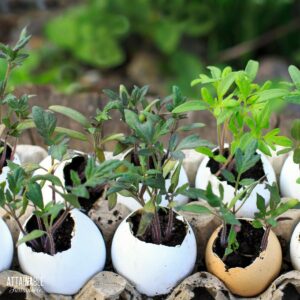
As someone who’s been growing a garden – or at least helping to grow a garden – since I was a child, it is almost unfathomable to me that someone could not know how to plant a seed. I’ve had several people ask me about seed starting recently, though, so I have to assume that there are more people out there who have yet to acquire this knowledge. Good news: It’s simple! To get a head start on the growing season, plan to start your seeds 4-6 weeks before you’ll be ready to set them out in the garden. This will be determined by your region’s last frost date. You don’t want to plant your garden too early, only to have Jack Frost kill all of your little plants. You will need: A container: You can reuse nursery containers if you have them, or alternatively, use plastic containers scrounged from the recycle bin* Potting soil (available at nurseries or hardware stores) Seeds Fill your containers with potting soil to within 1″ of the top. Seed packets include planting directions and will note the planting depth for each type of seed. Generally speaking, if you’re planting a large seed (beans,...

Read more »

Tomato Math – How Many Plants is Enough?

Tomato Math – How Many Plants is Enough?

One of the primary reasons I garden is to fill my pantry with canned fruits and vegetables that are (almost*) free of bpa and pesticides. Of all the different things I preserve, tomatoes are far and away the most-used ingredients in my household; it seems I’m constantly pulling a jar of some sort of tomato product or another out of the pantry. In previous years, it’s been pints and quarts that I put up from our big California garden. I ran out of the canned goods I brought with me when we moved some time ago  and I’m reduced to buying canned tomatoes – it’s killing me. (And yes, the movers DID think I was nuts. But I needed the jars; why not bring them full?) As the time for planting a garden nears, I’m gearing up to once again fill my pantry with tomatoes from the garden. In the past, I’ve planted as many as 40 tomato plants in a season and always had plenty for me as well as lots to share, but my space wasn’t nearly as limited. Here on this small lot where (ironically) full sun is scarce, there’s not room to wantonly plant excess....

Read more »

Welcome!

Welcome!

As more people become aware of the human impact on this earth (and ironically, on our own health) the idea of living a more sustainable, self-sufficient life is gaining ground. But. It’s one thing to think, “Hey, I’d love to be more self-sufficient!” and quite another to implement a lifestyle change that might require learning a new set of skills or two. Attainable Sustainable is about bridging the gap between wanting change and making it happen without becoming overwhelmed. Nobody’s saying you have to go get a tractor and a cow. As far as this site is concerned, sustainability is about eliminating excess and living lightly on the world. It’s about learning to generate food in a smart manner, whether that’s raising your own, joining a local CSA, or frequenting your local farmers markets. It’s about leaving the consumerism model behind and embracing the concept of re-purposing and reusing what we have. It’s discovering – one step at a time – how to make changes in your life to support a sustainable lifestyle. If you’re interested in making some positive changes in the way you live in this world, I hope you’ll stick around!

Read more »

An Unexpected Source for Canning Jars

An Unexpected Source for Canning Jars

If you’re planning to try your hand at preserving this summer, but still shopping the grocery store aisles until then, consider choosing products that come in glass canning jars. These jars have threads that will accommodate canning lids and rings so that rather than simply recycling the glass, the jars can be added to your collection. I have quite a few of these kinds of jars. The only drawback is that the labels leave a sticky residue, but that’s a small price to pay for being able to use the jar over and over again. Both Classico and Barilla pasta sauces come in canning-type jars (Classico has a few organic options, too) as do certain brands of fruits. I’m sure selection varies by region, but look for glass jars that have raised measurement markings on the outside.

Read more »

Just What IS Sustainable?

Just What IS Sustainable?

sus·tain·a·ble maintaining ecological balance: exploiting natural resources without destroying the ecological balance of an area Well, that sounds like a nice idea, now, doesn’t it? Here in America (and in many other parts of the world, to be sure) we are no longer living a sustainable life. Native cultures did it, and did it well. They utilized the resources they had on hand in their region. They wasted nothing. They cared for the earth as a provider. Us? We suck at sustainability. Unfortunately, we can’t just decide to go back to being sustainable. There’s too much to undo. What we can do is start from here. From where each of us is right now. Each one of us will tackle sustainability differently, but we’re all headed for the same result. Consider these the guiding light in our joint efforts to make a difference in the world. Stepping stones to sustainability, if you will. Do it yourself. This covers so much, but is so important. The biggest tenet of sustainability as I see it is to stop depending so much on other people for our needs. One example is food. If you get all of your groceries at the local...

Read more »

Join Me!

e-book

Free Email Alerts!

Click 'subscribe' once, then check your email for a confirmation message.

Welcome

It’s one thing to think, “Hey, I’d love to be more self-sufficient!” and quite another to implement a lifestyle change that might require learning some new skills.

Attainable Sustainable is about bridging the gap between wanting change and making it happen without becoming overwhelmed. Nobody’s saying you have to go get a tractor and a cow. Attainable Sustainable is about discovering – one step at a time – how to make changes in your life to support a sustainable lifestyle.

The Author

Kris Bordessa has been gardening for most of her life. She's been authoring books and writing features for the past ten years or so. It's about time she combined the two, don't you think? [More about the author]