
You won’t need those flimsy, single-use plastic produce bags from the supermarket when you learn how to make cloth drawstring bags. This easy step-by-step will teach you how.
Originally published December 2011; this post has been updated.
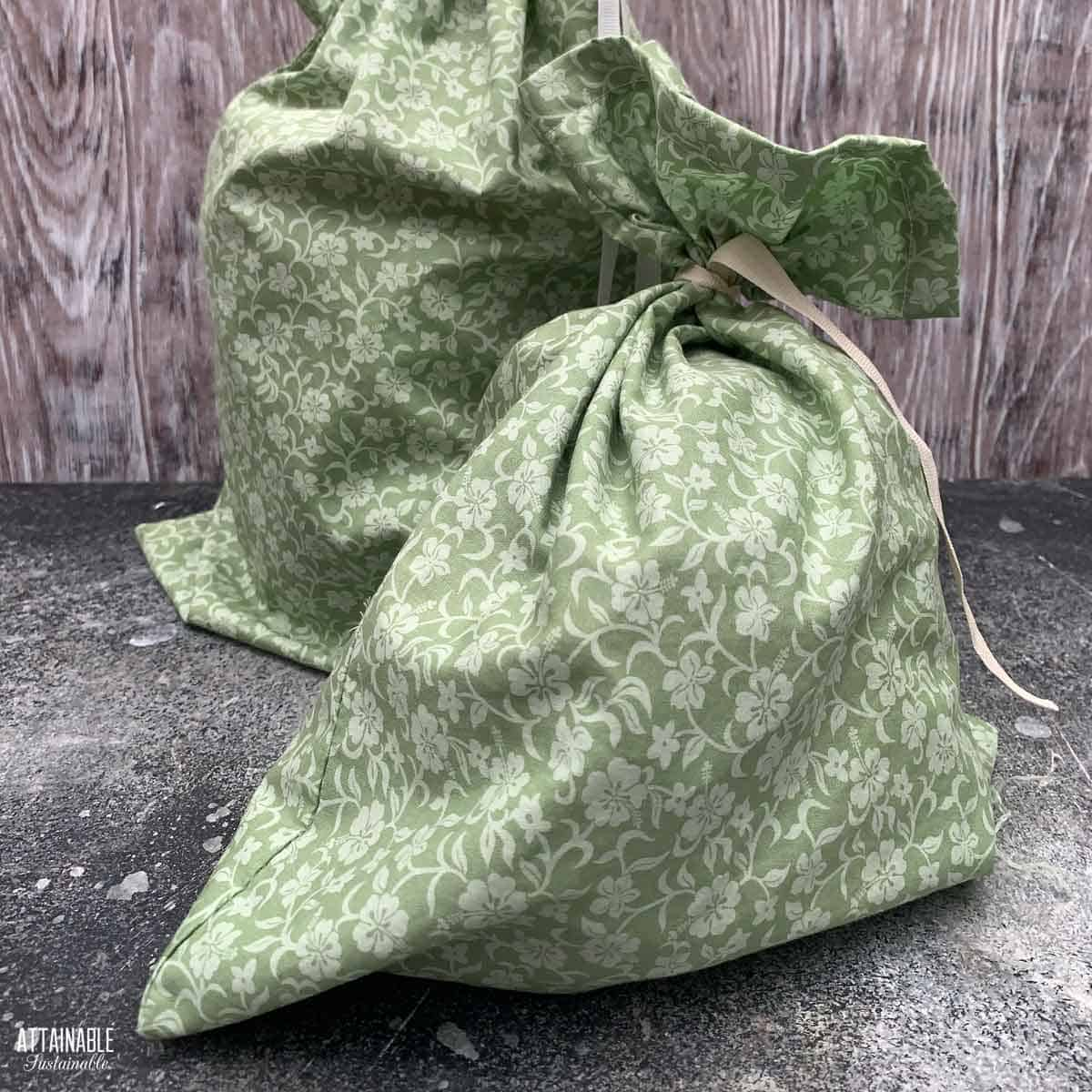
Reusable Cloth Bags
This is an easy sewing project for beginners, and a useful one, too; these cloth bags are incredibly versatile.
Depending on the type of fabric you use, they can serve a variety of purposes. You can make them and simply tie them closed or take it a sept further and make drawstring cloth bags. You can make them small or large, depending on what you intend to use them for.
If you have a sewing machine and can sew a straight seam, you can make these. It’ll take 10-15 minutes, start to finish.
Of course, even if you don’t have a sewing machine, you could make these with a needle and thread, but that might be a little more effort than you’re willing to put out. Instead, find a friend with a sewing machine who will teach you to make drawstring bags in exchange for a nice cuppa or lunch.
Take a Peek Inside My Book!
Get a free excerpt from my book, Attainable Sustainable: The Lost Art of Self-Reliant Living! You’ll also get my free weekly newsletter, complete with recipes, gardening tips, and a little peek at what’s going on around here — both the zany and the mundane.
Choosing Fabric
These instructions will work for virtually any type of fabric, so the possibilities are endless. Use remnants from your fabric box or keep your eyes open for possibilities at the local thrift store where sheets and tablecloths are often readily available. Upcycled clothing that is stained or torn can also be cut apart to make bags.
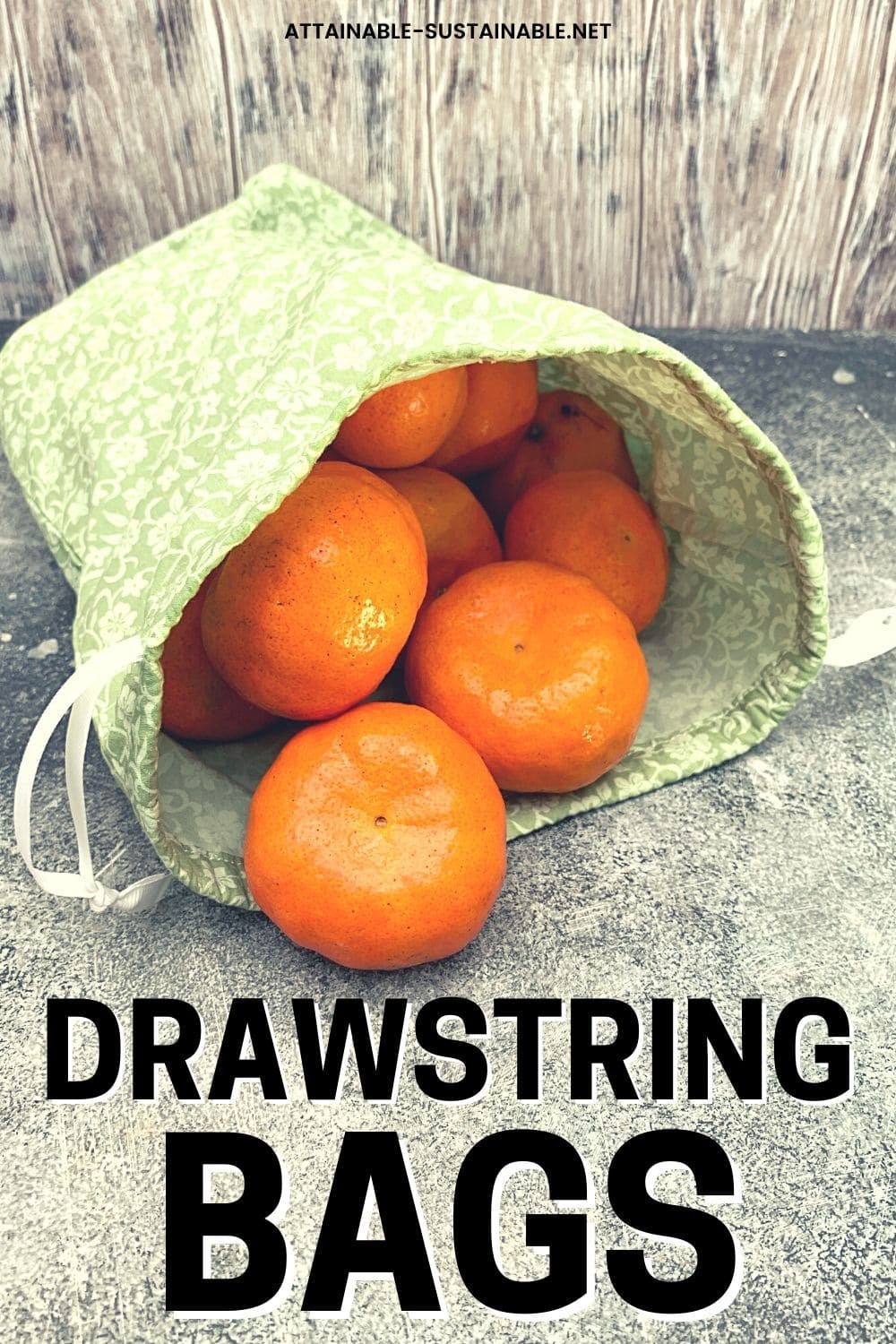
DIY Produce Bags
You won’t need those flimsy, single-use plastic produce bags from the supermarket when you make some of your own reusable produce bags.
For the purpose of purchasing produce, you’ll want lightweight fabric that doesn’t add much to the weight of the fruits and veggies you buy.
I’ve made some from upcycled sheer curtains; lightweight bed sheets would also work.
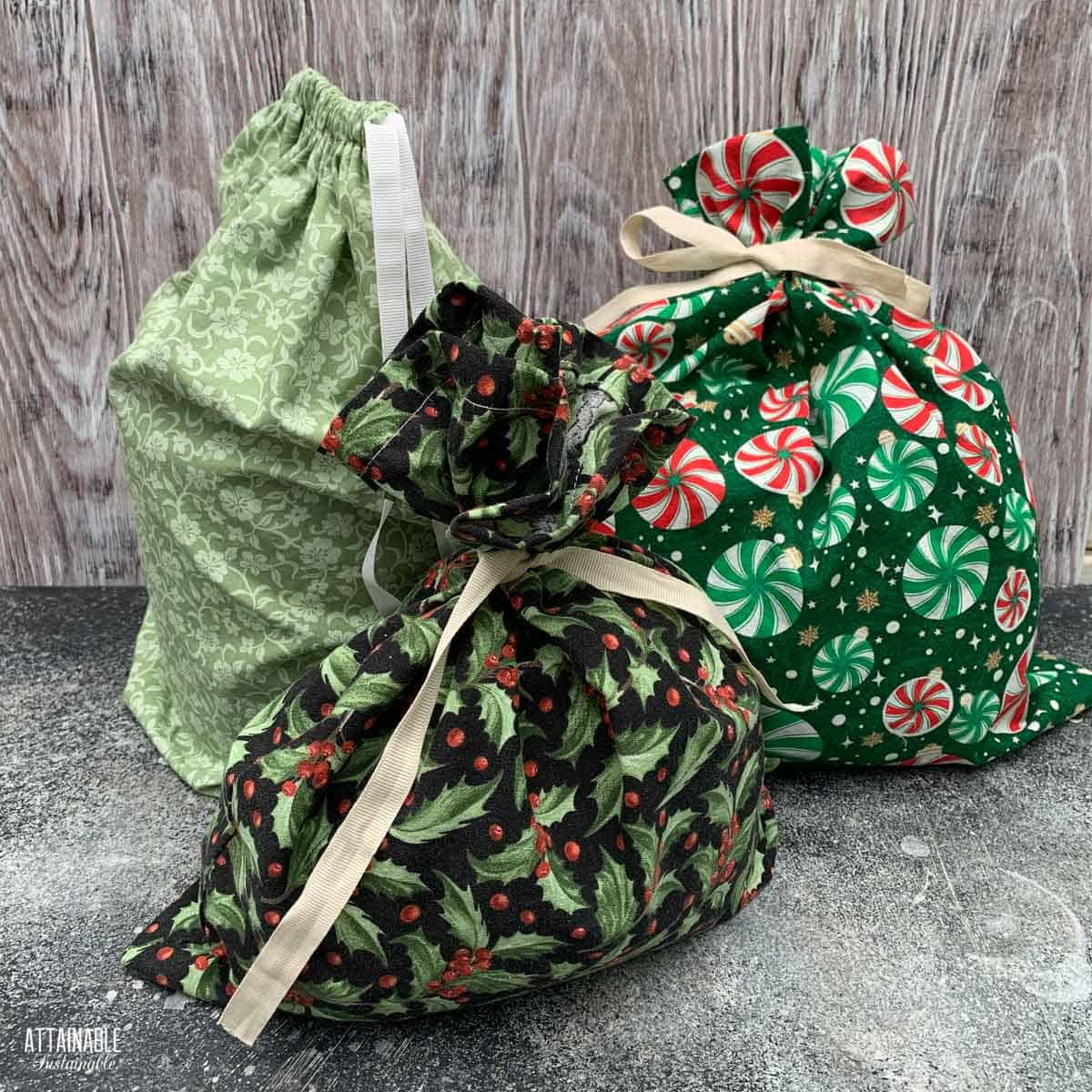
DIY Fabric Gift Bags
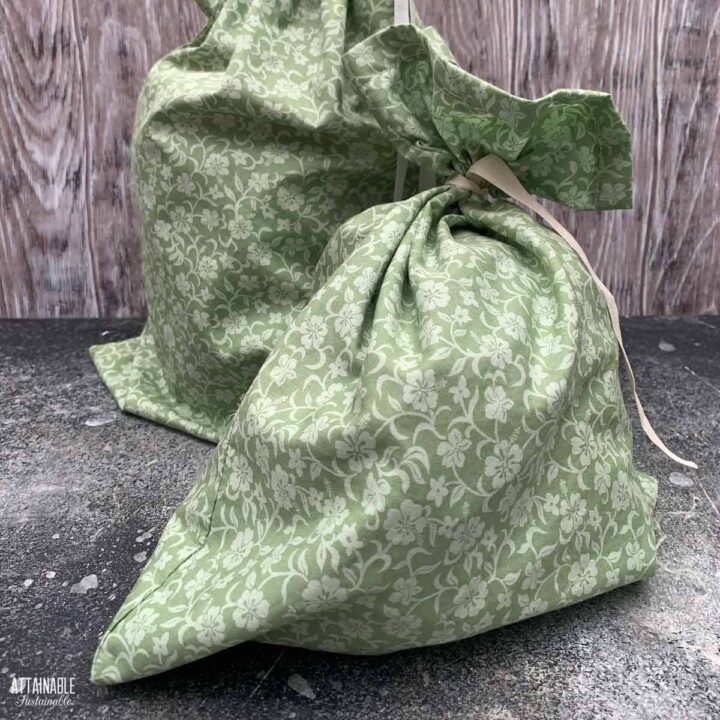
These bags are also great as reusable gift bags to replace wrapping paper. Gift recipients can add the bags to their wrapping paper collection, and maybe they’ll decide to adopt this less wasteful way of wrapping, too! These bags are especially useful for wrapping bulky items.
Choose a heavier, opaque fabric to make DIY gift bags so that curious eyes can’t peek and see their Christmas gift.
Storage Bags
My kids always loved to have containers to sort things into. Choose some fun fabric and go wild. Denim is a good option here, too, though the thickness of the fabric will make the French seams difficult to sew.
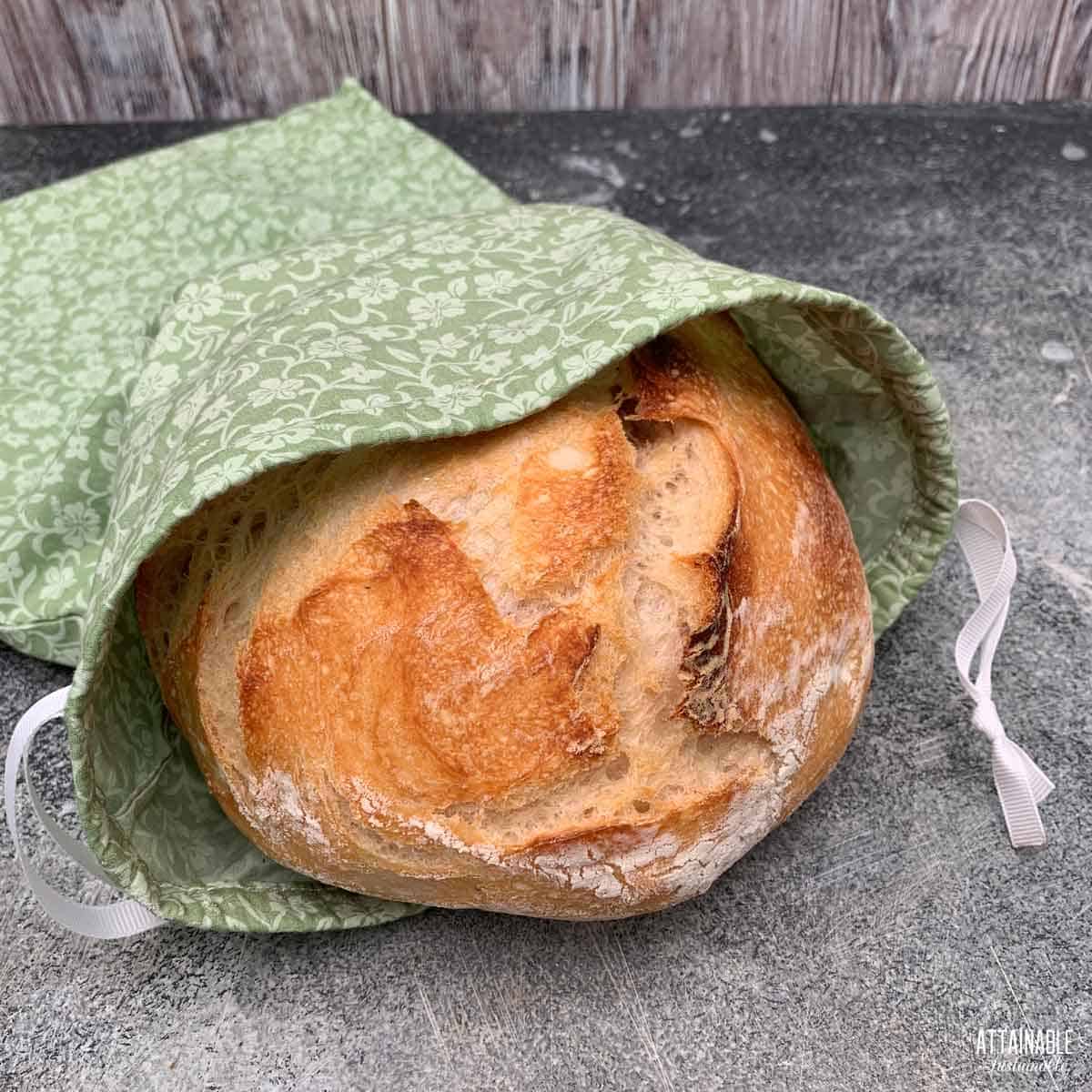
Cloth Bread Bags
Not to be confused with these linen bread bags for storing bread, these simple cotton bags are my solution to sharing loaves of bread with friends. Tucking loaves of homemade bread into these bags is a great solution for keeping the bread packaged for transportation.
Varying Sizes
These instructions can be followed to make large or small cloth bags, depending on how you plan to use them. A 12″ to 14″ inch square bag works well for rounds of bread and for buying produce, but you can make an enormous bag following these same directions if you have need for one.
To Make the Bags
Determine the finished size of the bag you’d like to make, adding about an inch to the measurement for seam allowance.
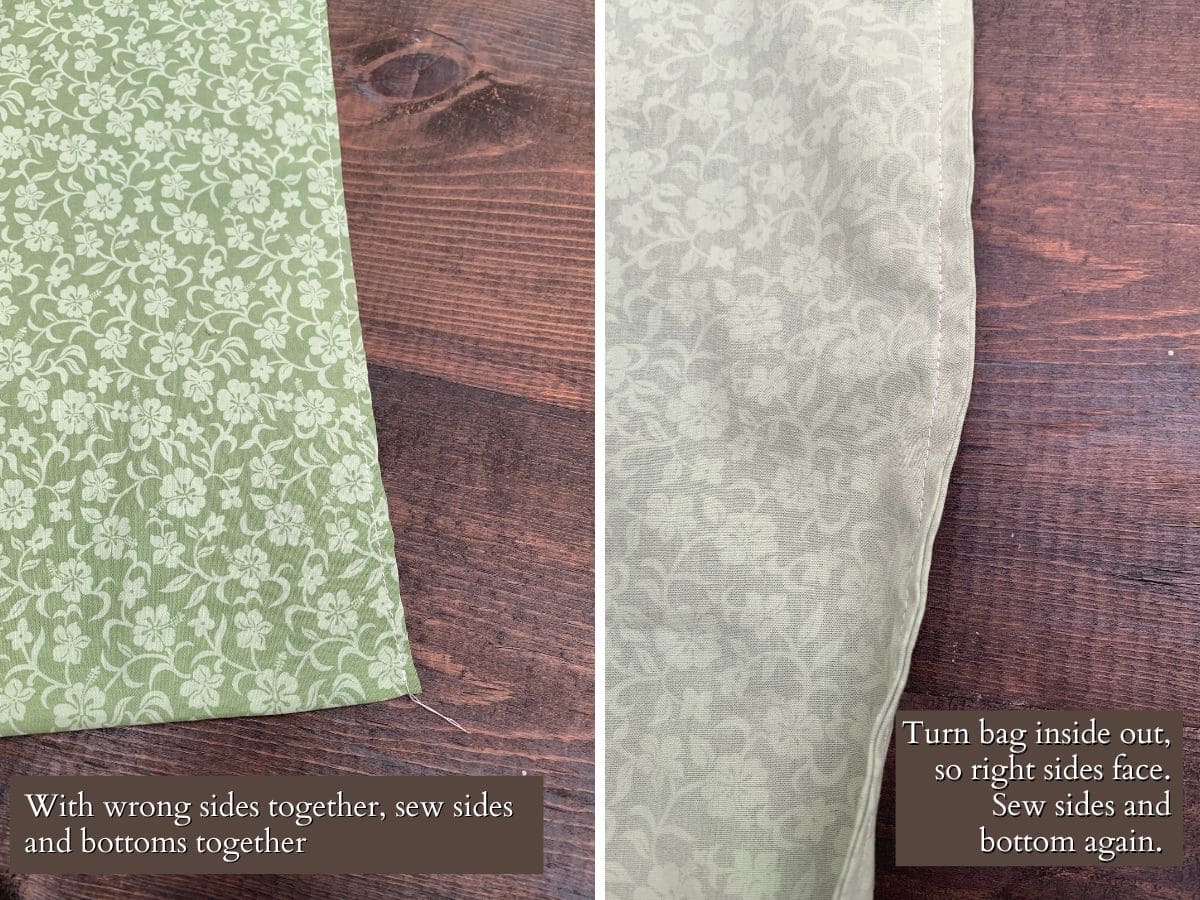
With wrong sides facing, sew a straight stitch along three edges using a 1/8″ seam allowance.
Note: this goes against everything your sewing teacher ever told you about starting with right sides together. This is called a French seam. By sewing this way, all of the fabric’s raw edges are secured, preventing fraying.
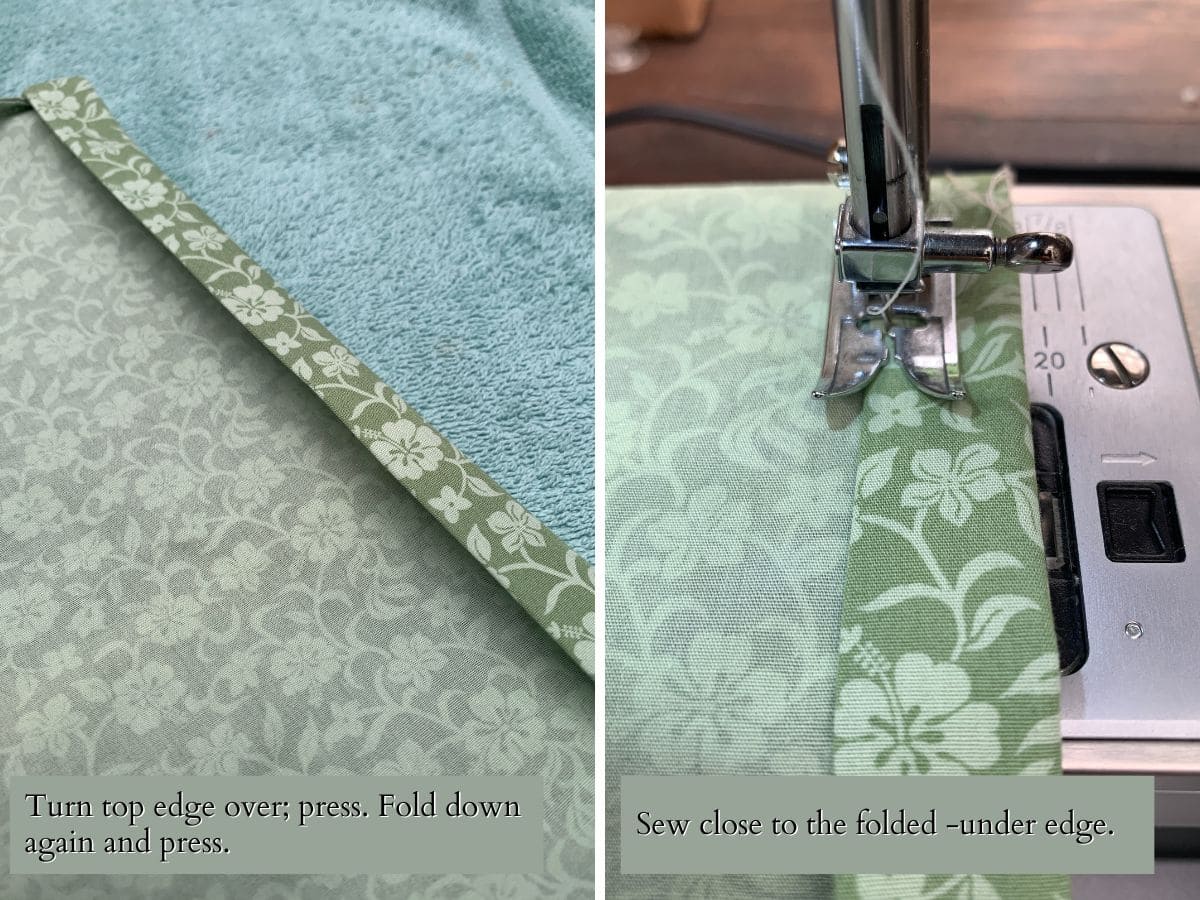
Turn the bag inside out and turn down the top edge, and fold over twice.
At this point the bag is done. You can simply use a ribbon to tie the bags closed, but if you prefer drawstrings, it’s easy enough to do. If you want to make this a drawstring bag, continue with the next steps.
DIY Drawstring Cloth Bags
Use your scissors to carefully snip a 1/4″ cut in the outside of the drawstring casing. Do this twice, on opposite sides of the bag. (It’ll be easier if you avoid making your snips near the seams.) Make sure you don’t accidentally cut through both layers of fabric.
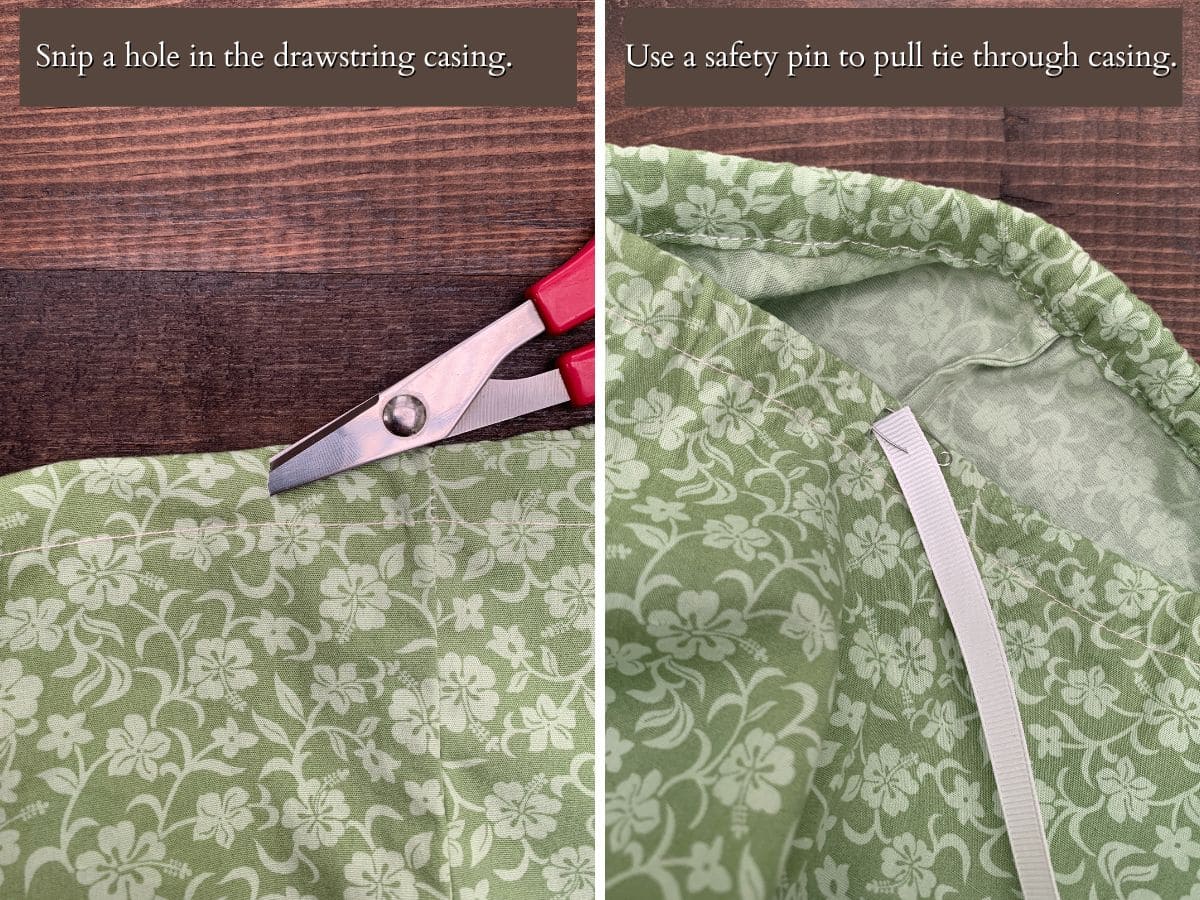
Cut two lengths of cording or ribbon twice as long as the width of the bag plus six inches. Pin a safety pin to one end of the cord and use it to pull the cord into one opening, all the way through the top hem, and out the same hole.
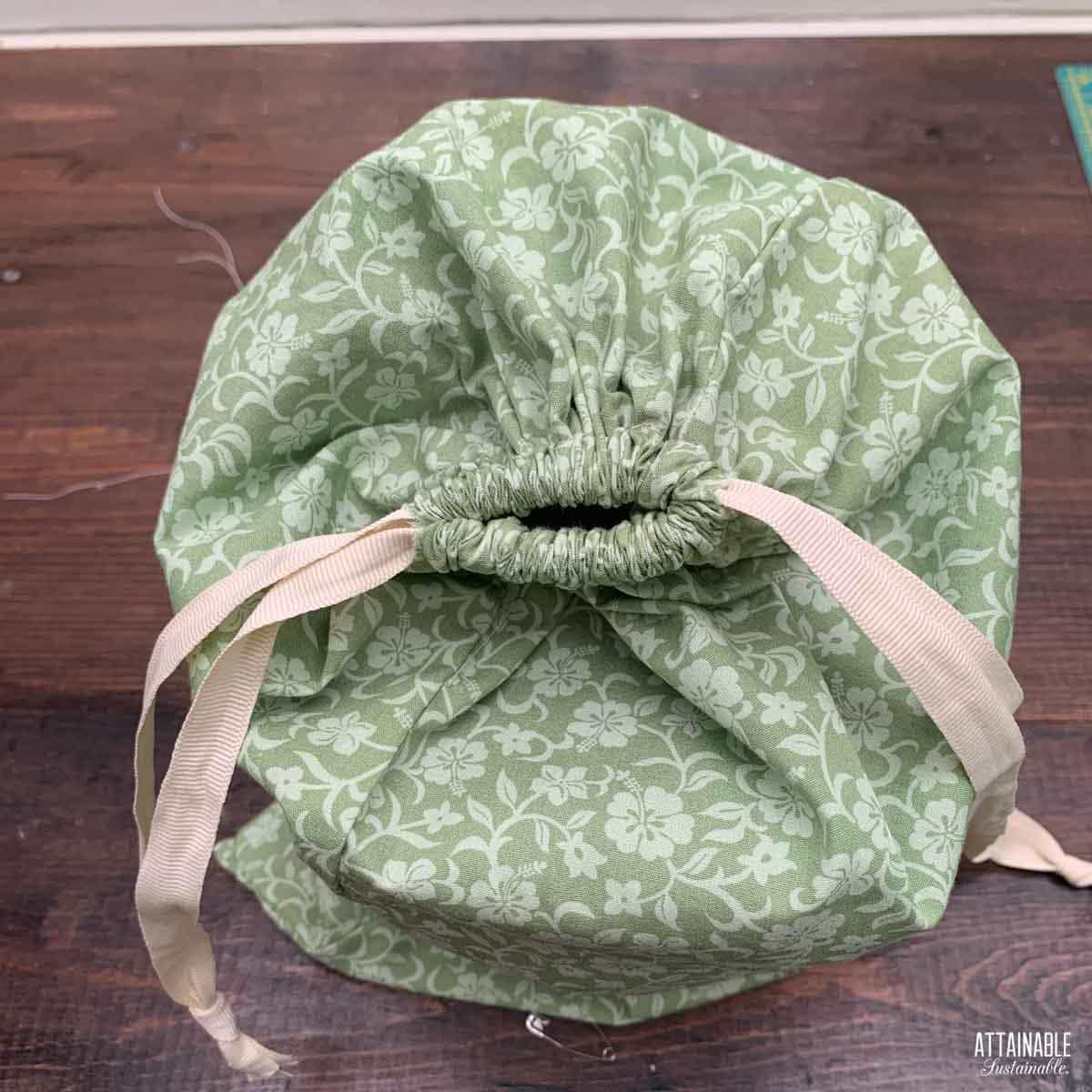
Tie the ends together. Now do the same thing with the hole in the opposite side of the bag.
When you pull both cords simultaneously, the top of the bag stays closed without the use of a twist tie, making it suitable for carrying produce or bulk items.
DIY Drawstring Bags
Use this easy bag tutorial with a lightweight fabric to purchase produce or choose a festive fabric for Christmas gift bags - tie on a gift tag and it's ready for giving.
Materials
- Fabric
- Thread
- Ribbon or cording
Tools
- Sewing machine
- iron
Instructions
Making the bags
- Start by cutting two pieces of fabric the desired size of your bag, plus about an inch for a seam allowance.
- With wrong sides facing, sew a straight stitch along three edges using a 1/8″ seam allowance.
- Turn inside out and press seams. Now use a 3/8″ seam allowance to again sew all three sides. This seam -- called a French seam -- is essentially securing the loose ends inside of the seam.
- Turn your bag inside out and hem the top edge by folding the fabric over twice (about a half-inch each time) and then sewing around the edge.
- Turn the bag right side out. The bag is complete and can be tied with a ribbon or cording as a closure.
Adding a drawstring
- Use small, sharp scissors to carefully snip a 1/4″ cut in the outside of the top casing. (See image in post.) Do this twice, on opposite sides of the bag. (It’ll be easier if you avoid making your snips near the seams.) Make sure you don’t accidentally cut through both layers.
- Cut two lengths of cording or ribbon twice as long as the width of the bag plus six inches. Pin a safety pin to one end of the cord and use it to pull the cord into one opening, all the way through the top hem, and out the same hole.
- Tie the ends together. Now do the same thing with the hole in the opposite side of the bag.
- When you pull both cords simultaneously, the top of the bag stays closed without the use of a twist tie.
Notes
Instead of cutting two separate pieces of fabric, you can fold the fabric and cut one piece. For a 12" x 12" bag, for instance, you'd cut a single piece 12" x 24" and fold it in half, using the folded edge as the bottom or one side of the bag.
Choose a lightweight fabric for making produce bags or a sturdier cotton for gift bags.


It would be good if the material were opaque so that cashiers can read the bar codes at the register. I do hate those flimsy plastic bags at the store though!
Sad to say I do have sheer bags I purchased and they stay in my cooler side pocket. This is a gentle reminder to take them with me into the store.
thanks.
I love the idea, but wonder if I could make it somewhat see-thru, so the produce can be seen at check-out. Any ideas on what I could use as fabric?
I’ve used reuseable produce bags off and on. Trying to remember to bring them into the store is the hard part for me! I should definitely use them more!
I am always looking for ways to reduce my use of plastic – I will make these bags!
I do not have (or know how to use) a sewing machine.Thsi strikes me as a porject I could get inot for a quiet bit of hand sewin sometime though. I remember to take my bags to market bu stashing them in my backpack or other bag.
You are awakening my latent homemaker! I’m 20 years late to the party, but you have inspired me! So happy I found your website, not even exactly sure how that happened, but grateful it did! <3
I’ve never made or used drawstring bags but I’ve made other things.
I am making reusable fabric shopping bags for my co-workers christmas presents in the colors of our double hull canoe – yellow, white and green. I did card weaving in the iwa pattern for the bands to use in the handles in green and yellow. The bags are also lined in a yellow, white and green vegetable pattern fabric. They are going to be very surprised ;o)
I have had this page bookmarked for a rainy day project with my girls ❤️ I only use reusable produce bags ❤️
I keep my cloth grocery bags in a big one hanging on a nail to the back door. That way I can grab them as I head out. I also like to the produce bags made from the lightest weight material I can get my hanks on….no reason to pay for the weight of the cotton bag.
Hi Kris,
I’ve been using cloth bags for years. I don’t like them much though, because they are made of cotton(great) that is on the heavy, thick side.
I think I’m going to start searching for cotton batiste to make a batch of these bags. Lighter weight, partially see through……
Thanks so much for the info in this post. I always look forward to getting your next email. And, BTW, thank you so much for this contest which gives me a chance to win some marvelous things, especially your book.
I love the fabric with the chickens! It would make lovely napkins and a bread basket cloth for the kitchen table, to coordinate with fresh eggs!
I might even get my kids to make, getting ahead of myself again, use one of these bags! Great tip!
Ohhhh I bought some of these at Target last year but would LOVE to make some for holiday gifts and the keep out stockpile supplies for grocery store runs. Thanks Kris!
I was lucky last Christmas, when my friend made these handy produce bags out of thrifted cotton . So nice and I’ve used them as gift bags too. I wash them after use and leave them in in my basket by the front door.
I have made some of the produce bags and they are great. Because of the pandemic I also have made a lot of masks, some being made from xl men’s plaid shirts from second hand stores.
Time to pull out my sewing machine! So many uses for these simple bags!!
I’m so glad I saw this. Never thought about using sheer curtains as bag material. Love that idea especially for lighter items like herbs and limes. Thanks for a great idea.
I have older sheer curtains, I now what to do with them! Thanks! Sewing machine is up for masks, so great time to do this.
I made a bunch of reusable totes in different sizes for the grocery store a few years ago. Unfortunately, due to the pandemic, we haven’t been able to take our own bags into the store for the past several months. 🙁 Hopefully we can get back to normal soon!
Hmm, I never thought about turning any bag with a hem into a drawstring bag. Great idea!
I use these bags all the time; they work well in that the veggies and fruit are even fresher than when kept in plastic, which can create too much moisture and rot them quicker.
Another great project to do with kids.
My goodness
You have such good ideas and imaginative ways to reduce waste ! I am simply captivated by every page I open on your website!
You have been inspiring me every day and step by step in my journey about Attainable Suistainable
I have been wanting to try reusable produce bags. How do you keep fruits and veggies fresh in the produce drawer? I reuse my plastic bags (from grocery store) especially when I get my CSA box or go to the farmers market. What are good ways to prevent wilting without plastic bags? Thanks!
I have not yet remembered once to take the bags into the store with me yet. I have purchased 40+ pretty food organic pictures reusable bags. If I could I would make phone alarm or my car alarm sing in my favorite wake up tune, ‘Remember to take the resusable bag in the store with you. Have a great day!’ whenever my phone GPS sees I am at my regular grocery store stops… dreaming of that day… lol.
Kris, your work is AMAZING and INSPIRING! Thank you so much for all you do!
Forever leaving them in the trunk of the car— great idea to make your own, thank you!
Thank you for the reminder. Reusable is definitely the way to go.
Thanks for this nudge. When I moved, I lost some of my reusable bags. Now that I work at a fabric stoee, I have little excuse not to make my own replacements.
I’ve made some of my own from some cheesecloth I had in the cupboard. They work well. I do forget to take bags a lot but I just stack it in the trolley and pack everything in the car without bags and the use my bags at home to unpack the car.
Thanks for the ideas, encouragement, and chance to win your book.
I like the idea of using sheers to make the bags so you can see what is in the bag
I’m only a beginner sewer. However, even I will be able to make drawstring bags for more than produce after reading your tutorial!
I haven’t purchased reusable produce bags yet- time to just make some! Also, plan on making fabric gift wrap and gift bags for reuse- these instructions will be most helpful. Thank you. (Hope to win your book, of course, but if not, I definitely plan on buying it.)
Great post! Thank you for sharing. I will begin locating materials to make some produce bags. I have made a similar bag from a terry cloth hand towel to store my lettuce/spinach/green leafy vegies in the fridge drawer. I really like it and know I will enjoy making and using cloth produce bags!
I don’t use reusable bags just yet but am thinking about going that way soon.
These bags look like a great idea! I also reuse my grocery plastic bags.
Even I can follow these instructions… now as to the remembering issue !
Reusable storage bags are the bomb!! LOVE them and can’t wait to make some of these!!
Love this idea.
This is a great idea- the gift that keeps on giving because they get to resuse the bag !
I’m all about the reusable bags! I keep several in my backpack so I don’t have to wonder where they are when I need them.
I have reusable bags of a few different sizes (use the largest to hold them all) so it’s just one bag to add to my favorite canvas shopping tote. I love having fun prints and designs so that I want to show them off when shopping!
I do not already use these cloth shopping bags but I see they are really easy to make and I will keep them in my car in the door pocket. Neat idea!
Love using reusable everything. These were fun and easy to make!
The Make section certainly has my attention. We use reusable bags regularly.
These look great! I may not be able to sew a straight line, but I’m up for the challenge!
The bags live in the car, and always have to return there or they don’t get used! I love the idea of making reusable gift bags!
I don’t have asewng machine. I will shop at Etsy!
Unfortunately, at the moment, all the stores around us have banned people from bringing in their own shopping bags. These look really nice, like the bags I used to make as a kid with my grandma for all kinds of things.
Aloha Kris, I have been making my own bags out of worn-out t-shirts for over 20 years but I love your idea of making them out of sheer curtains. I would think tulle might also work & it’s light weight.
What a great project for a new machine sewer with an older Singer machine! Though reusable cannot be used now due to the pandemic, I will have time to gather supplies and learn to machine sew!
I don’t know how to sew, wish I did. But I do have some fabric that I plan to use for gift wrap, per your suggestion. Thanks!
I have lots of reusable bags. I use one of them to hold what I think I will need in the store plus my coupon folder. It has become a habit to grab this bag when I go shopping.
I *love* using reusable bags and I’m super excited to try out your drawstring bag pattern! I’ve got some sheer-ish fabric ready to be upcycled and produce bags would be perfect!! Awesome idea!! I can’t wait to have your book in my hands so I can do so much more!!
Wow! There are so many great things you offer in your book!! I cannot wait to try some of your ideas. I have several reusable produce bags and now I’m gifting some to my family members. If I need more I now know how ot make some! Thank you!
We use reusable shopping bags and produce bags. For a long time, my mom had planned to knit her own produce bags, but we’ve all been so busy. So instead of DIYing, I broke down and purchased some fabric mesh produce bags. My mom can still get around to knitting/sewing her own, but in the meantime, we don’t have to keep using the plastic ones from the store and feel guilty/like a failure every week because of not getting around to making our own.
As far as how we remember to take the produce and tote bags with us to the store, we keep them in the car. For a time, we weren’t allowed to bring in our own bags, because of the pandemic, but for now, we can. (Although, with cases rising, they might temporarily dis-allow it again.)
When we arrive, we take them out of the car and into the store with us. When we get home and unpack, we fold up the bags and put them in a pile near the door or where we can easily see them, and the next time we go out to the car, we take them with us.
Great ideas, thanks!
I was already planning on upcycled cloth napkins for my sister for Christmas. Now she may get some bags too (depending on how much fabric remains).
I love this idea because it is quick and simple. You can use your old favorite pants or shirt you no longer wear so you have more use with them too.
This is a super idea – we have to use store bags at the moment due to the Virus but that leaves plenty of time to make some of these before we get back to normal. Thanks for this idea, this is really one to pass on to everyone.
This is a good idea especially if you are shopping at a farmers market. They can hold veggies & fruits to be put in market bags eliminating the need for plastic
I have not made any homemade ones yet but I love the thought of making some really cute ones. It is really hard to remember to take them to the store with you. I try to set them on my car seat as a reminder.
I love the idea of making my own produce bags. I have had some in an Amazon cart but why not make my own?! Possibly a fun project with my son over the holiday break!
These reusable material-made produce bags looks really cool. That’s a pity that I’m not really sewing machine person. I have one but used it long time ago. I prefer knitting . I’m looking for tomorrows beeswax ideas as I have a lot clean beeswax from our beehives.
Love the idea of making reusable one of a kind gift bags! I’ll have to go thru my fabrics and find something festive to use for Christmas gifts.
This is a great idea. I will be making more than one of these bags.
I already use reusable shopping bags, now I can go further & make use of all reusable grocery bags!
I do use reusable produce and bulk good bags, or at least I did prior to the pandemic. I keep them in my reusable grocery bags, in the car, so they are ready when I (used to) go in the store. Now that we have our groceries brought out to the car, I reuse the plastic baggies for storage and, eventually, for scooping the litter box and then discard. Your book has so many great ideas!
We have been using the nylon produce bags for a couple of years now
This would be so handy and cut back on the plastic.
These reusable produce bags would be so much better than plastic bag. I’ll have to try making some.
I have decided to get my sewing machine fixed. These bags will be the first things I make.
If you make these from a cotton bed sheet you are able to make a lot of bags at little cost. I think reducing plastic is very important to everyone’s future.
Yes, I use fabric bags when I can. Some of the things I buy still come in their own bags… but I try to avoid buying those products as much as I am able.
I have not made or used cloth bags for produce. I still use plastic bags, but try to reuse or re-purpose them. Does produce keep well in cloth bags?
Hi! Would love to win your book! Thanks for being so generous!
These are cool !
This is a great idea to share with my daughter. We can use our creative time to make this project, that will benefit us far into the future. Thanks!
I HATE grocery store plastic bags. Most of them don’t hold up to my grocery load. I have a lot of material to recycle in my rag bag. I don’t really enjoy sewing but, these instructions look pretty easy. I think I will give this one a try. TY for the inspiration.
Hi, I’d love to enter your great giveaway! Keep up the inspiring work!
I hate those cheap plastic bags! I have made several bags for the grocery store and now we can’t use them due to corona virus. Sometimes I take the groceries to my car in the cart and bag them up there. I do need to make the smaller bags for produce when we are able to use them again. I also make bags for “wrapping” Christmas gifts and they get reused by family members for the gifts they give. My grandchildren call me the “bag lady”. I think they are being funny? lol You have such good ideas!
I love using reusable cloth/fabric bags for both my groceries and produce as well as any time I need to send something with the kids somewhere. Unfortunately in our area our stores are not allowing us to bring in our own bags due to Covid. I’m hoping this changes soon.
The bags would be a cute way to “wrap” Christmas gifts!
Can’t wait to give these produce bags a go. I love getting fabric from Spoon Flower , they have such fun patterns Ok, bought mustard seeds yesterday, today it’s fabric.
I use reusable produce bags, however I haven’t tried making my own, will definitely have to try.
I love reusable bags! Unfortunately, due to Covid, the stores in my area aren’t allowing them at the moment. Breaks my heart
Love the idea of reusable bags, I hate the plastic ones. Really great gift idea, thanks!
This is a goal of mine in the new year. I always remember reusable grocery bags, but forget about individual bags for produce, etc. Thanks for highlighting this post!
I have used cloth bags for years now and love them! I make homemade bread, so some linen bags would be nice to store them in.
Great project that can improve the environment!
I have several reuseable bags for my produce and for my shopping. I keep them in my car so I can easily grab them when I shop. If I don’t have them with me I always ask for the brown paper bags and use them in my garden as weed barrier or compost.
I have some bags I use for all my groceries. But most of the time I forget them at home.
I think I’ll show this to my daughter, as she likes to sew and is crafty.
Yikes I need to get busy to get some of these ready for Christmas gifts. What a great idea. I think I will go to the resale shop and find some tea cups to make candles as gifts.
I love this project; simple and practical! I use reusable bags and once I empty them after going to the store or farm, I put them back in my car so I don’t forget them. 😉
I do take my own bags as in NY you have no choice. I do always forget and go back to the car to get them. lol. I love your tutorials and I will be needing some new bags so after the holidays I hope to make some. Thanks for the chance to win and happy holidays.
This is just like my first ever sewing project as a kid. Nice memories. This is an inspiration to use up some left over pieces of fabric I have too. Thanks
I love that reusable bags are popular enough now to have some really cool designs so I use them as gift bags.
As for remembering to bring them in, I keep them at my kids feet and they all want to be the one to carry the bag so between them we always get the 3 bags in that we need.
When it’s warm enough to walk to the store we keep reusable bags in the bottom of our stroller along with huge caribeaners to clip to the handle bar.
I also won a couple bags that collapse down really small that I clip to the outside of my bag.
Now I just need to check my cloth stash for something light enough to make produce bags from! I don’t use bags for produce usually but it would be really nice to keep everything together instead of rolling away.
We use ours at the green market stands. We use them to get fresh bread and produce from stores. We buy bulk grains and nuts in these. Store baby treats for long trips. So many options
I love the idea of using sheer fabric so I can see the produce! But I think I am going to make some with Christmas fabric to use as gift bags! Thank you!!
I’ve been using fabric grocery bags and mesh produce bags for a few years. I often forgot them in the car until I made a firm rule with myself that if I forgot them I had to go back and get them. A few trips back through the rain made me better, but not perfect, at remembering.
I love the book! I checked it out from the library and then could not make myself return it until I bought one of my own.
We use the reusable bags for groceries, we wipe them down every time we use them and they go back into car immediately. We found this works best for remembering them. I also hand wash them completely once per month.
I usually for get the small produce bags I made. When we do use the plastic ones they go in to be used for liners in home small trash cans.
Having just recently thrifted a vintage sewing machine, I am beyond excited to get it tuned up & this is definitely going to the top of my project list! Although picking out fabric is fun, I love that you mentioned upcycling fabric! Such a good idea to use this for gift wrapping too 🙂
I try to use reusable when I remember them. Lol. I keep them in my trunk at all times but we end up driving my husband’s car.i would it some in there but his car is a disaster of hunting things, work things.
Love this and appreciate the detailed instructions.
I love using fabric bags for shopping! They’re usually so much stronger than paper or plastic bags, plus you can make them with fun designs and patterns. The trick is to remember to bring them into the store BEFORE getting to the checkout (oops!)
Creo que poco a poco el mundo está tomando conciencia de no seguir contaminando con el plástico, por lo que a mi respecta, uso bolsas de lino.
Saludos y felicitaciones por tu afanada contribución.
I can’t live without the fabric bags I make. I use them for everything from all kinds of groceries, to pet, sewing, crocheting needs to totes for daytime outings. Love, love them!
I will definitely be making some of these! Right now our produce just sits in the cart I bagged. I won’t be able to use them until the COVID rules allows us to bring our own bags again. We currently have to just put the groceries back in the cart and bag them when we get out to the car because they are only allowing single use paper or plastic.
I don’t have a sewing machine but when I do get one these bags would be a good stepping stone to start with.
You have super ideas! I carry my bags in my car so I don’t forget them and then leave them on the back seat, forgetting to take them with me into store.. Now I do most of my shopping at Aldi’s. They do not provide you with any bags. So I try super hard to remember to take them with me.
I guess I’m not a savvy shopper. I guess you make multiple bags to shop with so that each kind of fruit or veggie that you buy can go into its own bag for weighing at the register?
Otherwise, you’d have to dump the bag at the register or weigh ea. type
of item separately.
At my age, you would think I’d have this all figured out by now.
These are so cute! I know what everyone is getting for Christmas this year. They would be useful for shopping, too.
Used to always use reusable bags. Most stores don’t allow it now with covid.
This might be about the level of sewing I can achieve 😉 I would like to eliminate those plastic bags from my life, so I’ll have to try this one!
I will be making these bags! I make my own bread and this would be a perfect way to store it! Tks
I’ve used reuseable net bags for produce for a long time. Except when they wouldn’t let us use our own bags due to Covid19
I love my reusable bags! I’m always on the lookout for new ways to use up my scrap and extra bits of material and eliminate disposables. I use the bags as wrapping paper as well and, given the season, this is a good reminder I need to get some bags made!
Love this. These are quite functional. Use mine all the time.
I have a reusable bin that I keep my reusable bags in. I keep the bin in the back of my car and immediately after putting my groceries away, I put the bags back too. A little extra step but worth it the next time I’m at the store!
My daughter crocheted a produce bag for me. I’ll make some like yours out of Muslim I have stashed.
Great! Thanks for reposting this. Time to find some fabric scraps.
Yes! I love these! I will definitely be making some. Although I do reuse the plastic bags in lots of ways. They add up quickly though. Will be fun to use cute fabrics!
Reuseable bags are stronger than the cheap plastic ones the stores use, so you can fir more in a bag – carry fewer bags. Even double bagging will not stop a 2 liter bottle from ripping the handles off a cheap store bag.
I do not use re-useable bags yet, buy I plan to start soon. Thanks for this tutorial!
I use fabric bags for shopping, but haven’t been able to in months. Most stores won’t allow it because of Covid. Aldi still does and many stores if/when you pack your own groceries.
Hello, y’all! Unless last year and the years prior when I went shopping as needed, this year I go to the store only once a month. That means one month I let them bag me up with plastic so I can use them for different things at home and the next couple months I can use cloth bags. I keep them under the front seat, always. Those bags have picked up quite of lot of rocks and foraged things as I drive some days.as soon as our baby is 3 or so years old I will pull Old Nelly from her case and whip some of these up. I have been inspired! This will go to the top of the list keep in her case for whenever I am able to bring her out. Have a fabulous day, y’all!
I like this idea. But since crocheting is easier for me, I’ve crocheted several market bags. I love using them.
I wish I had more sewing skills! I hit a mental brick wall when it comes to it. I did purchase some reusable produce bags or just go completely bagless at times. It feels like I’m doing something wrong at the store Since no one else really does it. I’ll keep doing it though!
I currently already use reusable bags! There were plenty of of times I had to run out to the car to grab them before I built up the habit of always having them. We move to Japan come the new year and reusable bags are HUGE there so I’m looking forward to that change!
Another fantastic way to reduce the use of plastic. I have leftover material from the “old” days of quilt making with my grandmother and mom. It will be put to good use. As an added bonus, I’ll be carrying memories with me to the market. Thank you, Kris!
I’ve used fabric bags for awhile. Our state banned plastic but…due to Covid we can’t use reusable bags now!! We are forced to use plastic!!
I’m going to make some of these for Christmas!! Hopefully we’ll be able to use them soon!
I have started using reusable bags for everything! I bring one to work every day. I have another one that has turned into a sort of…well..junk purse! lol
I just found some old fabric in the attic, and this would be the perfect project to use it up and make some gifts!
Yes, That is the hardest part to get them back into the car! I try to hang them on the door knob after I unpack the groceries and sometimes I remember…❤️
Thanks for the pattern!
I been shopping for these. Would be great if I would win these
Great idea, any helpful hints on how to remember to bring them with you? I’m always forgetting to bring my reusable bag for groceries.
You are an inspiration. Your helpful sustainable tips are helping me (baby steps) change the way I live.
Thank you.
Chris “butterflywiings” Judd
This is a great idea! I already use fabric bags, but the drawstring on these is a handy addition. I keep my bags in my car and have made it a habit to take them into any store. Sometimes I forget, so I just refuse plastic bags and carry everything out. Once to my car, I bag in my fabric bags
I haven’t used cloth bags but I like to crochet and have made many market bags for myself and friends.
These are great. I think I’m going upstairs to whip some out right now for Christmas gifts.
Great idea, will start off making one of the linen bread bags!
These are so useful for everyday grab and go. I have a bag of bags that I take with me to go shopping and try not to use the ones the stores provide though Covid has changed that quite a bit. Check out your farmers markets as there are often people who make these and have them available.
Thank you for this! I will try my hand at making them this weekend. Not great at sewing but I’m learning 🙂
Love these bags and can’t wait to attempt to make some:)
I am a beginner when it comes to sewing. Cant wait to try these. Thanks for the chance to win.
Great ideas!
I’ve been trying to find a way of wrapping gifts with less waste and these look like the perfect solution! We can reuse them every year and make them as fun and colorful and we want!
I can’t wait to get into my new house and unpack my sewing machine so I can make some of these!
yes, I use them and I also have made them. I make small ones for spices too to buy at the bulk store! Thanks for the chance tow in! #birthdaymonth
I don’t know if produce is sold differently where you shop but where I shop it is mostly sold by weight, that is to say the cashier put it on a scale that is already set up to subtract the weight of the bag. If you use a material that weighs more than the plastic bag you will pay for that as well. Any solutions out there? Anyone found a material that weighs as little as the plastic bag?
I like the “sheer” fabric that curtains are often made of.
One other thing you can do is leave the drawstring out. I just loosely tie the top to keep the produce in the bag. Mine are made of sheer fabric I found at a thrift. Just a thought! 🙂
Yep, that would cut out a step!
I use these kinds of bags — they sell them made from organic cotton at our Co-op. But my one problem is that I can’t SEE inside them. Don’t get me wrong, I don’t use the plastic produce bags. I hate them. But the other day I bought bagels and then FORGOT about them, b/c the cloth is not see through. I will make them into bread pudding tomorrow (yum). But my 10-year-old who’s been wanting bagels is out of luck (sigh.)
Your readers might be interested in this post:
https://jennifermargulis.net/blog/2012/01/what-trying-to-eliminate-packaging-has-taught-me-about-marriage-life/
I’m not a sewer, but you make this look pretty easy!
Great idea…these remind me of the gym bags we made many (many) years ago in “home ec!”
It seems most people don’t realize you mean these bags to be used as keepers of the produce in the fridge….
To everyone above who thinks these are for you to take to the store and put your produce in them before taking to the cashier… the weight of the fabric and the cord will make a difference at checkout in the price per pound or ounce….so these are for when you get the produce home and get ready to store them in the refrigerator.
Your produce will last longer and not get slimy as easily.
Actually, Sonia, that’s not true. I DO mean for people to use them to purchase veggies/fruits at the store. The weight of the fabric might make a small difference at the checkout, but it’s a price I’m willing to pay to avoid those plastic bags. Note that SOME stores will pre-weigh your bags and mark them with a tare weight so that you pay only for the produce, not the bag.
I just have them tare the weights before filling them with produce. I do the same thing with my mason jars for bulk items. They just give me a little sticker on it with the tare weight so they can adjust the price at checkout. And once I have the weight for a container I can just mark it with permanent marker so it doesn’t have to be weighed at the next trip. Easy peasy!
Where are you shopping that they will do this… and do you go to the cash first and then do your shopping or do you empty the bag have then have them tare then fill it back up?
I use the plastic produce bags, sometimes. In general I don’t. However, in the event that I do, those bags are repurposed. Mostly for something that is going to the trash (cat litter) but they make great mini “mini green houses”. I do have a couple cloth produce bags that I do use. Lol they are those bookbag things my kids use to use.
Right? you don’t need those plastic bags. Most times my veggies go in the shopping cart without bags. Or from the farmers market. I sometimes put my tomatoes in my coat pocket to keep them from getting bruised. I have these great produce shopping bag like the bags people crochet, that is what I put my produce in from the market or store.
Have you encountered the checkers giving you a hard time at all when you use these bags. I’ve found even with my reusable grocery bags some checkers are better about taking them than others.
Fantastic post. I love cloth bags and use them all the time now I’ll be able to make my own. Thanks.
I like this idea. I do use plastic bags, and use them over and over and over (the T shirt kind anyway). The bags the way you mentioned, can be also used as a purse or a gift bag. 🙂
I’ve been trying to knit some mesh bags to use for a couple of months (trial and – mostly – error). My hubby keeps telling to sew some, and he is probably right, but I’m set on my method for a while longer.
Roxanne – I bought some of those knit bags and it left marks in the more tender fruits & vegetables. The tomatoes looked like they’d been sitting on railroad tracks, and the marks cut into the flesh in some places.
Thanks, Carley, for the heads-up. If I can ever get a bag to turn out right, I’ll be careful with more delicate items.
I was just wondering today if I could buy these. This is even better. Love it . Thank you.
Check out etsy.com. Pretty sure some folks sell them on that site!!
Would love to win your book!
Yes, I use those plastic produce bags — for what it’s worth, though, I (a) reuse the same plastic bags over and over again and (b) don’t even bag when I have 3 or less or a particular item.
It’s a pain in the rear for the cashier, but it keeps my bagging to a minimum.
I need to make these bags. I need to make them for everyone 🙂
If you make them from organza they will be virtually weightless.
Yes! I have some made from an old airy “sheer” curtain, too.
If you make these from a cotton bed sheet you are able to make a lot of bags at little cost. I think reducing plastic is very important to everyone’s future.
love having reusable produce bags!