
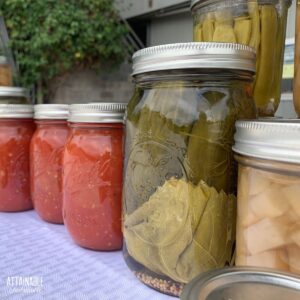
If you’ve embraced home canning and have a pantry full of canned goods, you’re probably wondering about canning storage. How do you properly store all of that home canned goodness for the most optimum shelf life?
Originally published March 2012; this post has been updated.
Prepare Canning Jars for Long-Term Storage
What does this mean? There are some things to consider when putting your home canned goods into the pantry.
First, how long will home canned foods last? There’s not a hard and fast rule about this, or an exact number of days.
The National Center for Home Food Preservation (NCHFP) suggests using canned goods within a year of processing for best quality. That doesn’t mean that the food inside the jars becomes unsafe after a year passes, though.
5 Easy Steps to Transform Your Pantry!
Ready to switch from store bought to homemade? Let me help you make some changes! Grab my FREE five-part guide to getting started.
As long as the food was processed properly and remains sealed, it is safe to eat. The quality of the food in the jars may begin to deteriorate over time.
To make sure you’re using jars of food in a reasonable amount of time, employ the “first in, first out” method in your pantry. This assures that you’re using the oldest jars first.
Choose a Cool, Dry, Dark Place for Canning Storage
Keeping jars cool will help retain the quality of the food you’ve preserved. Temperatures between 50°F and 70°F (10 to 21 C) are ideal.
The contents of jars stored on shelves exposed to daylight can oxidize more quickly and lose some vitamins. They may also fade in color. None of these are safety issues, necessarily, but storing in a dark space improves the shelf life of foods.
Jars stores in humid or moist conditions may develop rusty lids, which can compromise the seal.
Clean Canning Jars Before Storage
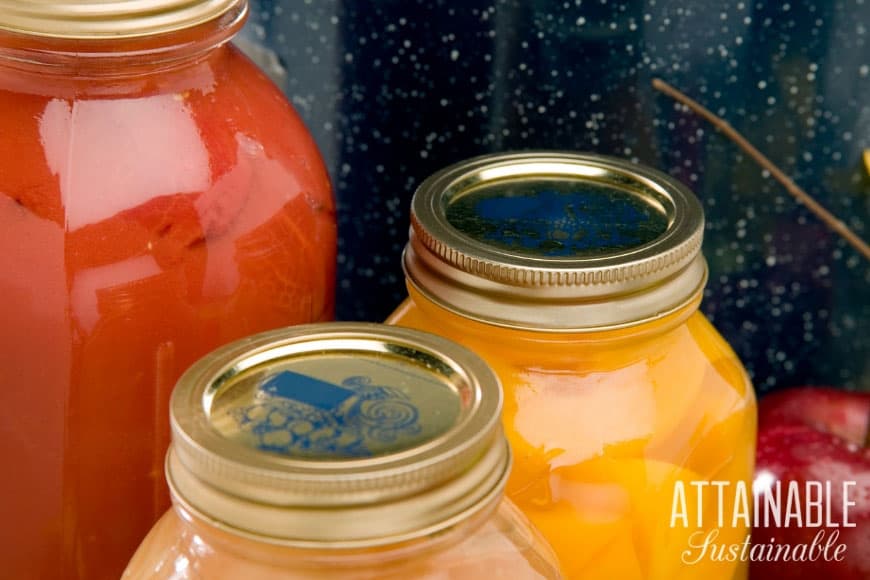
Once jars have cooled, check the seal and remove the rings, then rinse the jars thoroughly to remove any sticky residue from the outside of the jars.
The Handcrafted Pantry
Ready to DIY your pantry with more wholesome ingredients? Check out my ebook, The Handcrafted Pantry! Filled with delicious recipes for some of your favorite condiments, snacks, and toppings, it’s the guide you need to start skipping packaged products and embrace homemade.
Should You Remove the Rings for Storage?
The NCHFP recommends removing the rings for storage, but it’s not a hard and fast rule. I remove rings for storage.
- If there’s a problem with the seal, it will be obvious right away. With the rings on, it’s harder to discern if the seal has been compromised.
- Removing the rings allows me to use those for processing more jars.
If you prefer to store jars with the rings on, be sure to thoroughly clean and dry both the jar threads and the rings before re-attaching them.
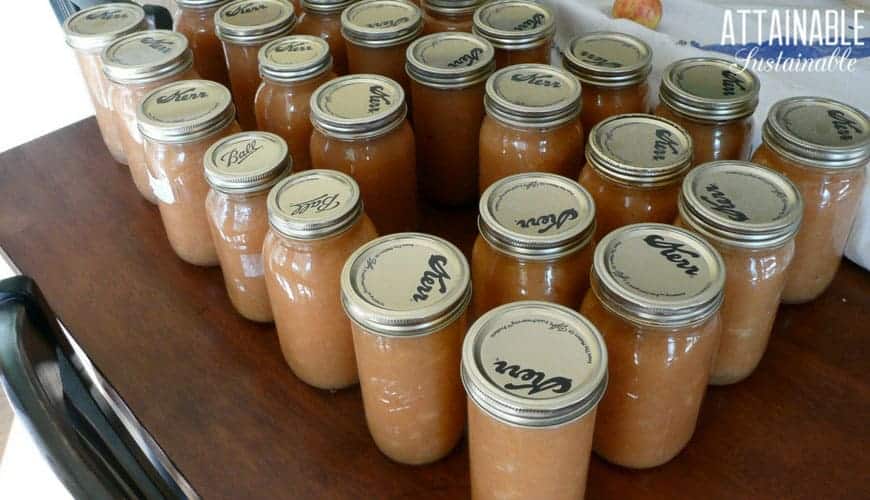
Store Jars Upright
This means that the contents won’t touch the lid for an extended time. Some canned items — tomatoes, for instance — are corrosive.
To Stack or Not to Stack?
Obviously, stacked jars are more likely to fall and break. If you’re short on space and want to stack the jars, the generally recognized safe method is to place a thick layer of cardboard or thin sheet of wood between the layers. Placing filled and sealed jars inside the boxes the jars came in is another option.
This helps to keep the stack sturdier and helps to avoid disturbing the sealed lids of jars on the bottom layer.
Another thing to be mindful of: stacked jars can deceive you into thinking a jar is sealed when it’s not.
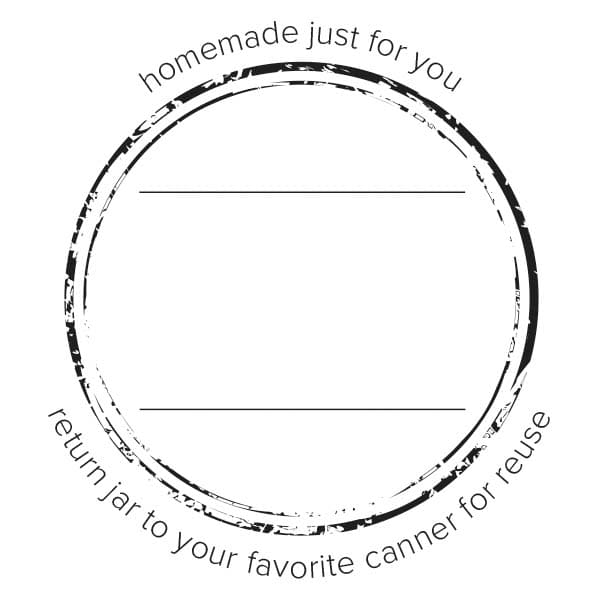
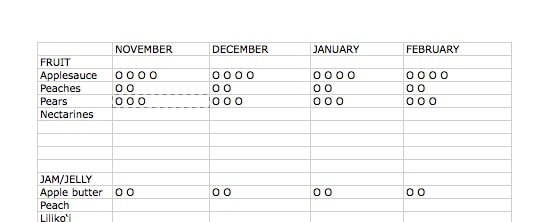
Keep Track
Knowing what’s in your pantry allows you to utilized what’s in your pantry. I use this system to keep track of our home canned foods.
Using this method with my canning storage helps me spread the various canned goods across the winter months, so we don’t end up with too much — or too little — of an item before winter ends.
Earthquake Food Storage
This is an issue specifically for earthquake-prone regions: Safe canning storage when the ground shakes.
A Doomsday Preppers episode once featured a group concerned about the possibility of an epic earthquake. Fine and good to prepare for an earthquake, I say.
But folks, if you’re going to have shipping containers full of food preserved in glass on shelf after shelf to survive an earthquake as these folks did, open shelving with nothing holding those jars in place is probably not a good idea. Storage for canning jars full of your precious preserved foods needs to be more secure.
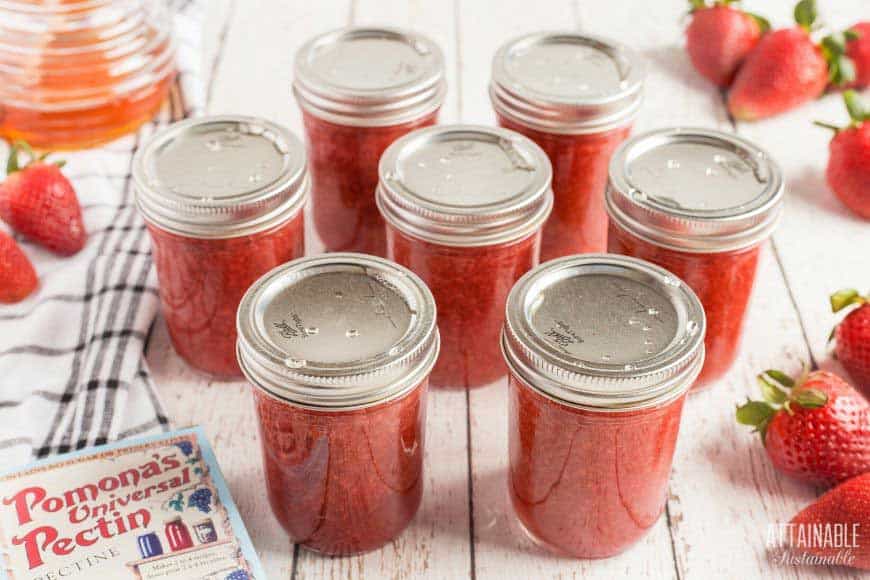
Here are some methods to consider to make your jars a little more likely to survive some shaking:
- Slip each glass canning jar into an orphaned sock before storage. This serves two purposes. It protects the glass from damage, and if there is breakage, the glass won’t scatter. You’ll be able to just pick up the jar inside the sock and dispose of it.
- Store glass containers only on shelves that have doors that latch securely. Shelves closest to the floor are best for this.
- If you’re storing glass canning jars on open shelves, run a 1″ x 2″ board across the front of the shelves to prevent the jars from crashing to the floor in the event of a quake.
- Instead of storing glass jars on shelves, reuse the boxes that those canning jars came in or pack them in boxes with a protective piece of cardboard between each jar. As long as they are down low and not situated below your bowling ball collection, the likelihood of breakage should be minimal, I would think. The space under a bed would be ideal for this.
Now, of course, all bets are off if we’re talking about a really intense earthquake. But for moderate quakes, taking precautions like this may be what you need to feel good about food storage in glass.
More on Food Preservation
- Easy Canning Recipes for the Novice Home Canner
- 10+ Food Preservation Methods to Consider
- Canning Equipment and Getting Started
Sources
- How long will canned food keep?: https://nchfp.uga.edu/questions/FAQ_canning.html#5
- Storing without rings: https://nchfp.uga.edu/how/store/store_home_canned.html

I live off grid and don’t have a basement cellar or garage. So I am storing in a closet right now. But I gave an old refrigerator on my patio. Before I get rid of it could I use it to store my jars?
It seems like that could be a good way to use it!
We just started canning. We don’t have a cool, dark place for storage. We are currently storing them on shelves in our dining room, for lack of a better place (bedrooms are being used). I am concerned about the indirect light and would like to know if you have some ideas on how we can protect our stash, so that it doesn’t degrade too quickly. – Thanks!
If it gets warm where you live, you could consider black-out curtains on your windows. Good luck!
One way to protect canning jars is to place each one inside a 2 liter soda bottle, which has been cut off at the top. You can tape the top back on after inserting the mason jar, and label. Then if it should fall or knock into other jars, they shouldn’t break. This also helps keep dust and debris of the jars, reuses plastic bottles, and keeps those plastic bottles out of the landfill.
Clever.
I have discovered “jar boxes”. All jars are separated and there is a jar lid that fits over the glass jars. Two sizes are available- quart and pint.
I’m hoping this will help with earthquake issues.
These are what I have and I store as many under the bed as will fit. There are holes to tie the top and bottom together. They are heavy plastic but they should last a very long time.
Great idea to store them under the bed.
in regard to earthquake prep and canning >> shelves themselves need to sturdy enough to survive and more importantly fastened down to avoid the entire shelving unit going down …
a big “retaining cleat” like a 1 X 4 across the shelf front will get the job done – but a much smaller one coupled with a bunge cord makes access eazier for everyday use >>> another restraint across the entire shelf unit is a piece of poly snow fence stretched tite …
i was wondering if there was a safe way to store you home canned goods in a storage shed?
Just as you would inside a house, I imagine. If there are no shelves, you can put the full, sealed jars back in their original box, or another box. Just make sure they’re not glass-to-glass.
We live on a sailboat that has a wooden built-in wine cabinet. Sounds fancy but it isn’t! It’s an old boat and we’re a big family. Anyway, I can fit 1 pint and 1 quart jar in each wine bottle hole. And I can see the bottoms, so it is a gorgeous solution for at least some storage (the jars that are currently being used). I bet there are some storage systems designed for wine bottles that would work on land, too.
So, we have some great ideas on how to protect glass jars in a 7-ish earthquake.
But how do we protect the seals? Jars full of spoiled food don’t help much, and we all know that the rubber seal on that metal lid is the most fragile part of the whole food-preservation equation.
The orphaned sock method could protect them some. At some point, though, there’s just going to be loss if the quake is strong enough.
Have lived in a couple of humid areas where boxes sometimes deteriorate in the humidity. If you need to replace them and don’t want to spend money for moving boxes or storage boxes with dividers:
A good source for boxes with sturdy dividers is a liquor store. Several in our town just pile the boxes up in the front as they unpack them and stock shelves. If you find out they days they get shipments and go late that evening or the following morning, you can grab some sturdy boxes for storing glass jars. 🙂 for smaller jars like jelly jars you can often stack 2-3 in one column in a liquor box. Just remember to put cut cardboard between each jar, too. Grab an extra box or two for this purpose. You are helping them recycle!
if you are storing dried food stuffs in plastic or storing water in plastic soda, water, peanut or other plastic bottles, be sure not to store these directly on concrete. It is corrosive and will 1. Change the taste of what you sure storing, especially water, 2. Cause the plastic to start to degrade faster. A piece of carpet, cardboard or a few layers of newspaper between the plastic and the concrete is sufficient.
The idea about the glass jars in socks is clever. Have to consider that here in so Cal.
@ Jane, The world mass is composed of shifting plates so I’m not sure there is a place that exist that is exempt from earthquake activity. Here’s a video that i just came upon.
Mother Keeps her Child Calm During a Frightening Earthquake
https://www.godvine.com/Mother-Keeps-her-Child-Calm-During-a-Frightening-Earthquake-1329.html
We’ve been watching that Doomsday Preppers show, too, and it’s fascinating. I’m glad we don’t live in earthquake country, but you’ve got some great ideas for working with glass storage.
I use #10 aluminum cans. Some are lined, I’m not sure what exactly is in the lining, but once you use up what’s in the can they’re easy to reuse or recycle. Per box of 6 #10 cans there’s just one plastic lid to use once you open the can.
Love the sock idea! so creative….
I’ve been saving 5 gallon containers to store my full canning jars into. You can fill the air space with other bags of dried food, rice, beans, corn and so on…..then put the lids securely back on and stack them up and label & date the containers for rotation. I always pack Bay Leaves into my dried goods to stop hatch-out.
@Sheri Cline Jars within a bucket is a good idea, too!
Hi Sheri Cline,
Excellent idea!! That could even be used in non-earthquake area. Thanks for sharing it.
Kathleen
Kris, I too watched that one episode of the preppers and thought the same thing…glass jars/open shelving…duh! This program is a bit too alarmist…or the preppers who are being featured are a bit too alarmist and over the top. I have caught bits and pieces of 2-3 episodes and can’t stand to watch any more than that…I think we will continue with our own modest plan…
One of my concerns as well, living in Southern California. Definitely some food storage ideas to consider — thanks.
GREAT post! I’ll be passing this on to my readers here in earthquake prone NZ.
No wonder the men in our lives can’t understand where their socks are going! lol
LOL