

Genetically engineered food is creeping into our diet, often without us knowing about it. GMO ingredients are hidden in plain sight in some of the most common grocery store products. You may be eating GMOs without even knowing it!
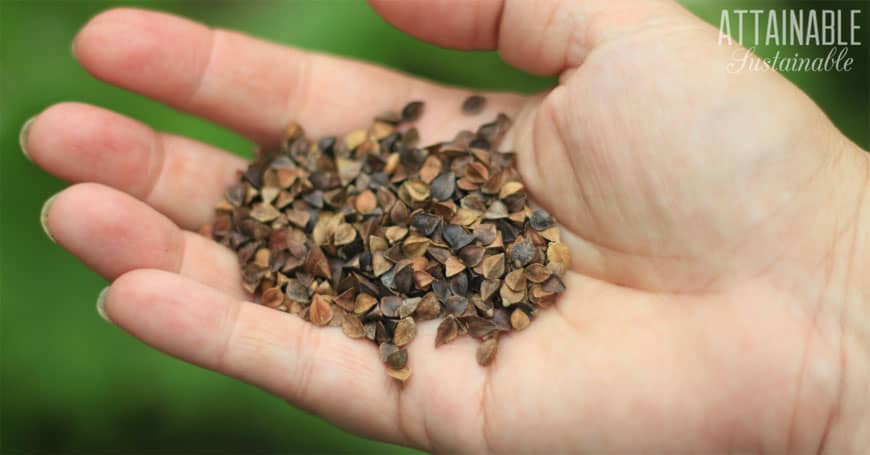
Historically speaking, we’re seed savers.
For hundreds of years American farmers have been growing crops, saving seeds from one year to plant the next. Remember Almanzo Wilder and his hidden wheat during The Long Winter?
From seed potatoes to corn and wheat, keeping a portion of the crop to be planted for the next growing season is a perfect example of being self sufficient. Once a grower harvests his first crop, he or she will never have to purchase seeds again, barring any natural disasters. That all changes though, when we add transgenic seeds into the mix. (Also called genetically modified organisms or GMO ingredients.)
Farmers who plant transgenic seeds aren’t allowed to save them.
There’s plenty of debate about the health and safety of GMO ingredients, but one thing is certain: crops that require farmers to purchase seeds from the patent owner every year are not very sustainable. When we buy genetically engineered foods made from these crops, we support the notion of unsustainable farming. (Who could have imagined such a concept a generation or two ago?)
How much of a problem is genetically engineered food?
It’s estimated that currently, over 90 percent of U.S. corn, upland cotton, and soybeans are produced using GE varieties. Other genetically modified crops on the market include sugar beets, canola, cotton, and papaya. (There are questions about transgenic squash, wheat, and potatoes being on the market, but I’ve yet to find anything definitive.)
Unless you’re buying organic, odds are good that many of the products you’re eating include GMOs. Many states are pushing for mandatory labeling, but what if you want to avoid GMO ingredients now? Unless you’ve been successful at becoming completely self-sufficient, it’s tough. Really tough.
Take a Peek Inside My Book!
Get a free excerpt from my book, Attainable Sustainable: The Lost Art of Self-Reliant Living! You’ll also get my free weekly newsletter, complete with recipes, gardening tips, and a little peek at what’s going on around here — both the zany and the mundane.
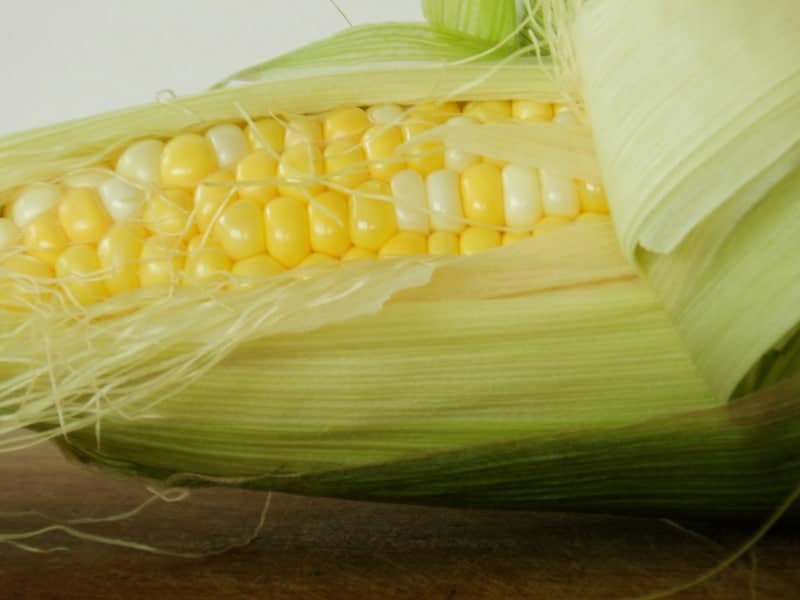
You might be surprised where GMO ingredients are hidden in your diet
Want to take a closer look at where GMOs are hiding in your food? Check out this list of obvious and not so obvious culprits.
CORN
My understanding is that while most sweet corn is not a genetically engineered food, there is high potential for GMO cross-contamination
Obvious:
- Corn on the cob
- Frozen corn
- Corn meal
- Corn tortillas
- Tortilla chips
- Corn oil
- Popcorn
Hidden GMO ingredients:
- Drinks and desserts sweetened with high fructose corn syrup
- Cornstarch (check ingredients lists for this, too)
- Potato chips
- Battery raised meat fed corn
- Factory farmed eggs from chickens raised on corn
- Dairy products from cows raised on corn
- Specialty coffee drinks
- Cat and dog foods
Related: Spotting Food Irradiation
SOY
Soy is one of our prominent genetically engineered food crops (91% of soy is estimated to be genetically engineered!). It’s also hidden in many, many food products.
Obvious:
- Edamame
- Soy milk
- Soybean oil (check ingredients lists)
- Soy sauce
- Soy oil
Hidden GMO ingredients:
- Bottled salad dressing
- Vegetable oil
- Lecithin
- Tofu
- Non-dairy frozen desserts
- Teriyaki sauce
- Battery raised meat fed soy
- Factory farmed eggs from chickens raised on soy
- Dairy products from cows raised on soy
- Texturized vegetable protein, a meat substitute commonly found in canned chilis, soups, and sauces
- Cat and dog foods
CANOLA
Canola oil can hide in products under the guise of “vegetable oil.” As GMO ingredients go, this one is pretty insidious and can be found in both sweet and savory products.
Obvious:
- Canola oil
Hidden GMO ingredients:
- Tortilla chips (especially sneaky are the ones that shout ‘made with organic corn’ but are fried in GMO canola)
- Baked items
- Bottle and jarred sauces
- Vegetable oil
- Bottled salad dressing
- Peanut butter (how to make your own here)
- Marinated vegetables (sun-dried tomatoes, artichoke hearts)
- Mayonnaise (how to make your own here)
- Prepared pesto (how to make your own here)
- Prepared hummus (how to make your own here)
SUGAR BEETS
Obvious:
- Granulated sugar – Any granulated sugar that doesn’t specifically say ‘cane sugar’
Hidden GMO ingredients:
- Yogurt
- Baked goods made with sugar
- Soda
- Candy
- Jams and jellies
- Prepared salad dressing
- Specialty coffee drinks (how to make your own here)
COTTON
Obvious:
- Textiles made from cotton
- Cottonseed oil
Hidden GMO ingredients:
- Battery raised meat fed cottonseed
- Factory farmed eggs from chickens raised on cottonseed
- Dairy products from cows raised on cottonseed
- Baked and prepackaged items that include cottonseed oil
This is by no means a comprehensive list of genetically engineered food. But it made you think, didn’t it?
Want to know more about transgenic seeds?
- Read my post about GMOs.
- Read Seeds of Deception.
- Watch Genetic Roulette: The Gamble of our Lives.


Sources of this “data” please.
The green text is linked.
Nothing unsafe about commercial GMO crops. They are a huge percent of production despite having to buy seeds every year because they offer benefits.
Your comments about hidden sources are not sensible. For example, High fructose corn syrup is purified and animals eating crops digest them. That includes humans eating corn.
If you don’t understand science don’t demonstrate your ignorance by publishing superstitious and unfounded nonsense.
Thanks for stopping by and disagreeing with me.
I’ve been doing some research lately and uncovered a very well kept secret. GMO Yeast. It seems that most non-organic yeast, used in things like bread, baked items and ESPECIALLY alcoholic beverages is GMO yeast. And yet, we almost never hear about it listed on these lists. It seems it is a closely guarded secret worth a closer look and certainly spread the word so others are aware of this lurking nasty ingredient in their glass of wine.
You know, I’ve heard this, but I would really love to see a link to a study for verification. Can you share?
It as come to the point where you can’t eat anything you haven’t grown or raised yourself and that won’t protect you if you live near a farm! All the organic farmers should get a class action suit against Monsanto for contamination of their crops and loss of livelihood. There has to be SOME judges somewhere with some logic!
Very enlightening. I had no idea about the hidden GMOs.
I had no idea that GMO’s had infiltrated so many of our foods. Do you know if GMO seeds grown in one field can contaminate the field next to it growing organic products? If so, it won’t be long before all of our seed is contaminated with GMO’s. The reason I ask – there is a field near our house that has a sign indicating they are growing GMO alfalfa. Animals like deer and birds eat the seed in the field. When they move to the next field and poop, surely they are spreading GMO seed to non-GMO fields. I live in a big hay growing area. The hay is sold as winter feed for cattle and other animals.
Donna, YES. That’s another of the HUGE problems with genetically engineered foods. And not only can the GMO seeds contaminate our non-GMO food sources (uncontaminated corn in particular is already hard to find – and how do we undo that mess??), corporations like Monsanto are suing farmers for “stealing” their technology when it drifts. Check out the story of Percy Schmeiser. Monsanto sued him and he fought, finally winning his case. Other farmers have just gone bankrupt.
https://en.wikipedia.org/wiki/Percy_Schmeiser
So basically, if we buy our food from the store OR from the farmer, chances are that we are receiving GMO food, or that we will be in a few short years. So how do you NOT support the GMO industry? I cannot afford to buy organic anything, much less ALL of the food we eat or clothes we wear. Next year, I’m going to try building a garden using heirloom seeds. I’ve always wanted one but am disabled and cannot maintain a “regular design” garden and my husband simply doesn’t have the time, as he also does a lot of the housework, since I cannot (yes, I know I am VERY lucky). However, I have found a design that I should be able to maintain almost all from my wheelchair, and I am hoping to begin building it next year. (Well, to get my husband to build it, lol.)
I’m still learning about this topic, but I thought you might be interested in this: https://online.wsj.com/article/SB10000872396390444358804578018472810435506.html
What a helpful post. So many people, myself included, had no idea of many of these less obvious sources. But, clearly, this is a scary and concerning topic.
This is both amazing and disturbing. Thanks for increasing my awareness.
NZ doesn’t allow GMO foods to be grown here, but having them imported, especially in products like corn chips are a different matter. Even here we have to watch.
Melanie, something you might want to keep an eye on: https://www.telegraph.co.uk/science/science-news/9579158/GM-cows-produce-hypoallergenic-milk.html
I am very disturbed by this issue and saddened by how we are puttin profits over people and the environment. We try to buy as much organic as we can but it is not enough. I wish the government would do something about Montsantos dirty deeds.
What an eye-opener!
I am back to say there is a new movement to get GMOs labeled across the nation. Please sign.
https://www.thepetitionsite.com/takeaction/448/913/868/?z00m=20411632
This is such an important topic. I never stopped to think where all those GMO’ed products actually end up in addition to the obvious.
Yes, I saw posted to Facebook that Whole Foods allows GMOs. It is hard to avoid them, as you point out, although I do try. One cereal that is GMO-free is Nature’s Path. I’m hopeful Prop 37 will pass. All it does is require GMO labels though. I suggest everyone watch Food, Inc. That film really opened my eyes. The problem is that companies that manufacture GMOs, like Monsanto, infiltrate the government, which is why GMOs have become so pervasive. I do not believe adequate testing has been done. The best we can do is spread the word. For now, contact everyone you know in California to vote YES on Prop 37. That will be a start anyway.
Just had a conversation with someone on FB about Whole Foods selling GMO food. Some people believe just because they are buying stuff there, it is automatically healthy and GMO free. Good post.
Wow. Thanks for pointing out the not-so-obvious. Would never have known or suspected things like tofu and peanut butter.