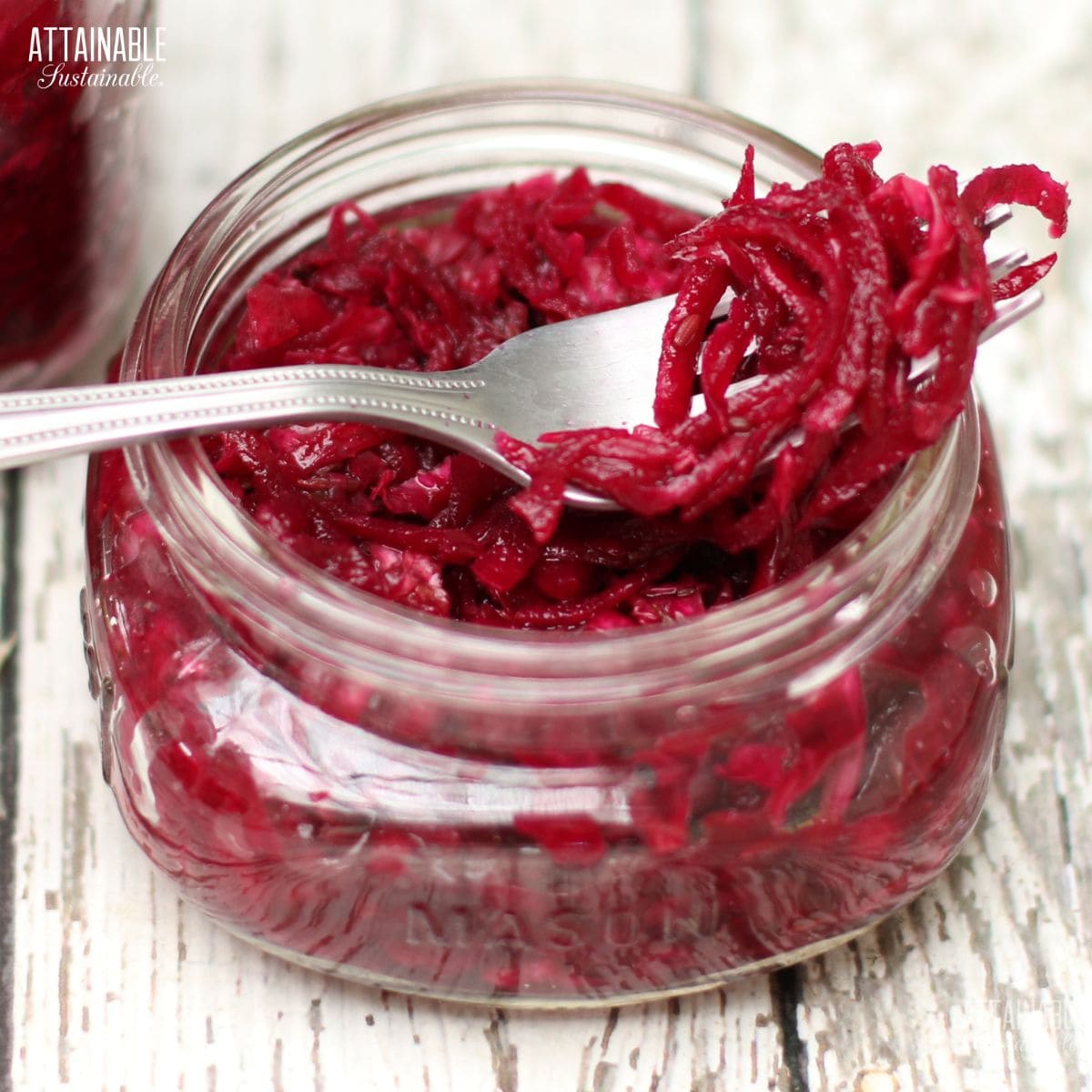
Beet Sauerkraut with Red Cabbage
Beet cabbage kraut is an easy recipe to ferment. It's a good way to extend the shelf life of fresh garden beets and results in a delicious ferment that will last months in the fridge.
Print
Pin
Servings: 1 quart
Equipment
- 1 quart jar
Ingredients
- 2 cups cabbage shredded (red or green)
- 2 cups beets shredded
- 1 ½ tablespoons Himalayan salt
- 2 teaspoons coriander seeds optional
Instructions
- Mix all ingredients together in a large bowl. Use your (clean) hands to really work the salt into the veggies. Don't be afraid to give it all a little squeeze; you want the salt to start to bring out the juices.2 cups cabbage, 2 cups beets, 1 1/2 tablespoons Himalayan salt, 2 teaspoons coriander seeds
- Once well mixed, begin transferring veggies tightly into a wide-mouth quart size Mason jar.
- Use a tamper to press the veggies tightly into the jar. There are specialty tampers or you could do as I do and use a large dowel.
- As you press, you'll start to see the juices rise to the top. If your produce doesn't generate enough juice, add just a bit of distilled water to bring the level of liquid above the level of the veggies. (You could also use a bit of leftover brine from another ferment, if you happen to have it.)
- Place a glass weight on top of the sauerkraut, making sure to push out any air bubbles that are visibly trapped under it. It's critical that the vegetables are not in contact with air.
- Place a fermentation airlock or lid on the jar to seal it. If you use a standard lid, you'll need to be sure to open the jar daily to let out any built up gasses.
- Let sit at room temperature for a week or two, checking occasionally to make sure that the veggies remain covered with liquid. This will vary depending upon the temperature in the kitchen. A warmer kitchen results in a faster ferment.
Notes
- Hot tip: Even with airlocks, my beet kraut went crazy and overflowed on about day two or three (called heaving, as you'll read here). You might want to set your jars in a tray to catch accidental spills. (And when this happens, remember that the liquid might need to be replenished.)
- Days two and three are often the most active, but it will continue to ferment as long as its sitting at room temperature. Once the beet sauerkraut is flavorful enough for you, cap the jar and store in the refrigerator or a cool cellar.
Nutrition
Calories: 164kcal | Carbohydrates: 36g | Protein: 7g | Fat: 1g | Saturated Fat: 0.2g | Polyunsaturated Fat: 0.3g | Monounsaturated Fat: 1g | Sodium: 10703mg | Potassium: 1175mg | Fiber: 13g | Sugar: 23g | Vitamin A: 227IU | Vitamin C: 65mg | Calcium: 134mg | Iron: 4mg
Did you make this recipe?Mention @attainablesustainable or tag #attainablesustainable!