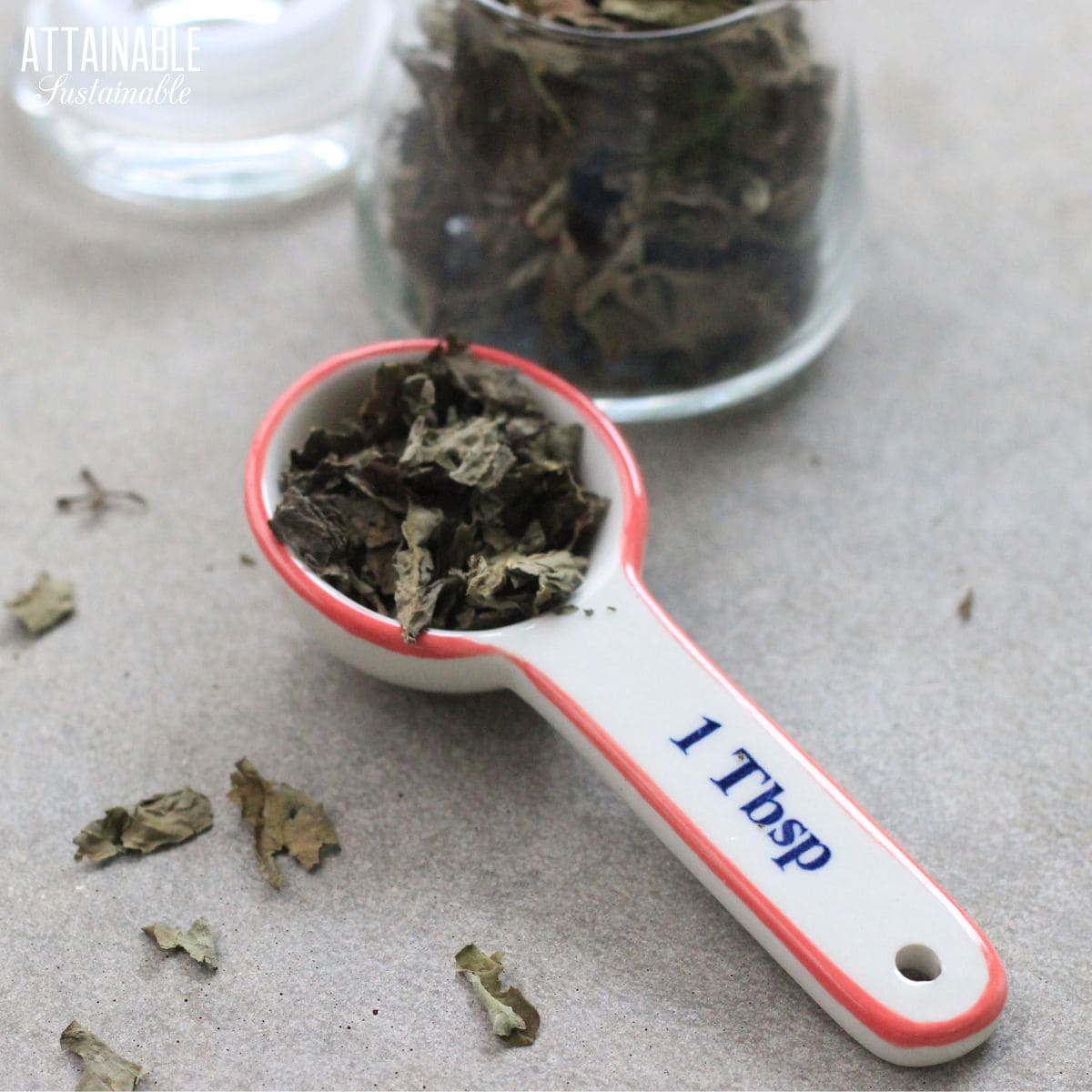
How to Dry Basil
Basil has a high moisture content and will mold if the drying process takes too long. A food dehydrator offers a more controlled environment for drying basil, though it’s not the only way to do so.
Print
Pin
Yield: 2 cups
Equipment
- Dehydrator
Ingredients
- Fresh basil
Instructions
- Prepare basil by washing and thoroughly drying. Remove most of the stem, leaving behind only the leaves.
- Place leaves in a single layer on dehydrator trays or a baking sheet lined with a towel. Pack as many as you can onto the trays without overlapping a lot.
Dehydrator:
- Set dehydrator to 95 degrees Fahrenheit or the lowest heat setting - some dehydrators have an “herb” setting. Begin checking basil after about four hours, though depending on your climate, this can take as much as 24 hours.
Oven:
- Turn the oven onto its lowest setting. If yours is a newer oven with a bread proofing setting, use that, otherwise aim for a temperature no higher than 180 degrees Fahrenheit and prop the door open to let some of the heat escape. It will take two to four hours or longer for basil to completely dry, again, depending on the temperature you use and the humidity. Check it frequently.
Air Drying:
- If your climate is dry and hot, the simplest way to dry basil leaves is to use what Mother Nature offers up. You can air dry basil the old-fashioned way if you have the space.
- Cut long stems of basil and bundle them together using a twist tie or a rubber band.
- Hang basil to dry on rafters at room temperature, or stretch a length of sturdy line on a fence out of direct sunlight or across the ceiling and use clothespins to hold herbs in place.
Notes
- How long it takes to dehydrate basil will vary greatly based on the humidity of your region. Basil is done when it is crunchy and crumbles when you pinch the leaves between your fingers.
- An 8 quart bowl of basil leaves is enough leaves to fill a 9-tray Excalibur dehydrator and nets about 2 cups of dried basil. I say about because this depends a lot on how full you pack the leaves in the bowl and how much you are able to fit on the trays.
- Store dried basil in an airtight container.
Did you make this recipe?Mention @attainablesustainable or tag #attainablesustainable!