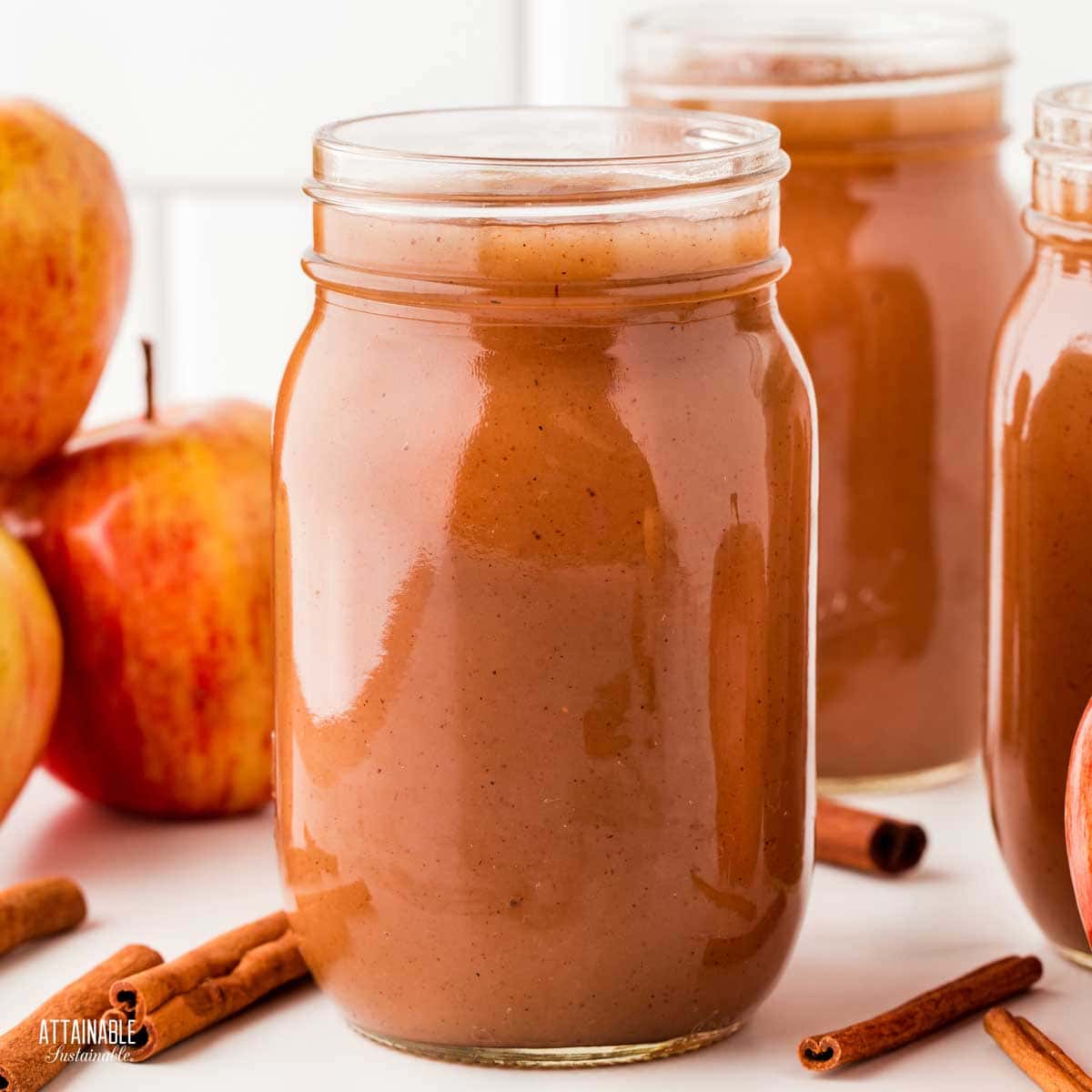
Old Fashioned Apple Butter (Canning Recipe)
With no added sugar, this slow cooker spiced apple butter recipe is a delicious way to preserve the flavors of fall.
Print
Pin
Servings: 256 servings
Equipment
- 8 pint jars
- 8 canning lids and rings
- canning funnel
- water bath canner with lid or deep pot
- jar tongs
- canning bubble popper/measurer optional but handy
Ingredients
Instructions
Recipe yields 8 pint jars.
MAKE THE APPLE BUTTER
- Peel, core, and quarter apples.12 pounds apples
- Place apples and apple cider in a slow cooker or in a large stock pot.3 cups apple cider
- For slow cooker: Cook for 3-4 hours on high or until apples are very soft.
- For stovetop: Bring to a boil over medium-high heat. Reduce heat and simmer, stirring frequently until apples are very soft.
- Use a potato masher to break up chunks of apple.
- Working in batches, run apple pulp through a food mill, sieve, or chinois. Alternatively, you can use an immersion blender to create a fine texture.
- Return apple puree to slow cooker or cooking pot and add remaining ingredients.¼ cup apple cider vinegar, 1 tablespoon cinnamon, 1 teaspoon nutmeg
- For slow cooker: Tilt cover to allow steam to escape. Cook for another 6-8 hours on low, or until apple butter is thick and holds its shape on a spoon.
- For stovetop: Simmer over low heat, stirring frequently until thickened. Apple butter should hold its shape on a spoon.
PREPARE FOR CANNING
- Wash the jars you'll use, making sure each is clean and free of nicks in the rim, which could impede sealing.
- Wash the lids and rings in hot soapy water. (If you're using non-Ball brand lids, prepare as suggested by manufacturer.)
- Place empty jars in a canning pot or large stock pot with enough water to cover by an inch or two, cover pot, and set on high heat to boil.
CANNING APPLE BUTTER
- Remove warmed jars from the canner and drain.
- Ladle hot apple butter into pint sized jars, leaving a quarter inch of headspace. A canning funnel makes this easy.
- Wipe jar rims to remove any fruit mixture that may have spilled. A clean rim is essential to a good seal.
- Place lids centered on the jar rim. Screw bands on finger tight.
- Use a jar grabber to gently submerge jars into boiling water in the canning pot. Water should cover the top of the jars by an inch. The water will cool somewhat in reaction to the addition of the jars. Return the water to a simmer and then set the timer.
- Process for 15 minutes 0-1,000 feet altitude; 20 minutes 1,001-6,000 feet; 25 minutes over 6,000 feet.
- Remove jars from water using the jar lifter and transfer to a solid, towel-covered surface. Listen for the popping sound of the lids sealing (a canner's favorite sound!). Allow to cool for 24 hours.
- Check seals. Lids should be solid and pulled down tight. (if they flex and pop, the jar didn’t seal; put unsealed jars in the refrigerator and use those first).
- Remove rings and wash outsides of jars. Store in a cool dark place.
Notes
- Recipe yields 8 pint jars.
- If you prefer a sweeter spread, you can safely add up to one to one and a half cups of white sugar (or brown sugar) to the recipe. I suggest tasting this recipe after it's fully cooked down before deciding to add extra sweetener; unless you're using really tart apples it shouldn't need much sugar at all.
- This recipe measured at a pH under 3.5, putting it well into the “safe” zone for water bath canning.
- Boiling lids or heating above 180°F as once recommended can damage the sealing compound.
- Makes 8 pint jars.
- SOURCE: Adapted from the National Center for Home Food Preservation's guide to making fruit purees. https://nchfp.uga.edu/how/can_02/fruit_puree.html
Nutrition
Serving: 1tablespoon | Calories: 12kcal | Carbohydrates: 3g | Protein: 0.1g | Fat: 0.04g | Saturated Fat: 0.01g | Polyunsaturated Fat: 0.01g | Monounsaturated Fat: 0.002g | Sodium: 0.3mg | Potassium: 26mg | Fiber: 1g | Sugar: 2g | Vitamin A: 12IU | Vitamin C: 1mg | Calcium: 2mg | Iron: 0.03mg
Did you make this recipe?Mention @attainablesustainable or tag #attainablesustainable!