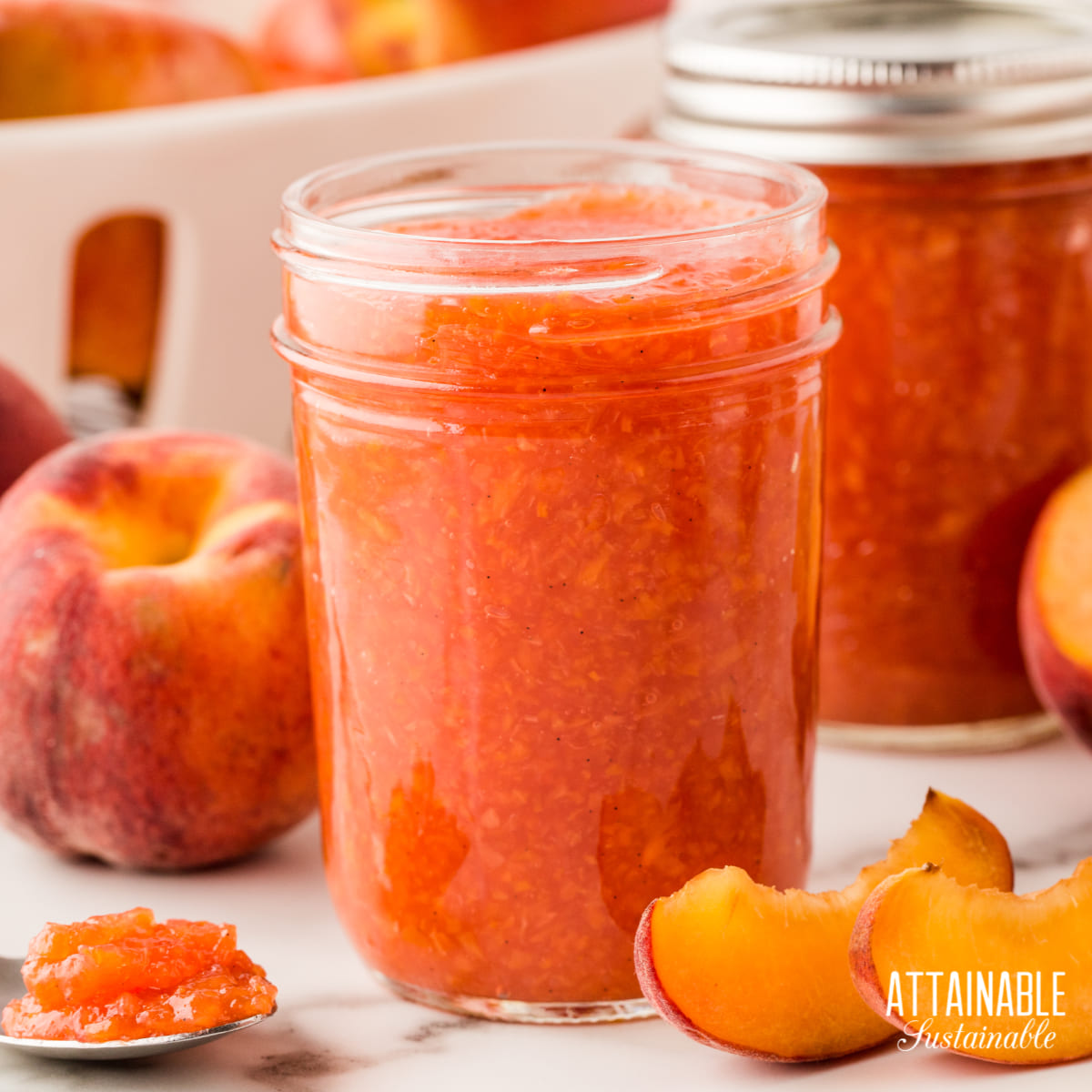
Peach Jam Recipe with Vanilla
Homemade peach jam is easy to make for the pantry and it's much less expensive than store-bought jam or preserves. It uses less sugar, too!
Print
Pin
Servings: 80 servings
Equipment
- 9-10 half-pint jars adjust quantity for quarter-pint and pint jars
- 9-10 canning lids and rings
- canning funnel
- water bath canner with lid or deep pot
- jar tongs
- canning bubble popper/measurer optional but handy
Ingredients
- 6 - 7 pounds peaches
- 8 teaspoons calcium water from the Pomona's Universal Pectin package
- ½ cup lime juice bottled
- 1 vanilla bean (optional)
- 2 cups sugar
- 2 tablespoons pectin from the Pomona's Universal Pectin package
Instructions
Recipe yields 9-10 half-pint jars.
Prepare for Canning
- Prepare the calcium water: Combine ½ teaspoon calcium powder (from the small packet in the box of Pomona’s pectin) with ½ cup water in a small jar. Screw on a lit and shake until well-combined. You'll have more than you need for this recipe. Store the excess in the refrigerator for use in making additional jam or jelly recipes.
- Wash the jars you'll use, making sure each is clean and free of nicks in the rim, which could impede sealing.
- Wash the lids and rings in hot soapy water. (If you're using non-Ball brand lids, prepare as suggested by manufacturer.)
- Place empty jars in a canning pot or large stock pot with enough water to cover by an inch or two, cover pot, and set on high heat. It can take awhile for the water to heat, so get it started before you begin making the recipe.
Make the Jam
- Wash and dry the peaches. Halve the peaches and remove pits; coarsely chop the fruit. Pulse peaches in a food processor. The skins should be chopped well. Alternatively, use a potato masher to make a fine pulp.6 - 7 pounds peaches
- Halve the vanilla bean lengthwise; scrape the seeds into the peach mixture along with the vanilla pod. Add the calcium water and lime juice; stir to combine well.1/2 cup lime juice, 1 vanilla bean, 8 teaspoons calcium water
- In a separate bowl, combine the sugar with the pectin powder (the large envelope) until thoroughly combined.2 cups sugar, 2 tablespoons pectin
- Bring peach pulp to a full boil. Add sugar mixture, stirring vigorously for a couple of minutes to dissolve the pectin. Return to a full boil, boil for one minute, and remove from heat. Remove vanilla bean pod from the hot mixture and discard.
Canning Peach Jam
- Remove the empty jars from the canner, draining the water back into the pot.
- Ladle hot preserves into quarter pint, half-pint, or pint jars to within a quarter inch of the rim. A canning funnel makes this easy.
- Wipe jar rims to remove any jam that may have spilled. A clean rim is essential to a good seal.
- Set jar lids in place. Screw bands on finger tight.
- Use a jar lifter to gently submerge jars into the hot water bath. Be sure to place a wire rack in the bottom of the pot to prevent the jars of peach jam from sitting directly on the bottom. Water should cover the top of the jars by an inch or two. The water will cool somewhat in reaction to the addition of the jars. Return the water to a low boil, cover the canner, and then set the timer.
- Process in a boiling water bath for 10 minutes. Add a minute to the boiling time for every 1,000' above sea level.
- Check seals. Lids should be solid and pulled down tight. (if they flex and pop, the jar didn’t seal; put unsealed jars in the refrigerator and use those first).
- Remove rings and wash outsides of jars. Store in a cool, dry place.
Notes
- Recipe yields 9-10 half-pint jars.
- Boiling lids or heating above 180°F as once recommended can damage the sealing compound.
- This recipe is made using Pomona’s Universal Pectin. This is the only pectin I use anymore as it allows me to use much less sweetener. The standard pectin brands use an obscene amount of sugar in my opinion, often requiring equal amounts of sugar and fruit! This product uses a low methoxyl method and calls for using two different ingredients, which are included in the box: pectin (the large packet) and calcium powder (the small packet).
- Do not use white peaches for this recipe; these peaches are less acidic than the yellow variety and can alter the pH of the recipe making it unsafe for canning.
- SOURCE: Adapted from Pomona's Universal Pectin.
- If you go through jam quickly at your house, you can fill the jars and transfer them directly to the fridge, skipping the canning process.
Nutrition
Serving: 2tablespoon | Calories: 29kcal | Carbohydrates: 7g | Protein: 0.3g | Fat: 0.1g | Saturated Fat: 0.01g | Polyunsaturated Fat: 0.03g | Monounsaturated Fat: 0.02g | Sodium: 5mg | Potassium: 45mg | Fiber: 1g | Sugar: 6g | Vitamin A: 111IU | Vitamin C: 2mg | Calcium: 2mg | Iron: 0.1mg
Did you make this recipe?Mention @attainablesustainable or tag #attainablesustainable!