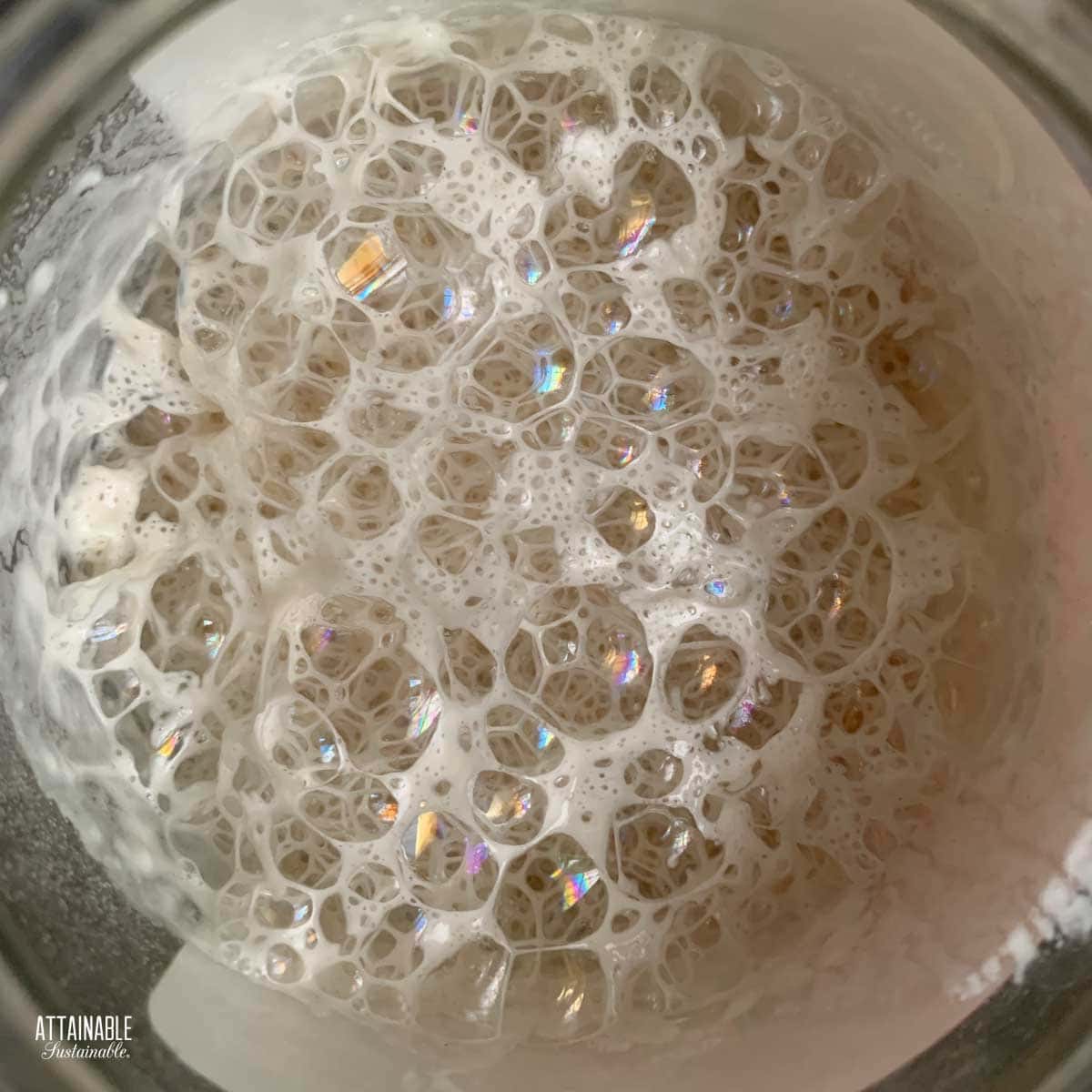
Basic Sourdough Starter Without Yeast
Sourdough bread starts with a good sourdough starter. This sourdough starter without yeast captures wild bacteria.
Print
Pin
Servings: 0.5 cup
Ingredients
- ½ cup unbleached organic all-purpose flour plus more for feeding
- ½ cup filtered or distilled water (scant)
Instructions
- Day 1: Combine a half cup of flour with a scant half cup of water. Stir vigorously to incorporate air. Cover with a breathable lid and allow to sit in a warm space for 12 hours. Repeat feeding with same quantities of flour and water.1/2 cup unbleached organic all-purpose flour, 1/2 cup filtered or distilled water
- Days 2 & 3: Continue feeding starter as above at the same 12 hour intervals. By the third day a bit of life should show up. There should be bubbles. A sour smell will begin to be evident.
- Days 4, 5, & 6: Continue feeding starter as above, but discard all but 1/2 cup of the starter just before you feed it. (There are plenty of good uses for "discarded starter" in the Grains chapter of my book.) You should now see and smell signs of sourdough. More bubbles are forming, the starter is growing in volume in between feedings, etc.
- Day 7: Your starter should now be very airy when it hits its peak, 4-8 hours after a feed. Continue feeding as on days 4-6 and feel free to start baking! You have successfully made this easy sourdough recipe without yeast.
- Continue to feed once per day going forward, if the starter sits at room temperature and you wish to maintain an active starter for regular baking.
- Alternatively, if you won't be using the starter regularly, store it in the refrigerator and remove to bake with it as you need it. Just be sure to remove it 24 hours before mixing up your dough.
Reactivating a dormant sourdough starter
- To reactivate an inactive starter, remove it from the refrigerator, feed it with 1/2 cup flour and 1/2 cup water, and allow to sit at room temperature until bubbly. Maintain it as noted in step 5 above.
Notes
- Chlorine in municipal water can impact the making of a yeast colony. If you're using tap water, allow it to sit out overnight -- uncovered -- so that the chlorine can dissipate.
- On discarding: If we keep feeding a sourdough starter day after day, the container would eventually overflow. For this reason, beginning on day FOUR, you'll discard all but one-half cup of starter. You can use this discarded starter in various recipes so it doesn't go to waste. (There are plenty of good uses for "discarded starter" in the Grains chapter of Shannon's book.) The remaining portion of starter, with its growing wild yeast colony, will be combined with fresh flour and water in a "feeding" and the fermentation process will continue.
Nutrition
Calories: 57kcal | Carbohydrates: 12g | Protein: 2g | Sodium: 3mg
Did you make this recipe?Mention @attainablesustainable or tag #attainablesustainable!