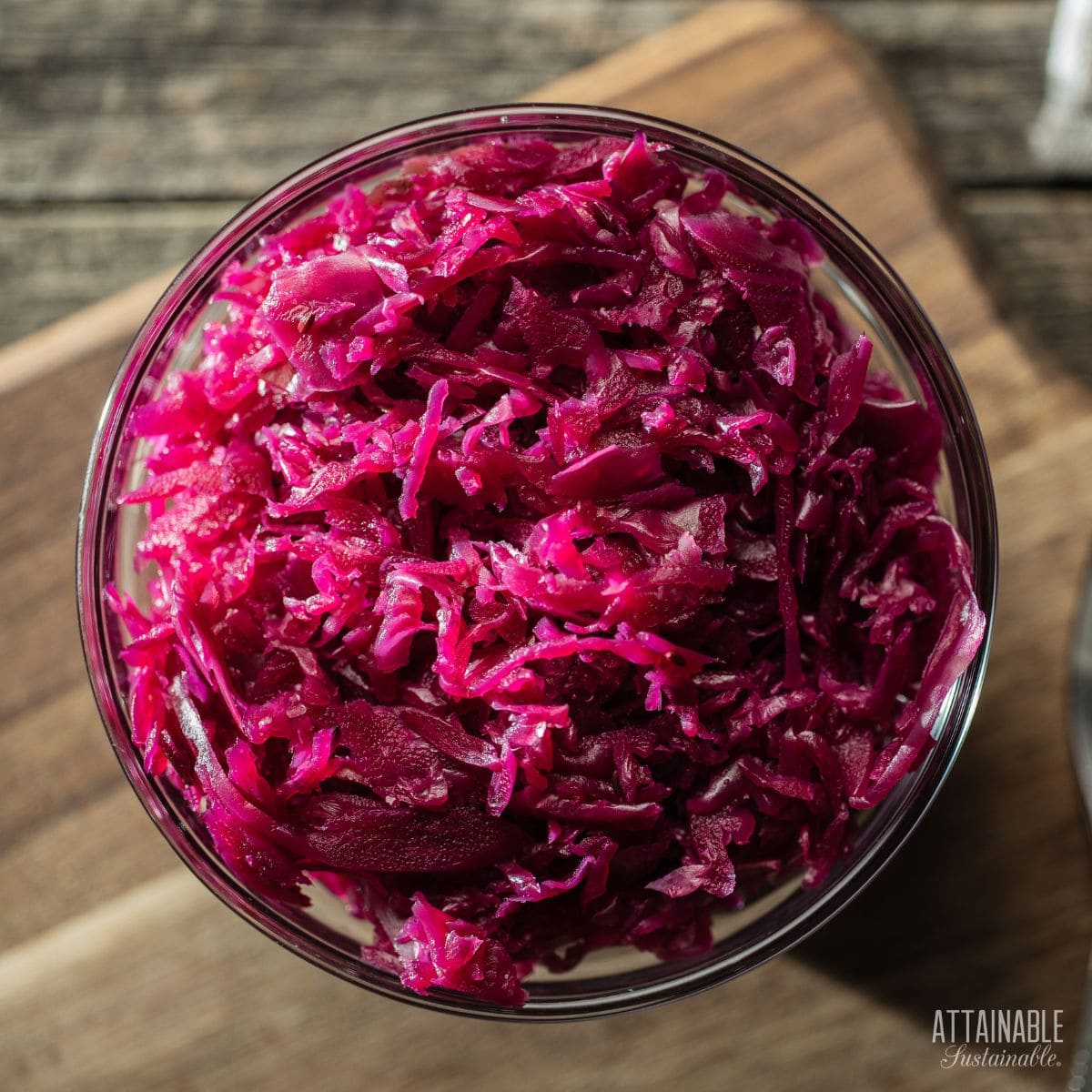
Homemade Sauerkraut Recipe
This quick sauerkraut is an easy to make condiment packed full of probiotic goodness.
Print
Pin
Servings: 12 servings
Equipment
- 1 half gallon mason jar or 2 quart-sized wide-mouth jars
Ingredients
- 2 medium cabbage red cabbage, purple cabbage, or green cabbage
- 3-4 tablespoons sea salt or kosher salt
Instructions
- If you have a kitchen scale, use 1 ounce of salt per 3 pounds of prepared cabbage. If you do not have a kitchen scale, use the measurements listed above.
- Remove outer leaves of cabbage, core and shred cabbage, and place into a large bowl.2 medium cabbage
- Add salt. Massage cabbage with clean hands for five to ten minutes until juices are released.3-4 tablespoons sea salt
- Put cabbage into wide mouth jars and, using clean hands or a utensil, press cabbage down until juices cover the top of the cabbage.
- Leave 1-2 inch head-space at the top of the jar.
- Add weights to hold the shredded cabbage under the brine.
- Store at room temperature for about a week, monitoring the liquid level to be sure the solids remain submerged. The number of days required will vary depending on the temperature. If you like it more sour, allow it to ferment a little longer.
- Sauerkraut can be eaten immediately, or continued to age for even better flavor.
- Store fermented cabbage in the refrigerator with a jar lid in place.
Notes
- When making homemade sauerkraut (or any ferment) be sure all equipment and supplies are very clean. Even if they were clean and in your cupboards, give the jars and equipment a rinse in very hot water.
- It's crucial that the cabbage remain covered by liquid as it ferments, to avoid mold. Check your ferment daily to make sure all cabbage is submerged. If any pieces rise above the brine, push them back down and weight them under the brine.
- Setting the jars on a plate or tray is a good idea; fermenting sauerkraut can overflow when it's in its most active stage.
- Serve your homemade sauerkraut alongside any meal, or use it in some of these recipes.
- When you finish eating a jar of this yummy quick sauerkraut recipe, retain the leftover brine. This can be added to your next batch to speed the fermentation process.
Nutrition
Calories: 38kcal | Carbohydrates: 9g | Protein: 2g | Fat: 0.2g | Saturated Fat: 0.1g | Polyunsaturated Fat: 0.03g | Monounsaturated Fat: 0.03g | Sodium: 1476mg | Potassium: 258mg | Fiber: 4g | Sugar: 5g | Vitamin A: 148IU | Vitamin C: 55mg | Calcium: 61mg | Iron: 1mg
Did you make this recipe?Mention @attainablesustainable or tag #attainablesustainable!