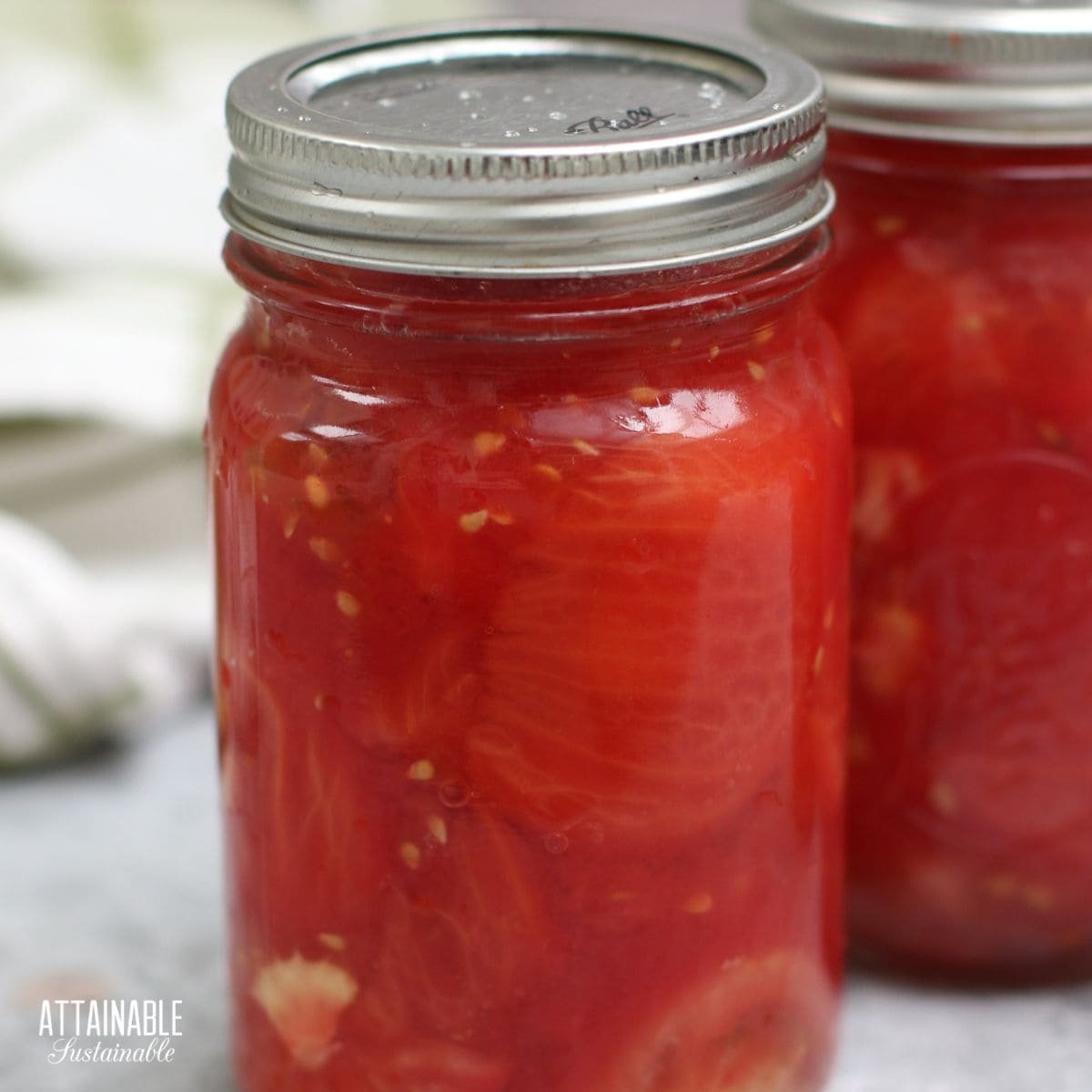
How to Can Crushed Tomatoes
Crushed tomatoes are one of the handiest pantry ingredients to keep on hand for home cooking. Happily, canning tomatoes in a water bath is also one of the easiest ways to preserve them. Be sure to follow these instructions carefully to achieve a safe product.
Print
Pin
Servings: 28 servings
Equipment
- 7 pint jars
- 7 canning lids and rings
- canning funnel
- water bath canner with lid or deep pot
- jar tongs
- canning bubble popper/measurer optional but handy
Ingredients
- 5 pounds fresh tomatoes
- 7 tablespoons lemon juice bottled
- 3 ½ teaspoons sea salt optional
Instructions
Recipe yields 7 pint jars.
PREPARE FOR CANNING
- Wash the jars you'll use, making sure each is clean and free of nicks in the rim, which could impede sealing.
- Wash the lids and rings in hot soapy water. (If you're using non-Ball brand lids, prepare as suggested by manufacturer.)
- Place empty jars in a canning pot or large stock pot with enough water to cover by an inch or two, cover pot, and set on high heat. It can take awhile for the water to heat, so get it started before you begin making the recipe.
PACKING THE JARS
- Peel tomatoes using the blanching method outlined here.5 pounds fresh tomatoes
- Remove hard core and cut tomatoes into chunks.
- Measure 1 tablespoon lemon juice and 1/2 teaspoon salt into each pint-sized jar. (Use 2 tablespoons lemon juice and 1 teaspoon salt for quarts.)7 tablespoons lemon juice, 3 1/2 teaspoons sea salt
- Drop tomatoes into jars, then press to release liquid and fill empty spaces. Leave a 1/2" head space.
- Wipe jar rims to remove any residue that may have spilled. A clean rim is essential to a good seal.
- Set jar lids in place. Screw bands on firmly tight, without over-tightening.
CANNING RAW PACK CRUSHED TOMATOES:
- Use a jar lifter to gently submerge jars into hot water in canning pot. Water should cover the top of the jars by two inches. The water will cool somewhat in reaction to the addition of the jars. Return the water to a simmer and set the timer.
- Process pints OR quarts of tomatoes in a hot water bath for 85 minutes 0-1,000 feet altitude; 90 minutes 1,001-3,000 feet; 95 minutes 3,001-6,000 feet; 100 minutes over 6,000 feet.
- Allow jars to cool overnight.
- Check for seal: the lids should feel solid and slightly indented. If they flex, that are not shelf stable and should be refrigerated and used first.
- Wash jars, remove rings, and store in a cool, dry place for a year.
Notes
- Recipe yields 7 pint jars.
- Don't use salt that is iodized or treated with clumping agents. Sea salt or canning salt are both good choices.
- USDA preserving recipes all call for using bottled lemon juice. This assures that the acidity level in recipes is safe for canning.
- Boiling lids or heating above 180°F as once recommended can damage the sealing compound.
Nutrition
Serving: 0.5cup | Calories: 15kcal | Carbohydrates: 3g | Protein: 1g | Fat: 0.2g | Saturated Fat: 0.02g | Polyunsaturated Fat: 0.1g | Monounsaturated Fat: 0.03g | Sodium: 295mg | Potassium: 196mg | Fiber: 1g | Sugar: 2g | Vitamin A: 675IU | Vitamin C: 13mg | Calcium: 9mg | Iron: 0.2mg
Did you make this recipe?Mention @attainablesustainable or tag #attainablesustainable!