Want to try your hand at growing an unusual crop? A tamarillo tree – also known as a tree tomato or arbol de tomate – might be an option for you, depending on your climate. In the right conditions, they are a prolific producer of long-lasting fruit.
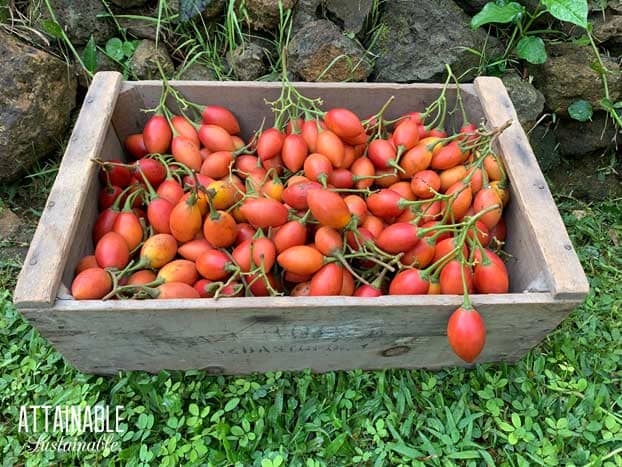
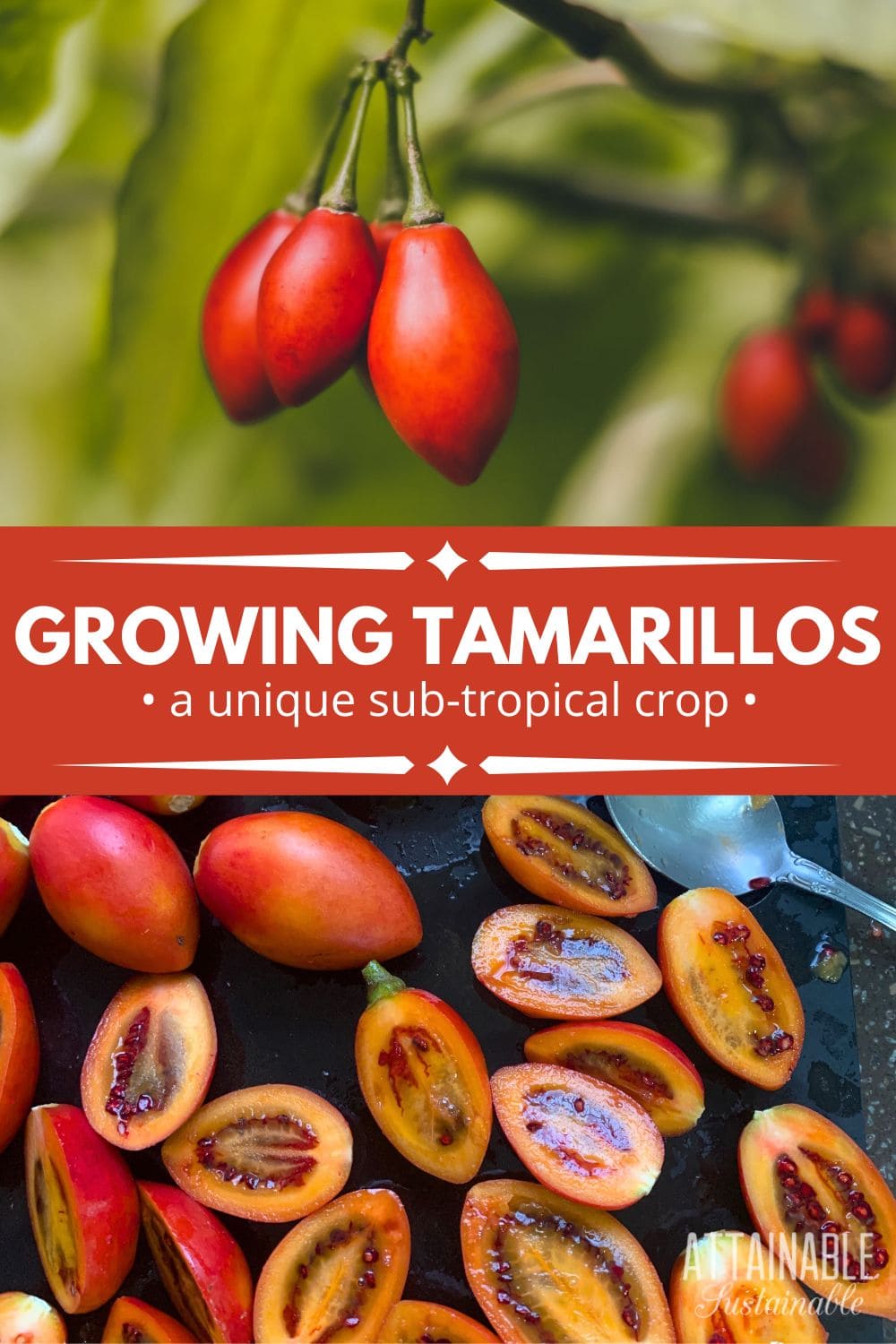
What does it taste like? is always the first question people ask when I mention growing a tamarillo tree. Also called tree tomato, the oblong fruit does have a slight tomato-y flavor. It’s more sour than a tomato, though, with slight berry undertones.
The skin is edible, but I don’t recommend it, as it’s a bit bitter. Instead, cut the fruit in half and scoop out the insides like you would a kiwi. The edible seeds are bigger than tomato seeds, and harder.
With it’s savory sweet and tart flavor, the flesh of the fruit is suitable for using in recipes like chutney and salsa. Try using them in place of tomatoes in recipes where the seeds won’t be a bother.
I’ve used it to make ketchup, barbecue sauce, and even a seedless jam that tastes much like blackberry jam, oddly enough.

Growing a Tamarillo Tree
The tamarillo tree is a member of the solanaceae family, like tomatoes. There are a number of cultivars, ranging in color from yellow to orange and red.
Native to the South American region, tamarillo fruit is also commercially grown in New Zealand. It’s considered a sub-tropical crop, and as such, it can handle light frost, but does best where temperatures remain above 50° F. Protect young trees from frost; more established trees might see damage to small branches, but the larger branches and main stem will be fine.
The California Rare Fruit Growers group indicates that trees have been successfully grown in Northern California.
Growth Habit
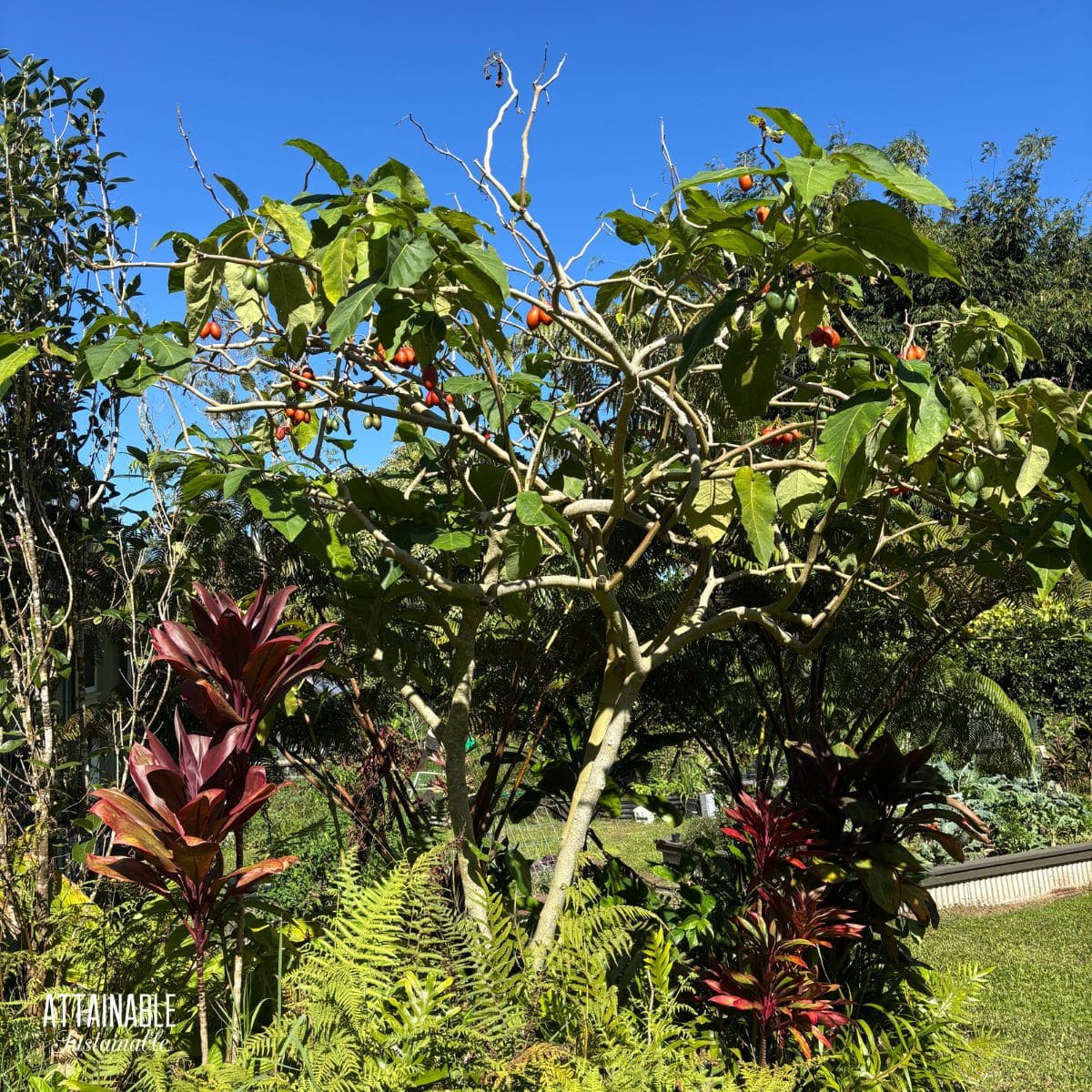
Tamarillo grows as a small tree that’s a bit gangly. Pruning can keep the shape in check; without regular trimming the branches will spread and criss-cross. Fruit is produced on new growth, so removing branches that have already borne tamarillos will help keep the tree productive and encourage new growth.
The size of tamarillo trees make it a good candidate for container growing or in an urban fruit orchard. This also allows you to move the container into a more protected area during the colder months.
I have several trees planted in landscape beds near my vegetable garden.
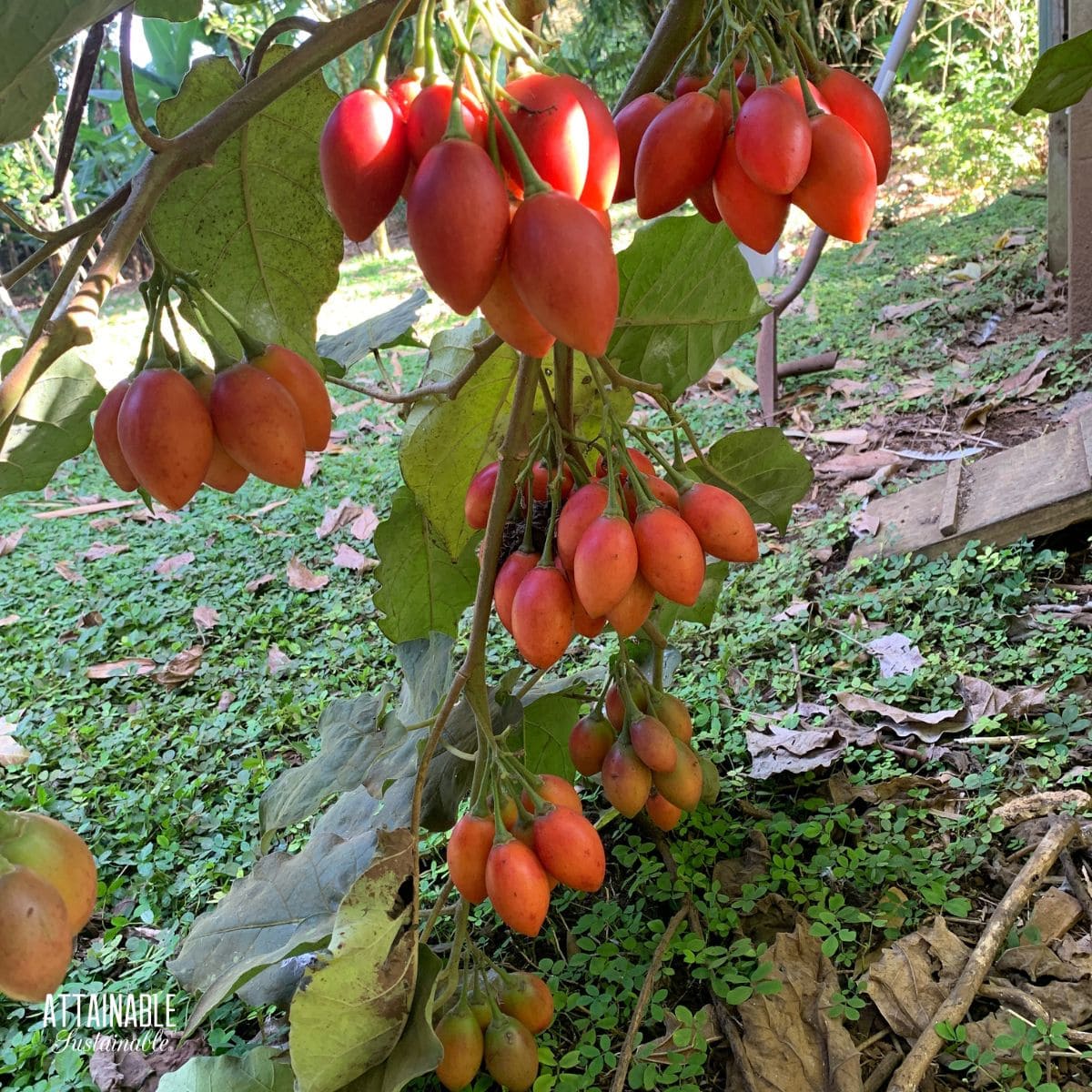
The leaves of a tamarillo tree are large and aromatic. Flowers grow in small clusters and are self-pollinating. The fruit itself is oblong and ripens from green to either red or yellow, typically in the fall.
Propagation
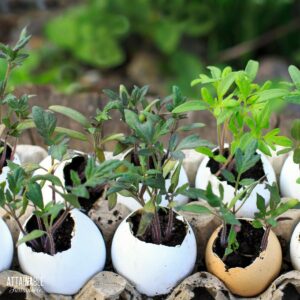
The tree tomato plant can be propagated by seed or cuttings. In my region, dropped fruits often result in a new tree, and they seem to grow true from seed.
Save seeds from fruit if you have access to that, or seek them out online. Placing dried seeds in the freezer for 24 hours before planting them can apparently accelerate germination, though I haven’t found that to be necessary.
If you have a friend who can share a cutting, that’s an easy way to get growing. Choose a branch that’s 3/8″ to 1″ thick and 1′ to 2′ long and cut it just below a node. Remove the leaves and bury the cutting in soil, either directly in the ground or in a soil-filled container, leaving 6″ to 12″ above the soil level. Keep the soil moist until you see leaves emerge.
I’d be surprised if you found started plants available at retail outlets, but you might find them from a hobby seller.
Pests and Disease
I’ve found that tree tomatoes are pretty pest free, with the exception of powdery mildew and occasionally white flies.