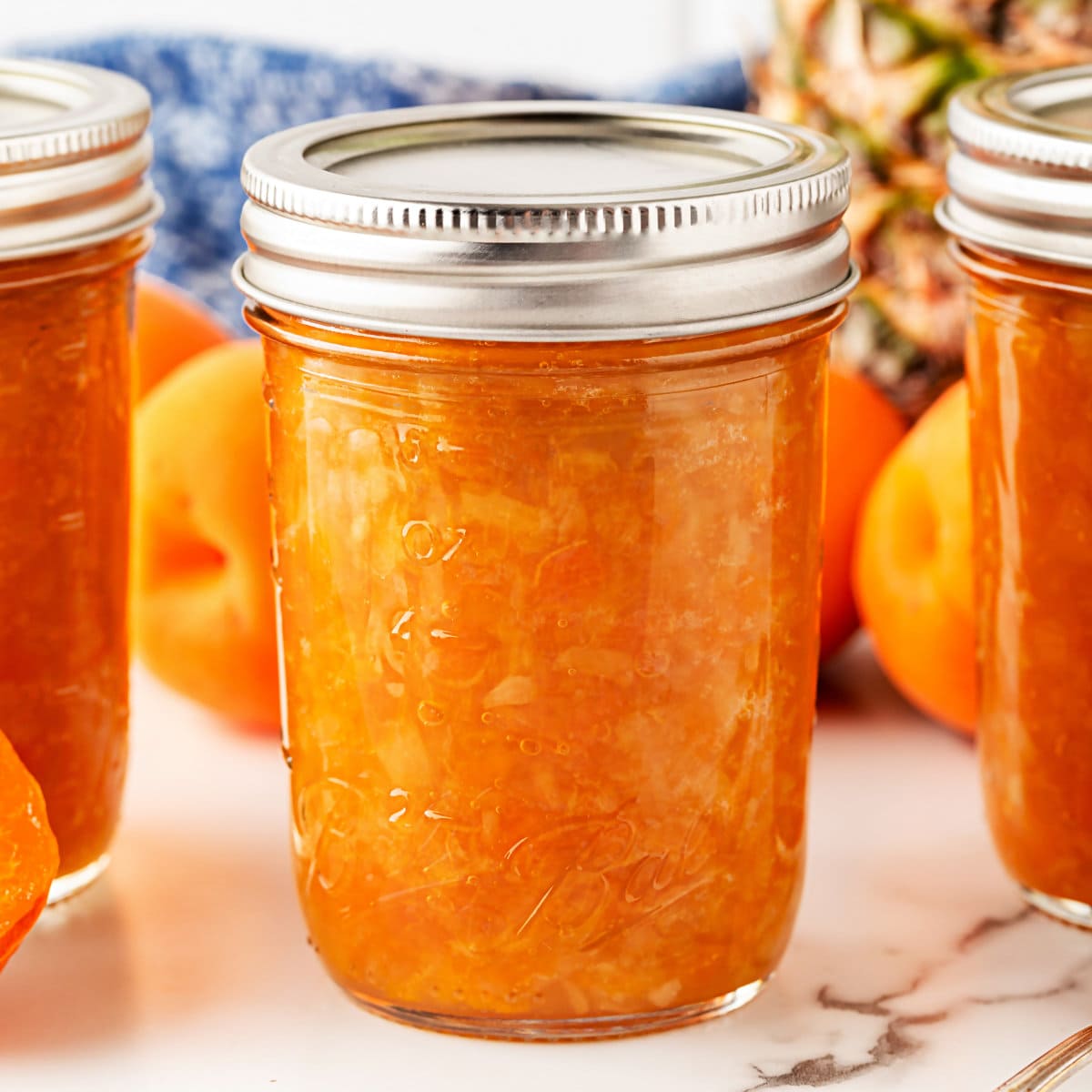
It was rare that we bought jam or jelly when I was growing up – mom always made it from scratch – but when we did, it was often apricot pineapple jam. It was a treat, since we couldn’t grow apricots (or pineapple!) locally. It remains one of my favorites.

Ingredients
Apricots — The key ingredient here, choose fruit that is fully ripe for the best flavor. Avoid overripe fruit. Freestone varieties of apricots (and all stone fruit) are easier to work with than clingstone varieties. Happily, most fresh apricots available to consumers are freestone, and the pit slips easily from the flesh.
Pineapple — You can use either fresh pineapple or canned pineapple here. Either one will work just fine.
Sweetener – This recipe calls for sugar. Use your favorite granulated white sugar.
Lemon juice – Use bottled lemon juice to assure that the resulting pH for this recipe falls within safe canning guidelines.
Get a Quick Start Guide to Safe Canning!
Want to learn how to preserve the harvest? Dive in for a look at various canning techniques and methods! Grab my FREE 6-part guide to getting started.
Pectin – This recipe is made using Pomona’s Universal Pectin. This is the only pectin I use anymore as it allows me to use much less sugar (or other sweetener). The standard pectin brands use too much sugar in my opinion, often requiring equal amounts of sugar and fruit! This product uses a low methoxyl method and calls for using two different ingredients, which are included in the box: pectin (the large packet) and calcium powder (the small packet). The dry pectin is mixed with the sweetener before being added to the fruit. The calcium water is added directly to the fruit. This low sugar pectin works a little differently, but makes a delicious, fruit-forward jam.
Fresh ginger – This gives the jam a little extra zing, but it’s purely optional. Use it if you like!
Prefer your flavors less combined? Try these:

Making the Jam
Wash and dry the apricots. Halve and remove pits, then dice into 1/2″ pieces.
Peeling the fruit is optional; if you’d prefer to remove the fuzzy skins, use this method.
Measure the diced apricots into a large stockpot along with the pineapple, calcium water, and lemon juice.
Combine the pectin with the sugar, making sure it’s thoroughly combined.
When the fruit mixture reaches a full rolling boil, add the sugar to the cooking fruit, stirring thoroughly for a minute or two to assure that the pectin is well distributed.
Canning Process
You’ll need special canning jars, lids, and rings to make this a shelf-stable product, but the process isn’t difficult.
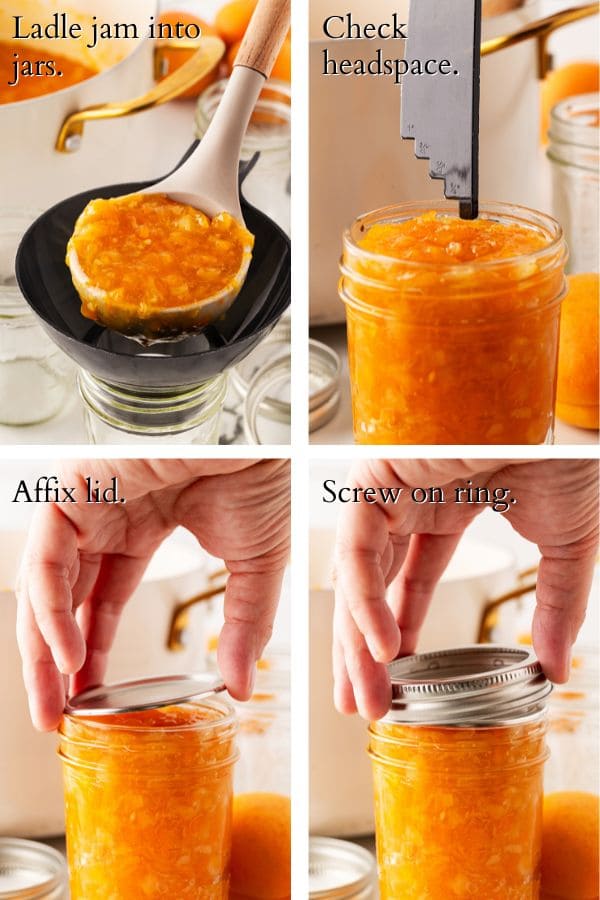
Transfer hot jam into canning jars, leaving a quarter-inch headspace. Use a non-metallic knife or bubble tool to remove any air bubbles. Wipe the rims of the jars, removing any residue.
Place the lids on and process them in a water bath canner. What this means is you’ll put the filled and sealed jars of jam into boiling water and heat them for a specific amount of time. This assures that the jars will seal well and kills off any potential bacteria in the jam mixture itself.
Jars must be covered by 1″ to 2″ of water.
Use a jar lifter to remove the hot jars to a towel-covered countertop and allow to cool fully. As they cool, you’ll hear the little “tink” sound of the jars sealing. Store any unsealed jars in the fridge and use those first. (This is unusual, but it does happen once in awhile.)
Remove the ring from each sealed jar of apricot preserves, rinse to remove any sticky residue, and store (without the ring) at room temperature in a dark place such as the pantry. Opened jars should be kept refrigerated; they’ll last in the fridge for several weeks.
🍅 Safety First!
Canning is an excellent way to preserve food for the pantry, but there are some important safety considerations to keep in mind. The recipes on this site have been made following safe canning procedures by a certified Master Food Preserver.
- Know the difference between water bath canning and pressure canning. Low acid items must be pressure canned for safety.
- Altering ingredients may change the recipe’s pH, posing a safety issue.
- Use the proper jars and lids. Never reuse lids, with the exception of the Tattler or Harvest Right hard plastic lids that are intended for such a purpose.
- For more on canning equipment, please go here.
- Want to learn more? The National Center for Home Food Preservation is the go-to resource for safe canning information.
Storage
Opened jars of jam should be stored in the refrigerator. Once opened (or thawed), the jam will last for up to a month in the refrigerator.
If you opt not to can the jam, simply store it in the refrigerator and use it up within a month or so.
★ Did you love this recipe? Be sure to give it a star rating below! ★
Homemade Apricot Pineapple Jam
Equipment
- 4 half-pint jars
- 4 canning lids and rings
- canning funnel
- water bath canner with lid or deep pot
- jar tongs
- canning bubble popper/measurer optional but handy
Ingredients
- 3½ cups apricots diced
- 1½ cups pineapple crushed (canned or fresh)
- ¼ cup lemon juice bottled
- 4 teaspoons calcium water from Pomona's Universal Pectin
- 2 teaspoons fresh ginger minced
- 1 cup sugar
- 3 teaspoons pectin powder from Pomona's Universal Pectin
Instructions
Recipe yields 4 half-pint jars.
Prep ahead:
- Prepare calcium water from Pomona pectin. Put 1/2 tsp calcium powder (the small package) and 1/2 cup water in a small jar with a lid. Shake well before using.
- Fill a canning pot with water, set the lid in place, and heat on high heat to a simmer while you're cooking the jam.
Make the jam
- Halve the apricots and remove pit, then dice. The skins should be chopped well. Measure 3½ cups of diced apricots into a saucepan. Add the pineapple, prepared calcium water and lemon juice; stir well.3½ cups apricots, ¼ cup lemon juice, 4 teaspoons calcium water
- Bring fruit to a full boil over medium-high heat, stirring occasionally. As it cooks, mash fruit until it reaches desired consistency.
- Meanwhile, thoroughly combine the sugar with the pectin powder (the large envelope) in a separate bowl.1 cup sugar, 3 teaspoons pectin powder
- When fruit is boiling, slowly add the pectin and sugar mixture, stirring vigorously for a couple of minutes to dissolve the pectin.
- Return to a boil and remove from heat.
Canning apricot jam
- While jam comes to a boil, remove the empty jars from the canner, draining the water back into the pot.
- Ladle hot jam into prepared jars leaving a ¼" headspace. A canning funnel makes this easy.
- Wipe the rim of the jar with a damp cloth to remove any jam that may have spilled. A clean rim is essential to a good seal.
- Place lids on the jar. Screw bands on finger tight.
- Use a jar lifter to gently place jars into the boiling water canner. Be sure to place a wire rack in the bottom of the pot to prevent the jars of jam from sitting directly on the bottom. Water should cover the top of the jars by an inch or two. The water will cool somewhat in reaction to the addition of the jars. Return the water to a low boil and then set the timer.
- Process in a boiling water bath for 10 minutes. Add a minute to the boiling time for every 1,000' above sea level.
- Turn off the heat and remove the canner lid. Wait 5 minutes before removing jars to allow the jars' contents to settle.
- With a jar lifter, remove jars from water one at a time, being careful not to tilt the jars, and transfer to a solid, towel-covered surface.
- Allow to cool undisturbed 12-24 hours.
- Check seals. Lids should be solid and pulled down tight. (If they flex and pop, the jar didn’t seal; put unsealed jars in the refrigerator and use those first).
- Remove rings and wash the outsides of the jars. Store in a cool, dry place.
Notes
- Recipe yields 4 half-pint jars.
- This recipe is made using Pomona’s Universal Pectin. This is the only pectin I use anymore as it allows me to use much less sweetener. The standard pectin brands use an obscene amount of sugar in my opinion, often requiring equal amounts of sugar and fruit! This product uses a low methoxyl method and calls for using two different ingredients, which are included in the box: pectin (the large packet) and calcium powder (the small packet).
- This recipe can safely be made using quarter-pint, half-pint, or pint-sized jars.
- Boiling lids or heating above 180°F as once recommended can damage the sealing compound.