
I tend to be less “Doomsday prepper” and more interested in living a more self-reliant lifestyle in which we count on ourselves instead of depending so much on others. It’s a different kind of emergency preparedness, but one that fits our lifestyle. I suppose you might consider us practical preppers.
Preppers Who are Practical
This topic came up on a local self-sufficient living list and I was impressed with what Sue Barnett had to say. It is a bit localized, but I think that no matter where you live you’ll find something to think about as you plan – or update – your emergency kit.
Availability vs. Expense
Unless were are under siege of war, I don’t see a lot of items just disappearing. But they surely [will be] more and more expensive to buy or maintain. There will come a point where you find you cannot afford them, and thus cannot afford to live here. Sadly many people have already reached that point and moved to the mainland. But those people are only putting off total bankruptcy by living some place where it is cheaper rather than learning to be more self-sufficient. Being dependent upon things like propane, lamp oil, generators and gasoline, canned goods and imported food, power tools, etc. is inviting downfall. In my opinion, it would be wise [to] gradually wean oneself from such dependency.
Case in point was the comment about using a water producing machine. Now you are dependent upon a commercial product that needs maintenance and uses electricity. That translates into cash expenditures. While one may be able to afford that now, do you know how to live comfortably without it? Having that knowledge and willingness to do it may become vital. Personally I prefer to store my water in glass one gallon and liter jugs. This frees up money in the budget for other things and makes me more self reliant.
Expanding Knowledge
While I indulge in the use of power tools and equipment now, I have taken the time to learn how to live without them. I have experimented with using other forms of power – animal, treadle, bicycle, etc.
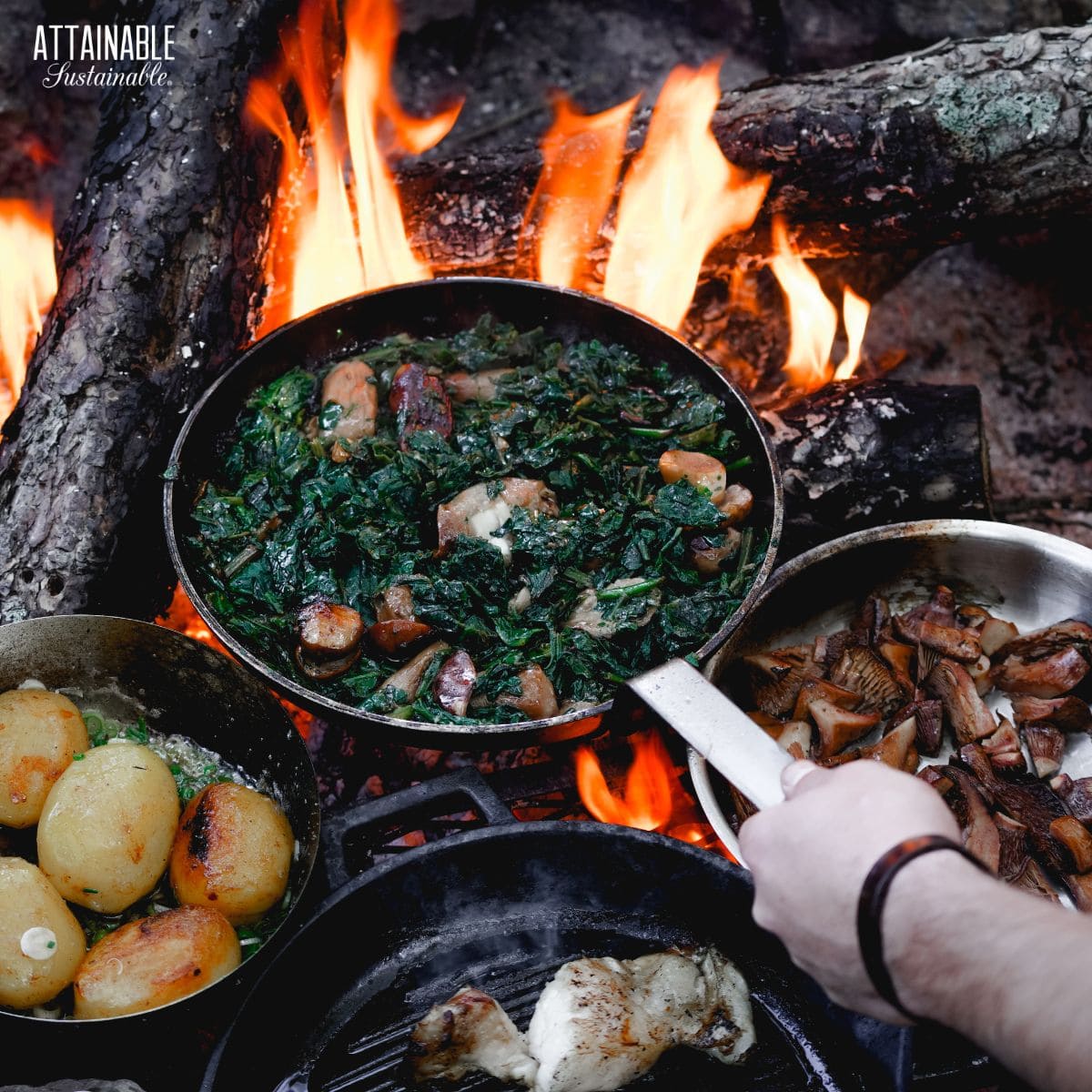
I currently use wood for cooking livestock food and could easily use it for my own meals, and often do! I use solar for electricity, and although that will require cash input sometime in the future, it has taught me to be frugal with my electric use.
Take a Peek Inside My Book!
Get a free excerpt from my book, Attainable Sustainable: The Lost Art of Self-Reliant Living! You’ll also get my free weekly newsletter, complete with recipes, gardening tips, and a little peek at what’s going on around here — both the zany and the mundane.
Plus I have no monthly electric bills. I use catchment water even though I could hook up to county if I wanted to. I have learned about solar for cooking and water heating.
Food and Lifestyle Changes
I have gradually cut my ties with imported food. If your are concerned about the future and are able to garden at all, I would suggest at least learning about it. Food will become costly, as prices are already going up.
Stockpiling: my suggestion would be to be careful. I made mistakes in the past by not taking into account that I was changing my lifestyle. As I weaned away from commercial food I found myself with boxes of canned goods I no longer wanted. So now I try to be more careful to stockpile only those things I’m sure I will need.
Also be careful about items that deteriorate. Vog and moisture ruined some of my things and taught me to take extra steps in the storing process. On my own stockpile list are hand tools, basic resource items such as specialty nails, screws, latches, locks, chain, rope, lithium grease, oil, and things that I cannot make myself. Medicine and medical supplies for both humans and animals.
Bleach, baking soda, soaps. I have a few slabs of paraffin. Buckets. Tarps and rolls of plastic sheeting (a pleasant indulgence on my part). Clothing and blankets. Kitchen pots/pans and kitchen hand tools. Lumber. PCV pipe.
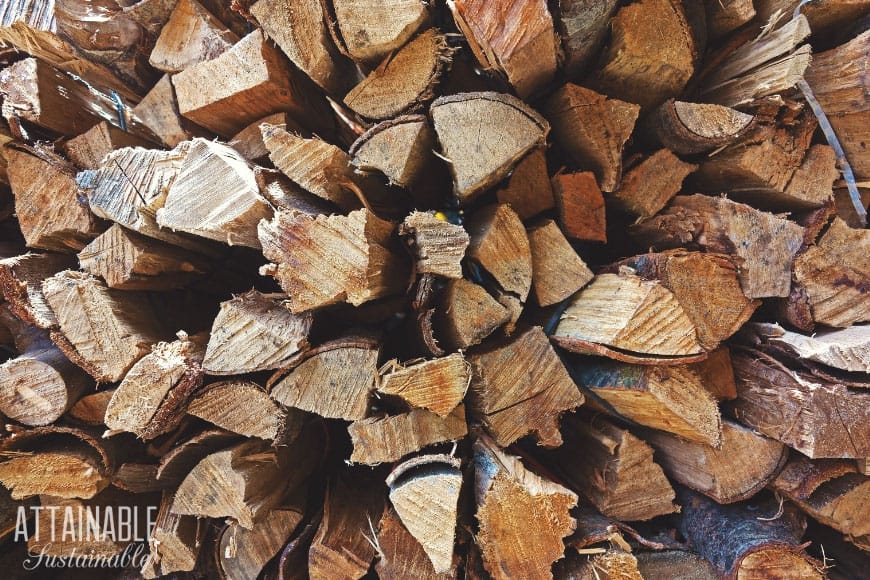
I try to think of what items I use frequently that I cannot make myself. And I try to envision projects I may need in the future, such as a hoop house to grow food in, repairs to the house, etc. I already have a nice library of how-to books. And I have acquired a secure source of firewood.
I would suggest gradually switching your lifestyle to becoming more self reliant now instead of waiting until you’re at the point of fiscal disaster. Even little changes can free up cash better spent elsewhere.
Becoming Practical
I have to agree with Sue. If we continue to lead a lifestyle that includes lots of packaged foods, convenience items, and pretzels, then sure, it’s going to be hard to do without in the event of an emergency. It’s what we’ll be used to and anything less than what we’re used to will feel like a hardship.
On the other hand, if we alter our habits so that many of our needs can be met locally on a day to day basis – from our own gardens to knowing a farmer – it will be much easier to adapt in a less than ideal situation. Becoming more self-reliant is good for us in emergencies and day to day life – not to mention better for the environment. Shifting our thought process and expectations allows us to be more practical in our efforts to be “preppers.”
Have you seen this list titled 100 Items to Disappear First? It’s a collection of items that, in case of serious emergency, are likely to disappear first. Now, I don’t know who created this list or how accurate it is, but it’s worth a look. If nothing else, just to make you think. (While I think some of these items are absolutely of value for emergency situations, others (see list item 82) make me raise my eyebrows a bit.)



As a survivor of Camille (1969) and Katrina (2005) we First ran out of water and t paper. then canned food. So now I start in late Apr. or early May to start buying what I need for Hurricane season. This past year we didn’t have any big storms so I have a head start for this year. Last thought if something bad happens in your area, Think of what you will need to fix your shelter, feed yourself and/or family. Think of your needs in stages and start now, don’t wait until it is on the horizon.
Great advice. Thanks for sharing!
For about $250, I got a VIVOR vacuum pump for a home freeze dry system, with a desiccation chamber and gauge. The pump is broken and I have not called to get it fixed. The gauge is wonderful, and the chamber holds a vacuum for days, though, and I (70yo woman) was able to pull a 1/2 atm vacuum by hand with a bicycle/air bed pump. That is good enough for a tolerable freeze dryer. The freezer is my regular fridge freezer. This could help you save your freezer food in a grid-down situation, or give you access to very high quality storeable food a lot cheaper than Harvest Right, which is a bargain item if you can afford it (half of us can).
Any long-term storage method can be used to save quality produce before it goes bad, saving money if done well.
During hurricane Ian our yard was underwater (salt water) 6’ deep. Lost nearly everything on ground floor where I store most everything including generator. Now I bought grow bags to grow sweet potatoes & herbs on second story. Canned goods expire. Learned sprouting which are a superfood. Rocket stove uses wood or leaves. Soap nuts. Vinegar. Baking soda. Store water. 100% cocoa. Flour. Rice. Dried beans. Ball jars (extract air for canning). Heirloom seed vault.
I’ve always worked toward being self-reliant. By doing this I have also become prepared for many things…food, medical needs, cooking methods, shelter, etc.
That’s great!
If you read about how people survived the Great Depression you will learn a lot. Don’t depend on your electronics for info. Write recipes down, keep a notebook on survival skills. Books will be crucial. Storing seeds properly is crucial. Heirloom seeds will keep you fed, you can’t save seeds from GMO plants. Read every label. Start gardening now, later may be too late.
Did not see shoes on the list, of all the list of what I am ment to have forgotten everyone has forgotten to add in extra shoes! On the day shtf we will have nice shoes but after 6 months a promise you, you will need to replace them… Cold wet feet will finish you off very very quickly! And I for one do not know how to make good shoes
In terms of generator there is one by goal zero that is solar powere,quiet’ and and you dont have to rely on gasoline
I rarely ever see someone mention this item but let me bring up this uncomfortable subject… feminine hygiene products. one item that most commonly is disposable but there is an alternative to reusable products. the initial cost can be a little spendy. but given the option of having nothing to choose from or a product that has to be rinsed, washed/dried much like a cloth diaper. not a difficult decision. esp if something happens and you run out of the disposable kind and there is no where to buy more.
I wish I could go solar but I can’t afford it. I can and have lived without electricity but I would like to have it for the fridge and air. I raise a garden and I have Vaccum sealed some foods. I plan on building a cellar this summer and developing a spring
I think everyone has some good ideas. A few I would add would be a mini tacbow (crossbow) 80 lb pull. Silent when you need it to be and easy to use, can take down deer or anything else you need to take down. It has a pistol like handle and trigger. A good sling shot can take down rabbits, squirrels ect. again silent. A good gun is good to have also and very important are sharp knives like hunting or military. A portable water filter, Berkey is really good but there are others. Berkey also filters out some radiation. You are always going to need clean water to drink. You can get seeds gmo free and they will last up to 25 yrs they add all the instructions for drying the seeds for the next yr. They are put in a container the size of a pringle can. Antibiotics, some farm pet stores carry Amoxicillin for cats and dogs that are the same the dr gives us so no script needed at some places also many things online. If you run out of TP phone books and newspaper can be used. A lock pick set, most times the guard houses out by power grids and places for rangers usually have water and possibly some food in them. Also churches and schools have food and water. Most ppl don’t think about those places. I didn’t till I read about it. Insect repellent either natural or chemical. Insects carry lots of diseases especially ticks. I know, I have lyme disease from one bite and it can take you down in a hurry. They have found mosquitoes and flies are carriers and a lot of animals and birds. Para-cord can always be used as well as duct tape on more things that can be listed. Some 5 gal buckets for many uses like toilets and others for washing clothes. I have heard many ppl make a big mistake by dumping sewage water too close to the house or shelter and have also done it uphill and it runs down during rain. Make a hole in the lid of 5 gal bucket and use a (new) plunger and bucket put the handle through the hole and plunge away to wash your clothes. Para-cord for line drying. A good pair of sunglasses is nice. Good shoes and socks. Many a warrior have been taken out because of foot problems. Bleach and vinegar. I heard of a woman that died from drinking contaminated water and she had bleach in her house, if she had only known 1/4 tsp of bleach per 1 gallon of water let set for at least half hour would have saved her life. There are online instructions. A good sewing kit, might not get to have other clothes for a long time. Just so many things needed. One other thing, for bartering, candy (chocolate), cigarettes, alcohol. Ppl are going to want the comforts in stressful situations and they might give up something more valuable for survival. Maybe a pen and some paper for some keeping a diary is a comfort. First ppl to be dangerous are ppl that do drugs either street drugs or medication. Ppl coming off their antidepressants can be psychotic as well as meth users. Some of these ppl will do anything for a fix. Legal or illegal drugs. Trust no one you don’t know extremely well. Even the nice neighbor next door can turn when his children are hungry and crying for food. Everyone will be fighting for their lives and those of their loved ones.
interested to see your site
I can do with out half the items on this list already. There is one thing missing on this list however that was #1 on my personal preparedness list. MEDICAL NEEDS … we have antibiotics and prescription meds for each and every member of our household including pets and livestock. Plus extras. Plus any other item I can think of or find while I’m out and about. And a great big comprehensive medical and veterinary guide (these books were the most expensive items in our kit) I could probably do minor surgeries if I had to. Routine things like injections, first aid and stitches are all planned for.
Good advice!
Having extra meds is a great idea. Where do you get things like BP meds or diabetic meds? My insurance co won’t even let me fill a script one day early!
They will sometimes do so if you tell them you’re traveling and will miss a refill…
Ask for 90 day scripts
The more serious question is how to survive a “dirty bomb” event? I feel like its only a matter of time before one or more serious bombings take place in USA due to our weak borders & lax leadership. I recently dug a well on our property. Also been reading books about the affects of a “dirty bomb”. A “dirty bomb” can be nuclear and bacterial at the same time. If you have a basement, you can prepare yourself to better survive this event when it happens. If no basement, consider building an underground shelter, even if its crude and basic. Include a gun and ammo also because you will
need to defend yourself.
I first found that list eons ago on a website called “The Power Hour” and from what I was understanding, the list was based on an actual war situation. It was, reportedly, developed by a survivor of the siege of Sarajevo, and it wasn’t, necessarily, meant to be a recommendation for “preppers”, but a caution about the kinds of things one might find oneself without in an extreme situation where supply lines have been completely severed.
Reading about such sieges, however, is a very good exercise in preparedness and self-reliance. Reading about the WWII siege of Leningrad was very eye-opening.
When I think about my personal preparedness, I always ask the question “and then what” with regard to the kinds of things I choose to keep. That is, if I were considering purchasing wheat to store/stockpile, I would ask myself, what will I do for food when I run out of wheat, if I can’t buy more? My personal answer is not to stockpile wheat as a food staple, and in response to asking myself those questions, my husband and I learned to forage.
I think the useful part of those kinds of lists is to get people thinking, and some of the recommendations on that list are actually pretty smart. Like, I’m not going to stockpile canned foods – mostly because my family doesn’t eat them – but having a good store of matches, lots of candles, some extra oil for the oil lamps, and books (lots and lots of books! especially how-to) is very good advice.
One other thing I would caution about stockpiling is seeds. Unless they are properly stored, they won’t be viable in a few years, and a better idea is to learn to save seeds and/or move from a diet dependent on annuals to one that favors more perennials – both wild and domestic.
What a thoughtful comment. I totally agree. I like the way you put that though – “and then what?”
I agree that seeds need to be saved continually, but saving a survival seed kit is still a good idea. Even though germination rates go down over time you will still get some germination and that is better then having no seeds at all. This year I am going to plant some beans I found in an old box from my grandfather. They are marked “old variety beans, 1978”. I’m excited to see what I get.
What a fun experiment! How great would it be if you have some success and can start growing them again.
Heirloom seeds can be viable for 10 years+. Use paper envelopes and put the envelopes in a glass jar. Wrap the jar in a towel for transport.
During the first week after an earthquake, water is hard too find, so is food you can eat with out having too cook it. An emergency barrel filled with change of clothes & shoes, first aide kit, non perishable foods you can rotate for age, medicines, tent, tarp, tools, hygiene products, trash bags, copies of personal papers important as insurances, phone numbers, a charging device that can charge you cell phone with out electricity; these are you go to “emergency” stuff.
You don’t have to lve in an area that is just “tornado or earthquake” type problems to have such provisions ready. I even have a back pack in the car with emergency provisions that changes with the time of year and area traveled. Ask a tornado victim, an earth quake victim, a fire storm victim, or someone stranded where they can’t travel further or must walk out of the area for an emergency situation. Most rescue help have limited provisions for large areas and some provisions, after plans are put to work, may take 2 days to a week to get provisions available. I’ve seen it.
We’ve been watching that survivalist show – it’s scary to think about, but good to be prepared.
Amanda Richards: I say stockpiling chocolate can never be a bad choice. 😉
The inserted quote totally makes sense. Making small, frequent lifestyle changes will gradually bring you to self-reliance more naturally than stockpiling. The stockpiles will eventually run out…
I totally believe in self-reliance, we try to grow/raise all our own food, but I’m having a hard time w/ chocolate….so I have a *few* buckets fully stocked! 😉
Woot woot! Of all the relavant things on this list ( I live without candy now, I don’t think I’ll need it in a crisis) we are ready!
Last Days Hippy: I totally agree. But I wonder if stockpiling enough pretzels and graham crackers to last through a zombie apocalypse is a smart use of energy – wouldn’t that energy be better spent in growing a garden?
Being self-reliant IS being prepared!
As a “survivor” of Hurricanes Charley, Frances and Jeanne in 2004, I can tell you what disappeared first in our communities near Melbourne, FL/Cape Canaveral, FL:
1 – Generators <– Lowe’s and Home Depot had their inventories cleared up north and shipped them down to FL in 2004
2 – Lumber <– lumber was similarly diverted
3 – Tarps
4 – Gasoline <– I have memories of those digital interstate highway signs announcing “Last available gas in Florida” at about exit 250 on I-95 southbound. In other words, to go south of about Daytona Beach there were allegedly no more gas for vehicles.
5 – Perishable foods. Grocery stores had to purge all items that had to be kept at less than about 40F after they lost power for as little as an hour. Our local Publix grocery store had nothing in their meat, dairy and produce sections. I’m not sure that was completely necessary — the food waste was unbelievable!
That whole experience was very surreal — having to choose what to evacuate and what to leave behind. It certainly made us realize how little we actually NEED…and that we have a lot of junk!
@vollmerdp Patricia, you bring up a good point in that in SOME emergency situations, a garden might not survive and be there to feed your family. (By no means am I suggesting to rely on only a garden for emergency preparedness, but I do think it’s a smart step to take for those who can.)
@Attainable Sustainable Of course, it depends on the type of emergency. A city under siege (i.e. zombies, terrorists, etc.) = garden! Hurricanes, tornadoes, fire = non-perishables.FWIW — when we were on the east coast of FL, my vegetable gardening was such a FAIL. I had flowers galore, but my veggies were either in feast or famine for some reason. Many of my veggie plants had rotted from an abundance of rain in 2002 and 2003. So by 2004 I had given up. My worst gardening experience of the 7 places I’ve lived since college…