
Tepache is a slightly fermented drink made from the skins of fresh pineapple. I love the idea of utilizing the skins that would otherwise be tossed to the compost pile, plus the drink itself is delicious!
Originally published August 2020; this post has been updated.
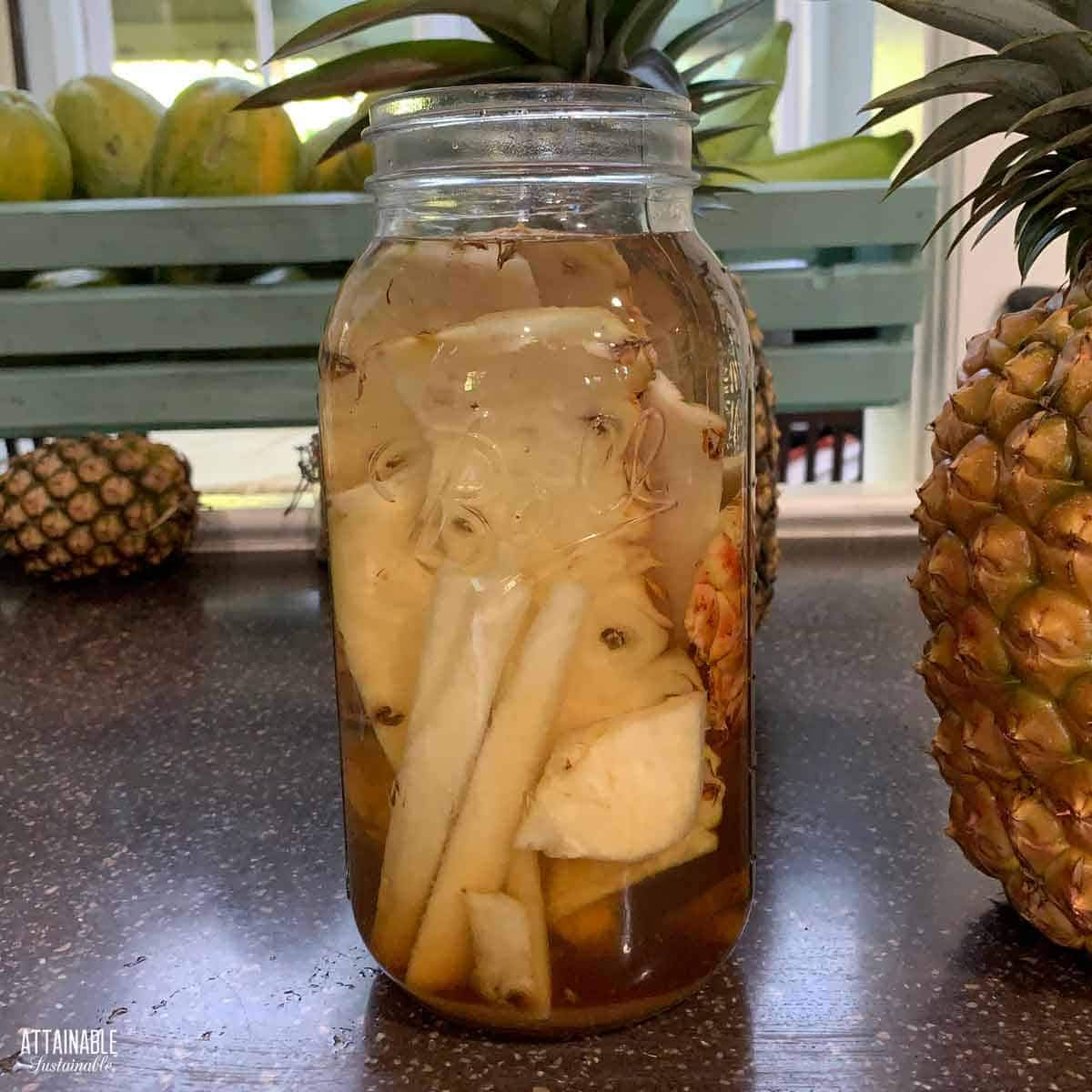
What is Tepache?
Commonly made in Mexico, tepache is a light, slightly carbonated drink that’s served cold. Through the magic of fermentation, you can transform pineapple skin into a delicious drink. No waste!
Now, admittedly, I’ve never tasted traditional tepache, but I’ve done a fair bit of fermenting so decided to experiment.
This homemade pineapple tepache reminds me of a cross between hard apple cider and kombucha. Is there alcohol in tepache? Probably, but if it ferments to the point of creating alcohol, the level is very low, similar to a kombucha.
5 Easy Steps to Transform Your Pantry!
Ready to switch from store bought to homemade? Let me help you make some changes! Grab my FREE five-part guide to getting started.
Ingredients
Pineapple peels — If you’re frugal like me, you will appreciate the idea of salvaging a waste product that would normally be tossed to the compost. Save the skins when you make my pineapple salsa or this pineapple jalapeño jam and you’ll be ready to roll!
Sugar — Traditional tepache recipes call for piloncillo, a dark brown minimally processed brown sugar. But it’s not something that most US households have readily available. I just use regular organic brown sugar or cane sugar and it turns out just fine. The end result may be a bit lighter in color than recipes made with piloncillo.
Spices — These are totally optional but a fun way to switch up the flavor of this Mexican fermented pineapple brew. You can shred a knob of fresh ginger into the jar, or add whole cloves or a cinnamon stick.
Making Tepache
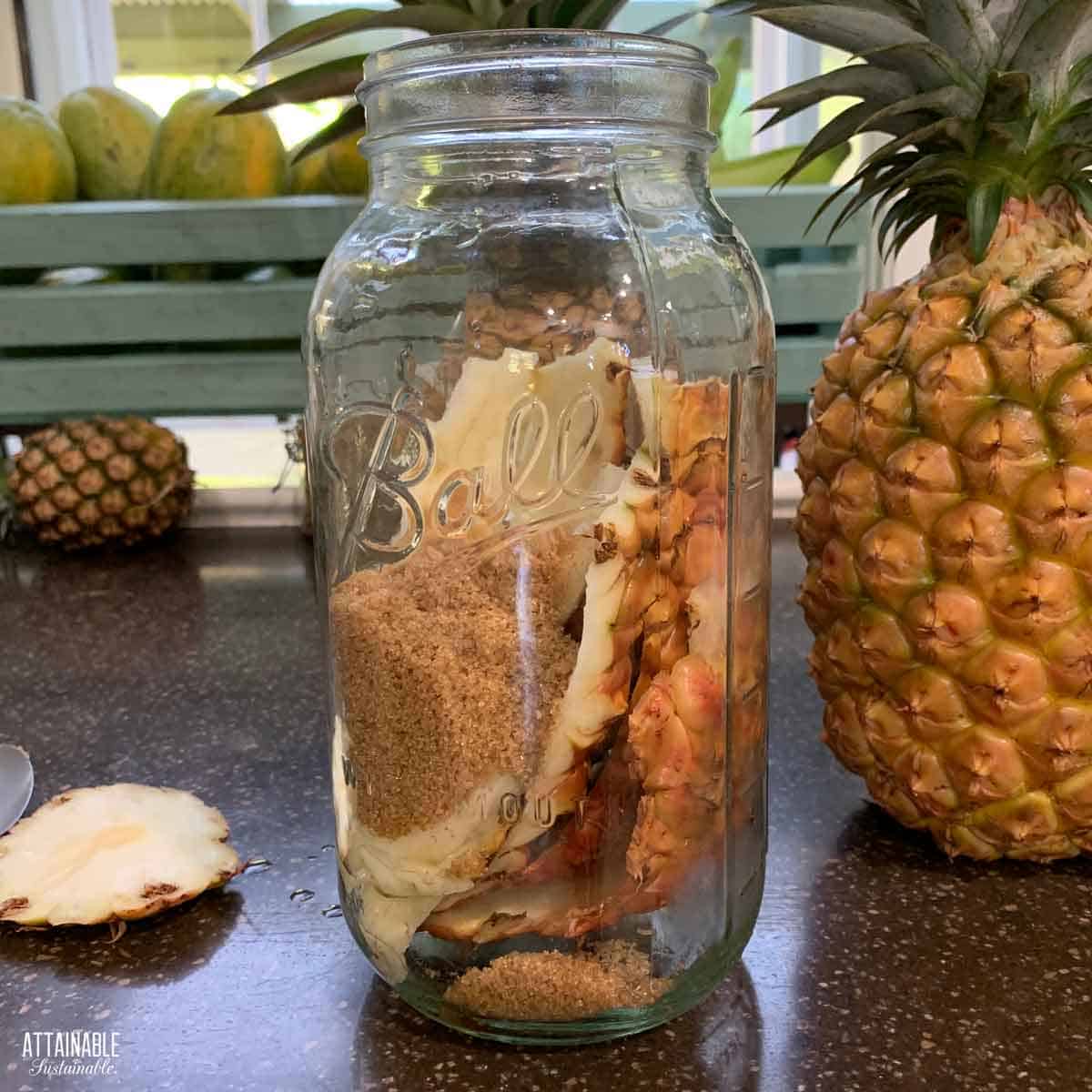
The making of tepache couldn’t be easier. Before you peel and core a fresh pineapple for another recipe, give the fruit a rinse to remove any residuals. You don’t have to scrub it; just make sure it’s not dirty.
As you cut off the pineapple rinds, place them in a half-gallon jar. Add sugar and water, along with any spices you’d like to add, loosely screw on a lid, and set the jar on the counter to ferment.
The Fermentation Process
Place the jar on the counter at room temperature. It’s a good idea to sit it on a dish or kitchen towel to absorb any potential overflow. An active ferment can bubble over the edge of the jar.
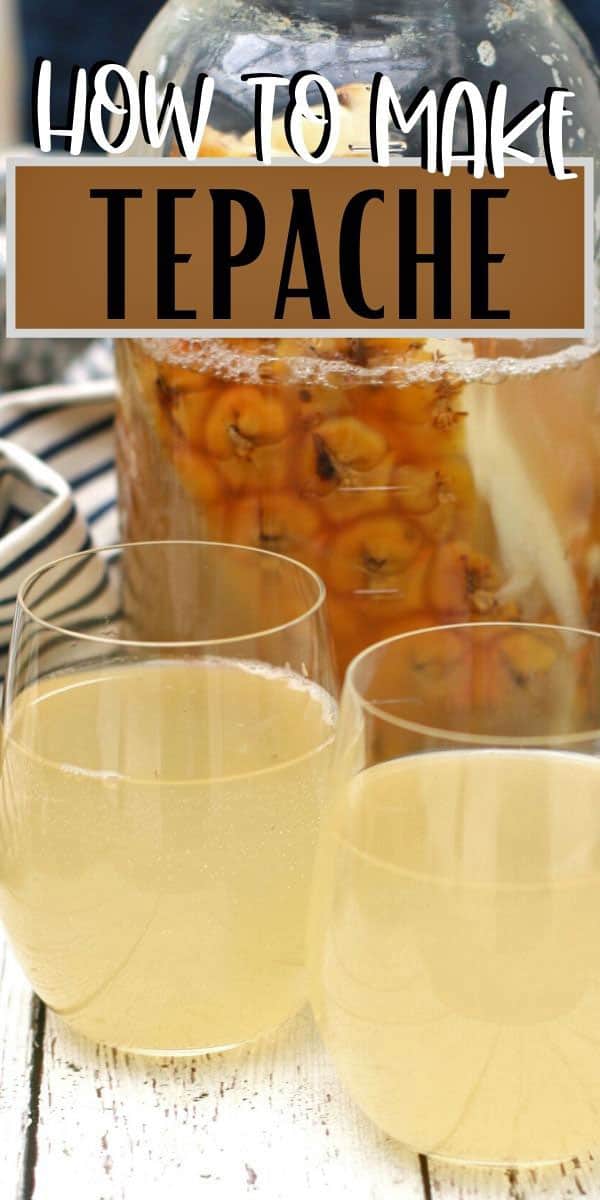
The first sign that fermentation is happening will be a bubbly white foam at the top of the liquid.
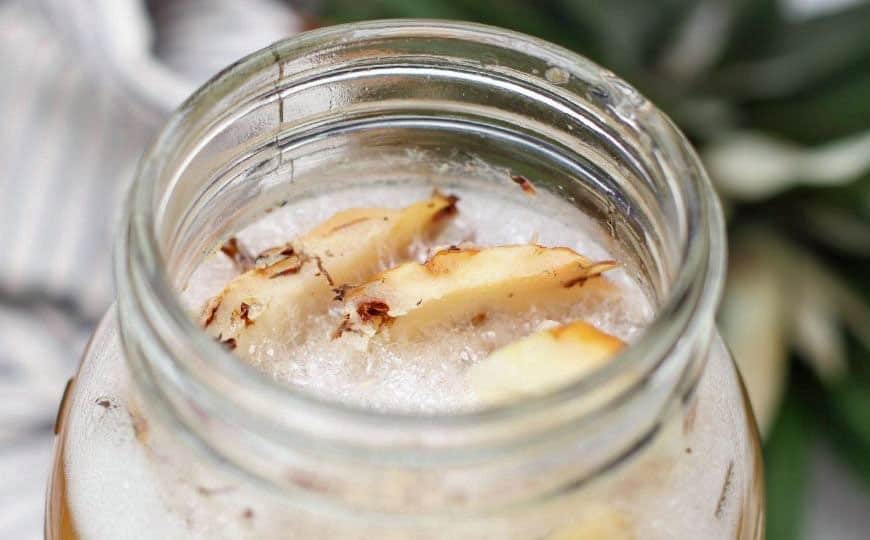
The natural yeast found on the skin of the pineapple will continue to ferment over the course of several days.
When is it Ready to Drink?
This is the million dollar question. This can vary depending upon the temperature, but generally speaking, between 2-5 days.
Be sure to taste it every couple of days. When it tastes good — slightly fizzy, sweet, and tangy — strain the tepache, discarding the fruit. (And by discarding I mean composting, but you know that, right??)
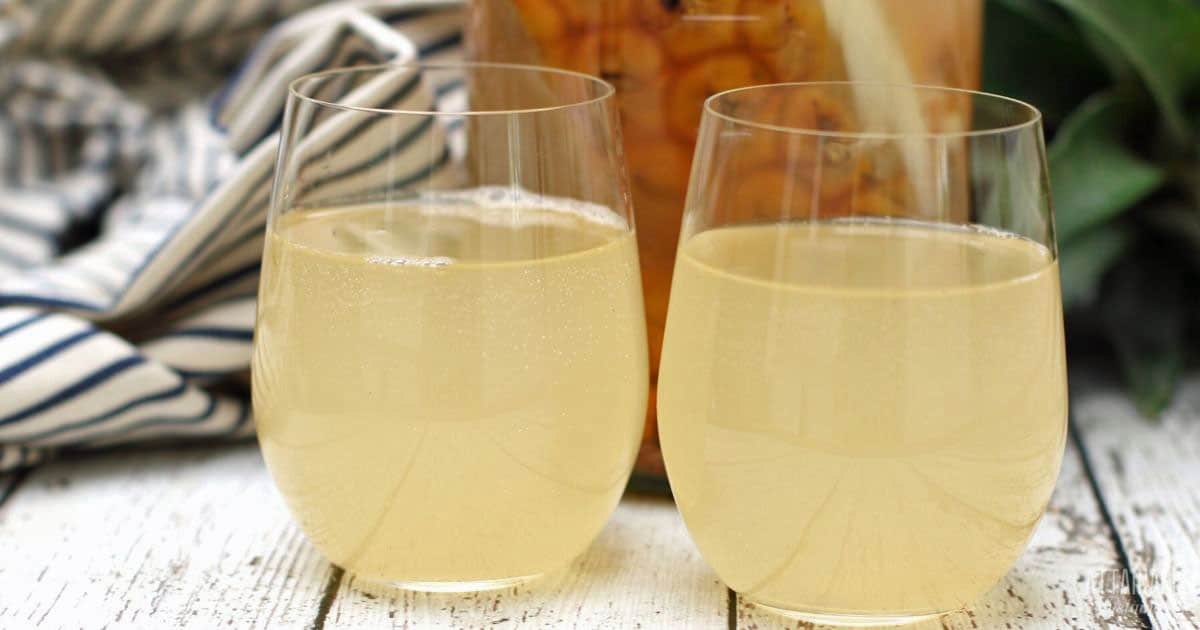
Refrigerate and serve over ice. The tepache can continue to ferment in the fridge; if you let it go too long, it will turn into a somewhat harsh vinegar. (I’ve used it for cleaning but it’s not great for cooking with!)
★ Did you make this recipe? Don’t forget to give it a star rating below! ★
How to Make Tepache from Pineapple Skins
Equipment
- 1 half-gallon jar
Ingredients
- Peels from one pineapple
- ½ gallon water
- ½ cup sugar or piloncillo
Instructions
- Wash, peel, and core a fresh pineapple. Place the peels and cores in a 1/2 gallon jar. (Use the delicious fresh pineapple for another recipe or enjoy it fresh!)Peels from one pineapple
- Pour sugar into jar and fill with water to within an inch of the top.1/2 gallon water, 1/2 cup sugar or piloncillo
- Cover jar loosely. You can use a cloth napkin attached with a rubberband or a jar lid that's not tightened down. (This allows any built up gasses to escape.)
- Leave the jar out at room temperature for several days. Watch for the formation of bubbles. Sample the tepache about 24 hours after the bubbles formed. It may be delicious at that point, or you may decide to let it sit at room temperature for another 24-48 hours.
- Pour the liquid through a fine sieve to remove particles.
- Store in the refrigerator in a sealed jar for up to 2 days.
Notes
- You can try adding a knob of fresh ginger (shredded) into the jar, or add whole cloves or a cinnamon stick to vary the flavor.
- There are some variables in this recipe (as with most fermentation recipes). Experiment and try it more than once! Each batch is slightly different.



Just about to start,thanks alot
I make this whenever we have a pineapple. When the water starts to go cloudy (from clear) I know the fermentation is starting.
There will also be foam on top, and you can see bubbles forming if you stir the mix.
I usually do a second fermentation with added flavours (cinnamon is a favourite) in pop-lid bottles for a day or two, then into the fridge. I have recently started adding some citric acid with the second fermentation because I wasn’t happy with the insipid pineapple flavour. Might be the pineapple’s fault, lol!
Oh, citric acid is an interesting idea!
I started making Tepache Tuesday morning and have not seen any bubbly starting. I live on the west side of the island, air condition house. I have it placed next to the refrigerator on the counter covered in a glass pitcher with couple layers of napkin with a rubber band on top. Is it time to give up, wait more days, or move it to the dining table which is a warmer spot, east window?
Thank you
Thank you so much for the information. I’m trying it right away.
Everything has been in the jar for around a week. I taste it now and then, it’s tasty, but there are no bubbles. I’m in Massachusetts so my house is around 65 degrees. Any ideas about how to start the fermentation?
It may very well not bubble at that temp, but still ferment. Lower temps – slower fermentation.
You should warm water first before putting it into a jar.For quick fermentation I add a 1/4 teaspoon of instant yeast.
I just got a pineapple for another recipe, gonna try this! Hopefully my house is warm enough.
I started this before reading your article, based on a verbal from my spouse on how to do it. I poured hot water from the tea kettle in a 1 quart mason jar with the pineapple rinds. After 1 day and a half it made a watered down pineapple tea if I had to describe it, but no bubbles or fermentation. After reading your article I added a quarter cup of raw sugar and shook it up. So hopefully the hot water did not kill any beneficial enzymes. If your interested I will let you know the results. Any additional thoughts are appreciated.
No need to boil the water. Not sure what to tell you to expect, though.
Delicious and easy thanks for the recipe!
To make the flavor stronger could I just add skins from 2 pineapples to the same amount of sugar and water? Or would it be better to just do a half gallon jar for each pineapple?
Feel free to experiment!
by ferment do you mean it becomes slightly alcoholic? can rum be added?
If it ferments to the point of creating alcohol, the level is very low, similar to a kombucha. I wouldn’t add rum to the ferment, but you could try adding a little per glass when you drink it.
I don’t have a 1/2 gallon jar so
I’m using only about 2/3 Oz of water and hoping it will still work.
Ooops I mean about 2/3 the specified amount.
It should, you might want to reduce the sugar a little also. Good luck!
This looks amazing and I would like to try it. However, I am AIP (elimination) compliant and am wondering if I can make this with coconut sugar. What do you think?
I have read that you can use coconut sugar for some ferments, however, I haven’t tried it with this recipe. I think it is worth a try if it is what will work for you. Keep us posted!
Coconut sugar works
I’ve made tepache for years. We love it. It really hits the spot on a hot afternoon.
Yes! It’s so good. 🙂
Can I freeze the pineapple skins then use them later or will freezing kill the bacteria for fermentation?
Hm. I haven’t tried it, but I’d think it would work? Let us know if you try!
I use frozen cores/skins without problem. Maybe takes a bit longer to start the ferment process but it still works. Freezing puts the bugs to sleep but doesn’t kill them.
I like to dehydrate the skins after the fermentation is complete and then grind it to a powder. I make a tea with it to drink daily. It’s lovely and extends the use of the skins!
I make pineapple vinegar by immersing the peels with water for a week or so and then straining it after straining for tepache
Yay! I just bought pineapple today. Guess what I’m going to try?!
A coffee filter over the mouth of the bottle and just the ring on the top is my “go to” cover for fermenting.
That’s what I do!
Used to ferment a lot, mostly sourdough and kombucha. My cloth covering got funky at one point so I switched to coffee filters. Biodegradable, inexpensive, change whenever needed.