Growing parsnips as a cool-weather garden crop is a sweet and delicious way to harvest some veggies during the fall and sometimes winter seasons. Parsnips are a tasty and versatile vegetable that are wonderful roasted, mashed, added to soups and stews, or eaten raw in salads. You’ll love having these delicious, creamy, carrot-like veggies growing right in your home garden!
Interested in more cool weather crops? Try these fall veggies!
Contributed by Jodi Torpey, author and Master Gardener.
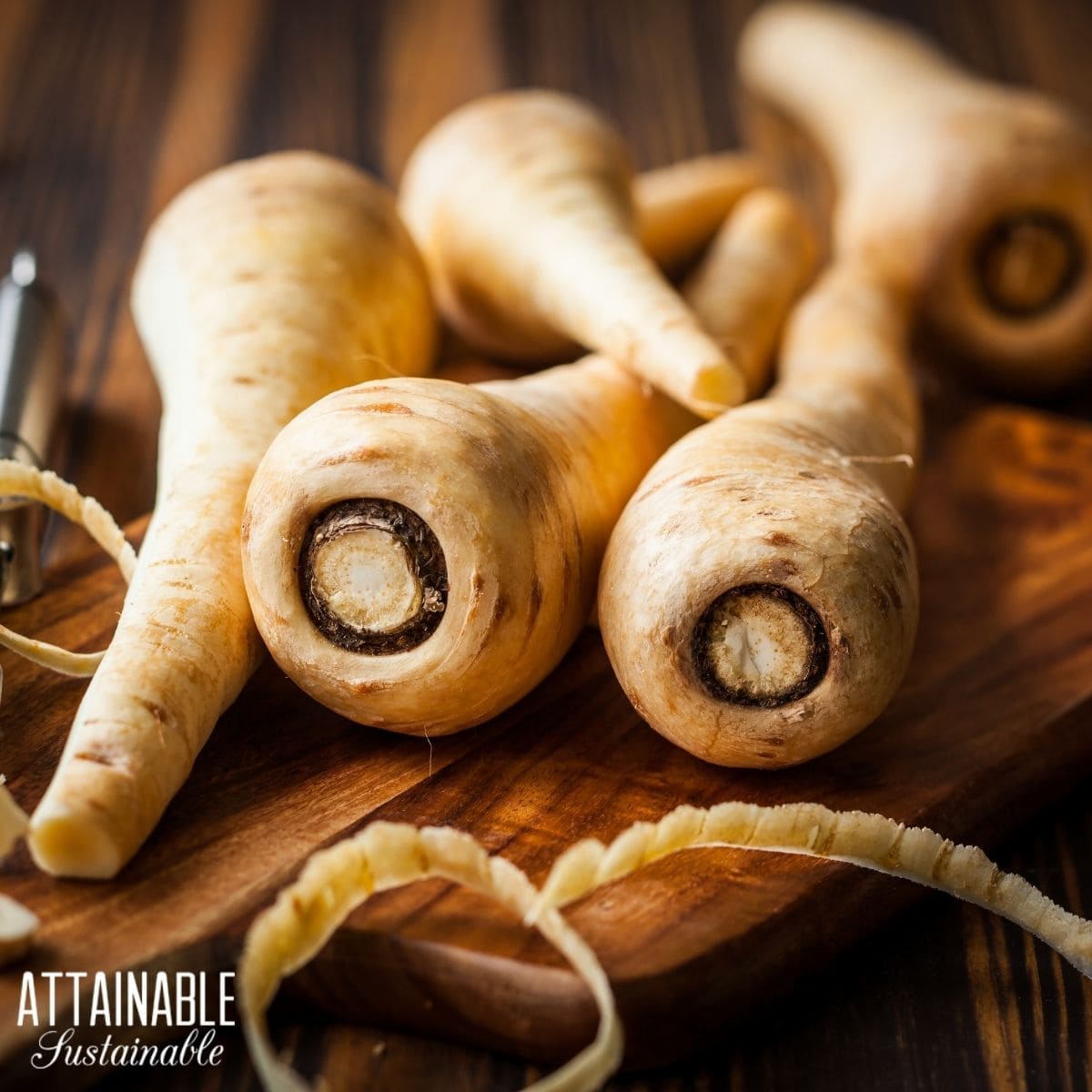
Growing parsnips
Parsnips sound like one of those root vegetables meant for someone else’s vegetable garden. These large, white carrot-like vegetables seem old-fashioned, but parsnips deserve to be planted and appreciated for all their delicious benefits.
Besides being beautiful to behold, these creamy-white roots contain iron and vitamin C and they have many uses in the kitchen. But the main attraction for growing parsnips is the roots become sweeter if they’re left in the ground until after the first frost of fall. That sweet taste is because cold temperatures convert the vegetable’s starch to sugar for an enhanced flavor.
Parsnips are considered a semi-hardy, cool-season crop because they grow best when daytime temperatures range from 40 to 50 degrees. With good planning, you can plant a crop in spring to harvest in summer and another crop to harvest in late fall.
Grow Some Greens!
Ready to grow fresh greens, no matter WHERE you live? Sign up for my
FREE quick-start guide and start growing some of your own food!
Parsnips are a long-season crop, some types taking up to four months to mature. This timing works out, even if you’re a gardener living in an area with a short gardening season. If the ground freezes around the parsnips, you can wait until spring to dig them once the soil warms. Warm-weather regions can plant parsnips in fall and use the roots as a winter crop.
New to gardening? Limited on space? The 5-Gallon Garden gives you the skills you need to grow food in the space you have. Get started with your garden today!
 The 5-Gallon Garden
Popular parsnip varieties for the home garden
Parsnips (Pastinaca sativa) came to this country from Europe in the 1600s and some of those heirloom varieties are still around. These roots look like carrots because they’re a member of the same family.
Here are six different parsnip varieties to consider adding to your vegetable garden:
White Spear is a parsnip plant with nicely tapered, extra-long roots and smooth skin. Can be sown in spring or late summer for a fall crop. 120 days to maturity from direct sowing.
Warrior grows parsnips that are 11 inches long with smooth white skin. These plants seem to grow extra foliage to help keep the roots filled out. 120 days.
Gladiator is said to germinate fast and produce good early growth. The 7-inch parsnips have a clean and sweet taste. 110 days.
Hollow Crown is an heirloom variety, popular with gardeners for over 50 years because of its mild flavor and 12-inch-long roots. 105 days.
Harris is a parsnip that grows large yields of flavorful, 12-inch roots. Their size and tapered shape make them especially easy to dig up at harvest time. 105 days
Albion is a bright white parsnip that features long and smooth roots. This variety adapts to most soil types to produce parsnips perfect for winter recipes. 120 days.
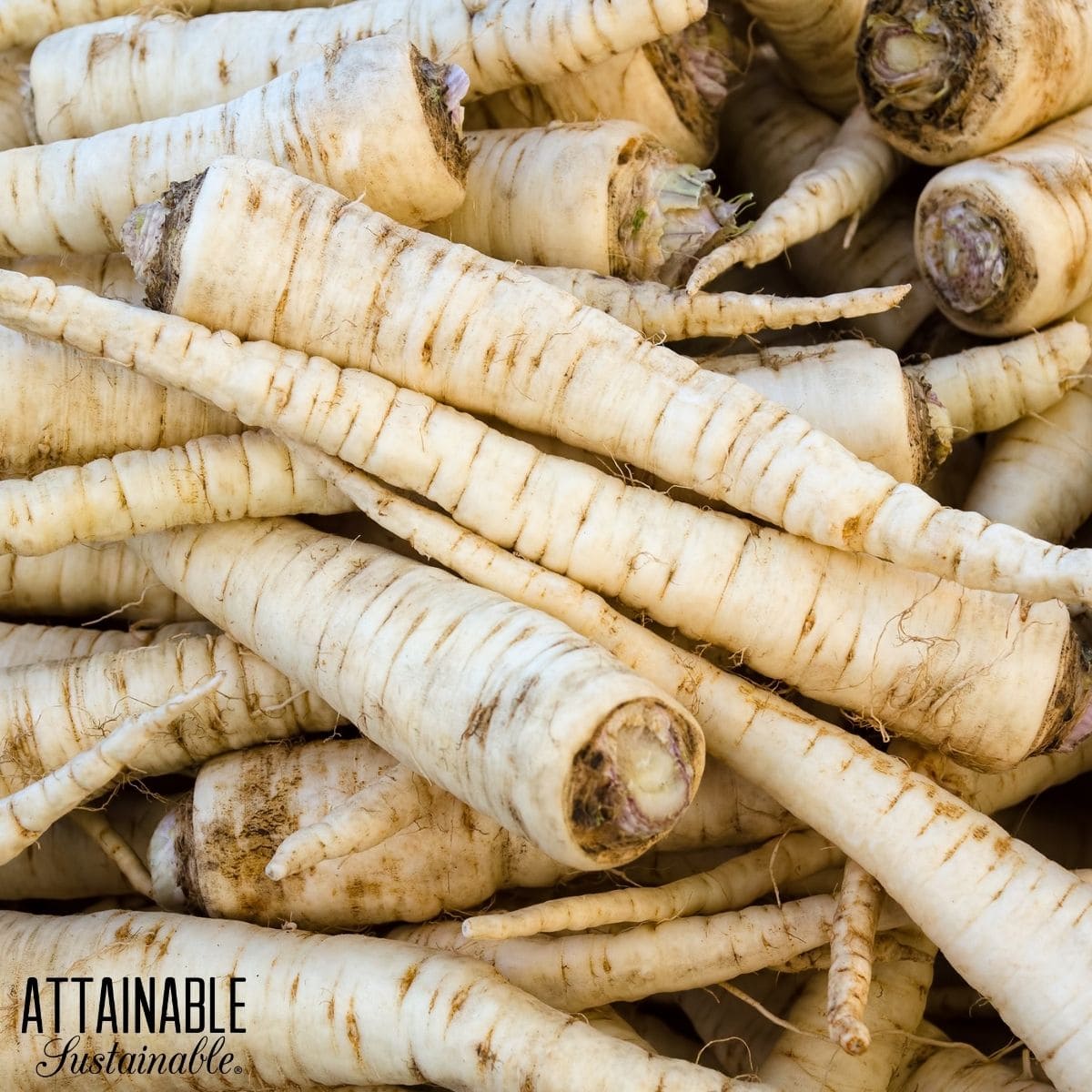
Parsnips come in many varieties, but all are good for storing in a root cellar.
How to grow parsnips
Parsnips are planted and maintained much like a crop of carrots. Plant parsnip seeds in the garden in early spring, at least two weeks before the last average frost date or when soil temperatures are close to 50 degrees. Soak seeds overnight before planting and allow several weeks for them to germinate.
Plant seeds about ½ to 3/4 inch deep and thickly in a row. Space rows at least 18 inches apart. Some gardeners mix radish seeds with their parsnip seeds. Because the radishes will germinate quickly, they help mark the parsnip rows and keep the top of the soil from crusting.
Plants will need to be thinned to 3-6 inches apart to allow roots to reach their potential.
Requirements for growing parsnips
Soil requirements
Parsnips grow best in a deeply worked, well-composted loose soil. Wait until the vegetable garden is dry enough to work in spring and then dig deeply (12-16 inches or even deeper) and amend the planting area with a good amount of compost or other organic matter.
Parsnips need loose, aerated soil to grow into well-shaped roots. If the soil is too dense, or there are rocks, tree roots, or other debris, the parsnips can grow into odd or crooked shapes.
Light requirements
Plant parsnips in a place in the garden bed or raised bed that gets full sun or at least 6-8 hours of sunlight a day.
Fertilizer and water requirements
Parsnips have low fertilizer needs, especially if the soil was prepared before planting. To give plants a boost, sidedress with a well-balanced fertilizer at the 4–5-week mark by sprinkling a dry, well-balanced fertilizer on the sides of the rows and away from the plants. Rake in and keep up with watering.
Mulch lightly to keep the soil cool and moist, and to eliminate weeds. Don’t let the soil or seeds dry out.
A layer of thicker mulch at the end of the season can help keep parsnips warm for harvesting during the coldest months.
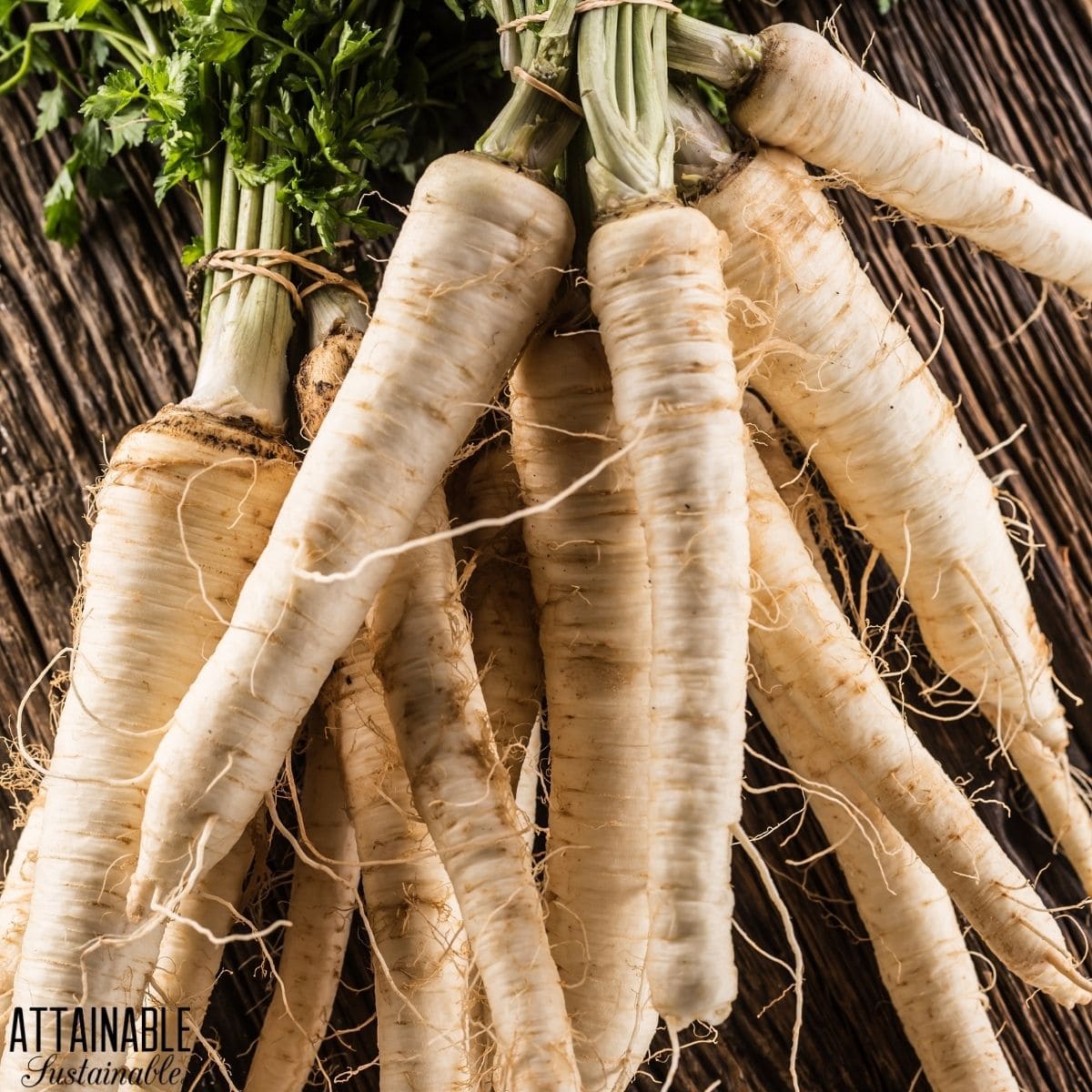
Parsnips aren’t the most beautiful crop, but they’re a great cool-season crop to try.
Prevent problems when growing parsnips
After seeds germinate and seedlings emerge, thin the plants to about 3-4 inches apart in each row. The closer the plants grow together, the smaller and more tender the roots will be.
Pull or snip weeds as they show up so they won’t compete with the parsnip roots.
Avoid problems with carrot rust flies by using a lightweight row cover cloth to protect newly seeded areas. Make sure the edges are tied down tight.
Prevent tough and bitter roots by planning the spring planting date. Use the days to maturity for the variety you’re planting and the average date of the first fall frost in your area. Count back the number of days from the frost date and plant then.
Growing parsnips in containers
You can grow parsnips in containers with the right size container. Make sure it’s at least 5 gallons and is deep enough to accommodate long roots. Ensure the container has holes in the bottom to encourage good drainage.
Fill the container with good-quality potting soil that’s designed for container growing. It needs to have a slow-release fertilizer and is light enough for tender roots to penetrate. Keep up with maintaining the container by mulching and keeping the soil moist, but not soggy.
In cold weather areas, gardeners may need to insulate the containers to keep the soil and roots from freezing as soon as the temperature drops.
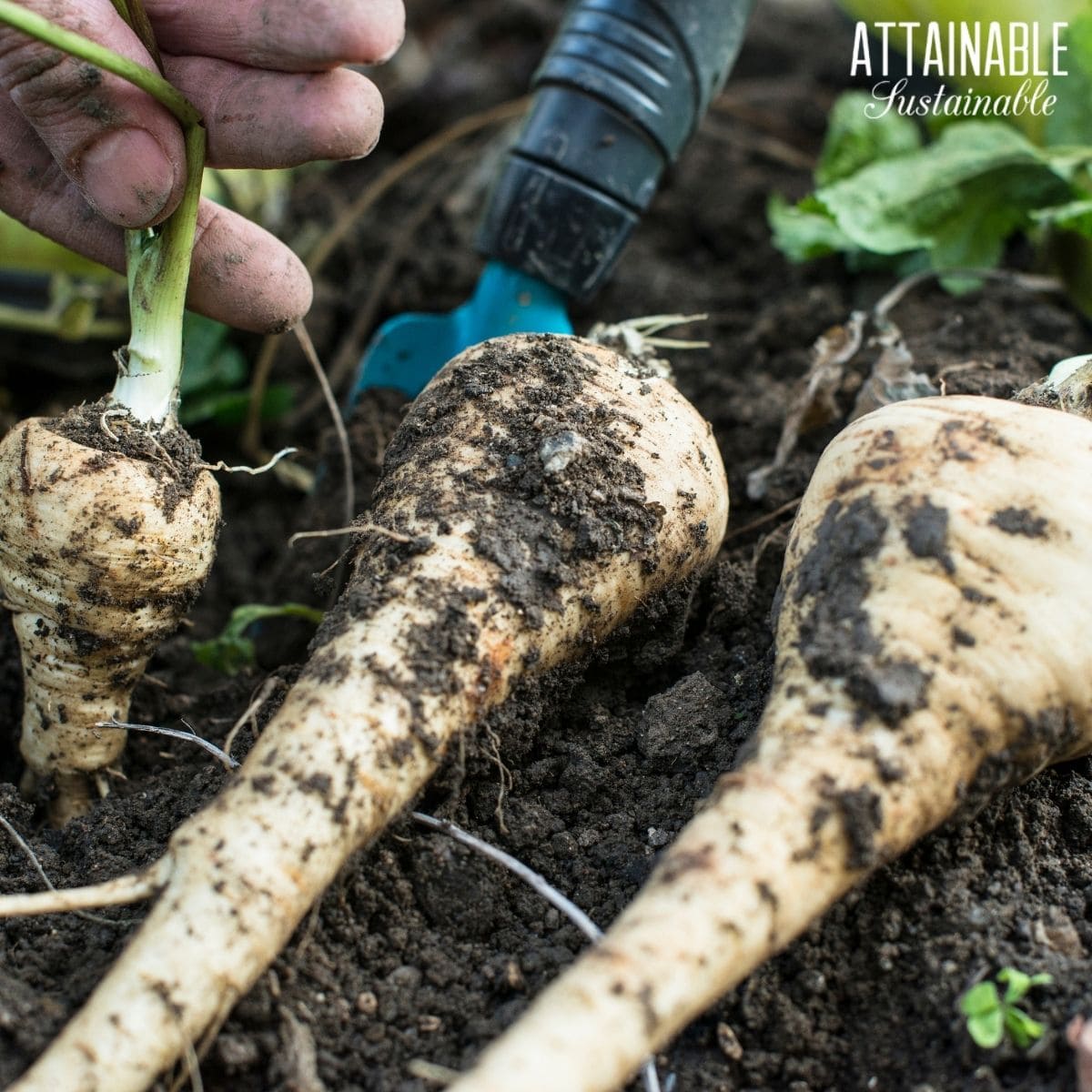
Fresh parsnips are pulled from the ground much like carrots when they are ripe.
How to harvest parsnips
To harvest, wait until temperatures fall below 35 degrees to allow the starch to convert to sugar. Then dig – don’t pull – the roots. Parsnip roots grow quite long and they need to be dug with a garden fork or shovel.
If you want to enjoy your parsnip crop for a longer period of time, cover some with a layer of leaves and dig them through the winter when the soil thaws. Start digging again in early spring before the tops begin to regrow.
How to propagate parsnips
If you want to save seeds from your parsnip plants, plan ahead. Be sure to plant only heirloom or open-pollinated varieties like Hollow Crown. If you try to save seeds from hybrid parsnip types, you won’t get the identical plant, but one of the parent plants.
Because parsnips are a biennial plant, they need two years to grow and set seed. After the first growing season, leave a few parsnips in the ground to overwinter. The following year, after they begin to regrow, they’ll send up a flower stalk that will bloom.
Wait for the flowers to dry and turn brown on the plant. Then carefully cut the seed head from the plant, allow the seeds to dry thoroughly, and remove them from the flower head. When the seeds are completely dry, place them in an airtight container, label them with the type and date, and store them in a cool, dark, and dry place until it’s time to plant again.

How to use parsnips in the kitchen
The best-tasting parsnips are well-shaped and small to medium in size. Avoid using any roots that are shriveled, limp, or have bad or sunken spots.
Parsnips are a versatile vegetable and can be prepared by baking, roasting, sautéing, steaming, adding to stews and soups, and eating raw in salads. One of the most popular ways to prepare them is by boiling and then mashing them, like potatoes. Another tasty dish is to cut them into pieces and roast them with other root vegetables, like carrots and onions.
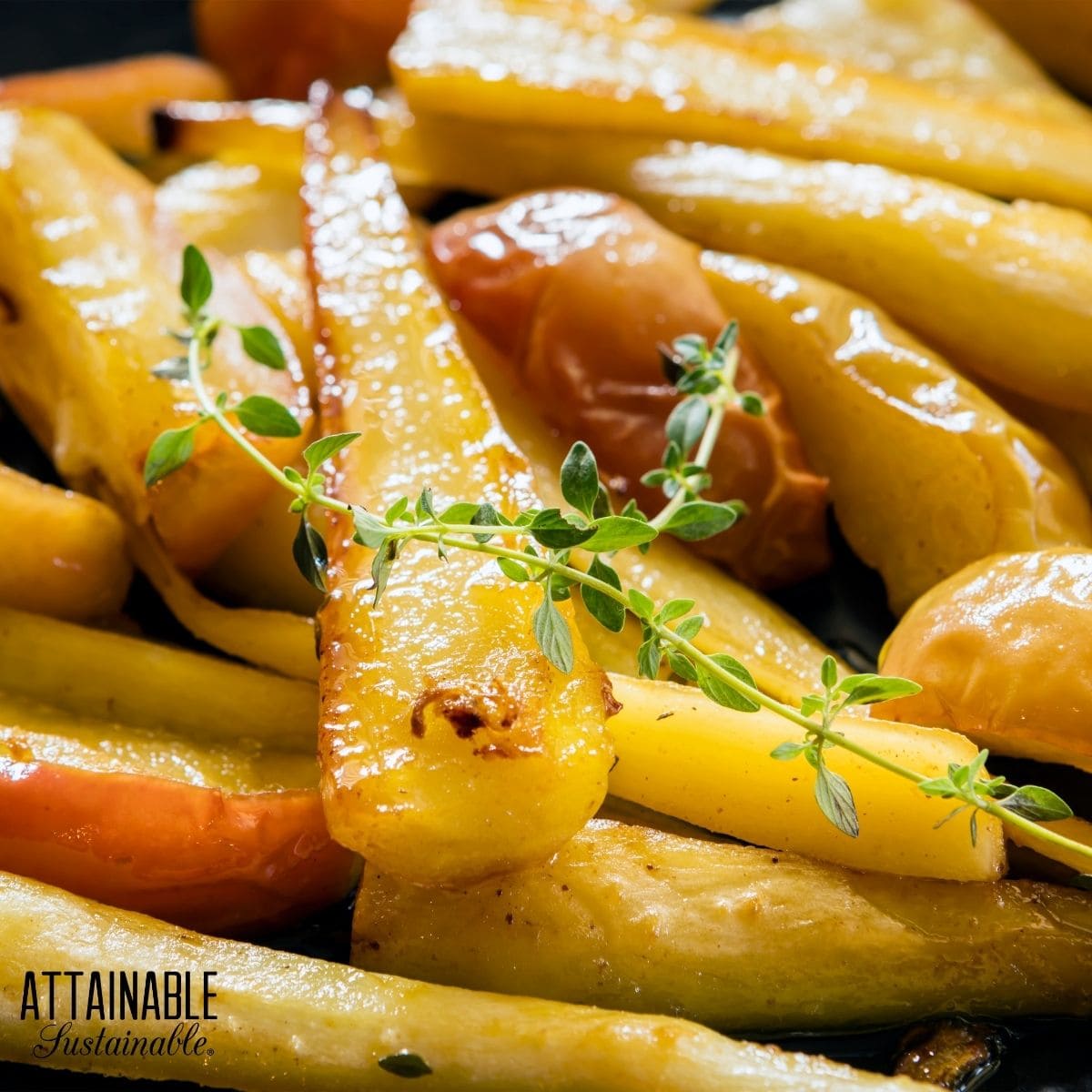
Roasting parsnips brings out their flavor.