Garden

Grow: Swiss Chard

P1460678

Even apartment dwellers can grow a pot of chard and the beauty of a pot of chard is that it will provide food for months.

Read more »

66 Small Changes to Make a Big Difference

66 Small Changes to Make a Big Difference

Changing how we do things - even just a little bit - can make a huge impact on our environment and the sustainability of this planet.

Read more »

Considering Water in the Garden

water

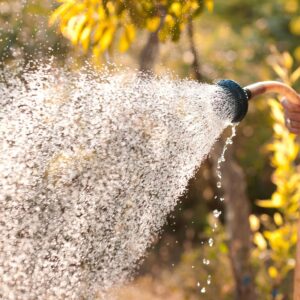
Raise your hand if you turn on the hose to water your garden when it’s thirsty. I suspect that most of us do at least some of the time, but that may not be the best way to hydrate your plants. For years, municipalities have been adding chlorine to water supplies to make it safe for drinking. At a recent community event I learned that our municipal water provider has switched over to something called chloramine, and other municipalities are embracing chloramine as well. The difference is this: the chlorine in water will dissipate if you leave a container of water uncovered for a few hours. Chloramine cannot be removed from water by boiling, distilling, or by standing uncovered. Both of these treatments kill bacteria and microorganisms in our household water, making it safe for use. Here’s the rub: Good healthy soil is home to lots of living bacteria and microorganisms. It stands to reason that water that’s been treated to kill off bacteria in our drinking water might also kill off the good bacteria in our soil, making it harder and harder to maintain healthy soil. What to do? You’ll need to determine if you feel the chemicals in the water are...

Read more »

Transforming a Community with Gardens

untitled album 4 - 07

"Growing your own food is like printing your own money."

Read more »

Perfectly Purslane

Perfectly Purslane

I have to admit I felt a little silly transplanting a purslane plant from my neighbors yard into my own. You see, until recently, I had no idea that this “weed” was edible. Here’s how it looked: In early spring I’d prepare my garden beds, plant seeds of lettuce, spinach, Swiss chard, and bok choy, wait for them to sprout, hope the snails didn’t get them, curse these thriving weeds with teardrop shaped leaves, and pull them out. The plant itself is very pretty – low growing and non-invasive – but it just didn’t belong there, in my garden. Sure, now it seems silly. My purslane is now thriving, mingling freely with beets and tomatillos. I’ve added the leaves to salads and smoothies and nobody around here has complained. The leaves are somewhat succulent with a mild flavor. (Not fuzzy and offensive on the tongue like uncooked dandelion greens.) And according to Mother Earth News, Purslane contains high amounts of alpha-linolenic acid (ALA), an omega-3 fatty acid generally found in vegetables, as well as small amounts of EPA and DHA, omega-3 fatty acids more commonly found in fish. It’s also high in vitamins A, C and E, and in dietary minerals such as iron, magnesium,...

Read more »

February in the (Hawaii) Garden

February in the (Hawaii) Garden

Experimenting with wintertime gardening, I planted Brussels sprouts, broccoli, cauliflower, celery, green onions, and beets a couple of months ago. You can see the brassicas (Brussels sprouts, broccoli, cauliflower) in the upper left corner of the photo near the pile of compost. They’re pretty happy; I need to thin them out. In the foreground are the beets, green onions, and celery I planted along with – surprise! – some volunteers: tomatillo, a tomato, cilantro, and purslane. I have tons of volunteer cilantro. A closer look. It’s a small experimental bed, but it’s cram packed with stuff. I’m thinking of just letting nature take its course. An even closer look. I’ve never grown celery from seed, but you can see how happy it is. A “lipstick” pepper that I started from seed and transplanted out a month or so ago. You can also see some sort of squash seedlings that sprouted from compost. Trouble in paradise. I have a yellow pear tomato that’s about three feet high and lush except for this little issue. Leaves at the base of the plant are yellowing then dying off. These are leaves that I’ve trimmed from the plant. Can you identify this? In...

Read more »

Compost Tumbler for Invasive Weeds – Does it Work?

Compost Tumbler for Invasive Weeds – Does it Work?

While I’ve got a number of compost piles, a worm bin, and chickens to work through much of my waste, I have a problem with invasive weeds. Living in the tropics means lots of vines, and tossing those vines in a compost pile? Is just like planting them. They root easily and quickly. Beating back the jungle means we generate a lot of this aggressive yard waste, and we often fill a pickup truck and haul it 60 miles away to the green waste facility. Sure, we combine a trip like that with other errands, and we swap our green waste for finished compost, but it still seems silly to haul it off site. Way back in July, my husband brought home a compost tumbler** for my birthday. Over the course of a month or so, I stuffed it with the invasive yard waste that I won’t add to my regular compost bin. Because the materials are contained and up off the ground, they won’t try to send out roots. The materials kind of collapsed after a few days in the tumbler and as there was room, I added more. A couple of days ago – about five months...

Read more »

NPR: Busting Myths About GMOs (Or Maybe Not)

NPR: Busting Myths About GMOs (Or Maybe Not)

My son posted a link on Facebook to an NPR article, with his own commentary: “How much did Monsanto slide you for this one, NPR?” In Top Five Myths of GMOS, Busted, NPR addresses some of the misconceptions we might have about genetic engineering. I’m not going to go so far as to accuse NPR of biased reporting and I can imagine the kind of glossing the whole GMO debate is getting from Monsanto’s public relations division these days. Indeed, based on what I’ve read, Dan Charles offers solid facts in his story. And yet… 1. Seeds from GMOs are sterile. NPR points out that while the  patent on “Terminator” technology is owned by Monsanto, it’s not currently in use. What if we keep allowing Monsanto and Dupont and other scientists to genetically engineer our food crops until the majority of foods are GMO or GMO tainted? And what if, at that point, Monsanto decides to fiddle further with Mother Nature, injecting the Terminator gene into those seeds? Guess who can no longer save seeds from year to year? Not just farmers, but every single backyard gardener will be forced to buy new – genetically engineered – seeds every year. Sure, this scenario is...

Read more »

What Does Organic Really Mean?

organic

by Loku. Browse more infographics.  

Read more »

Slugging it Out – Get Those Slimy Pests Out of the Garden

Slugging it Out – Get Those Slimy Pests Out of the Garden

Slugs are a problem for many gardeners, but here in Hawaii they’re an exceptional problem. Not only do they damage crops, they transmit something called rat lung disease. It’s a rare* disease and one that is still being studied, but the general consensus is that accidental ingestion of tiny slugs (ick!) is bad, as is ingesting raw produce that’s been slimed by slugs. I’ve been working on a “slug protocol” that will rid the garden of these slimy pests without the added risk of poisons. While it doesn’t eliminate the slugs, I start by growing my lettuce in containers – often hanging containers – to keep slugs off the salad greens we eat raw. I’ve started going on weekly slug hunts. (Psst! Hey, who’s the nut job out there in pajamas wearing a headlamp??) No, it’s not glamorous. In fact, it’s pretty gross. But since I’ve implemented this plan I’ve seen a huge reduction in how many slugs I catch in a night. I go out after dark with the aforementioned headlamp (PJs optional), a container with about an inch of either vinegar or salt in the bottom, and wooden chopsticks. As I spot slugs, I use the chopsticks...

Read more »

Join Me!

e-book

Free Email Alerts!

Click 'subscribe' once, then check your email for a confirmation message.

Welcome

It’s one thing to think, “Hey, I’d love to be more self-sufficient!” and quite another to implement a lifestyle change that might require learning some new skills.

Attainable Sustainable is about bridging the gap between wanting change and making it happen without becoming overwhelmed. Nobody’s saying you have to go get a tractor and a cow. Attainable Sustainable is about discovering – one step at a time – how to make changes in your life to support a sustainable lifestyle.

The Author

Kris Bordessa has been gardening for most of her life. She's been authoring books and writing features for the past ten years or so. It's about time she combined the two, don't you think? [More about the author]